

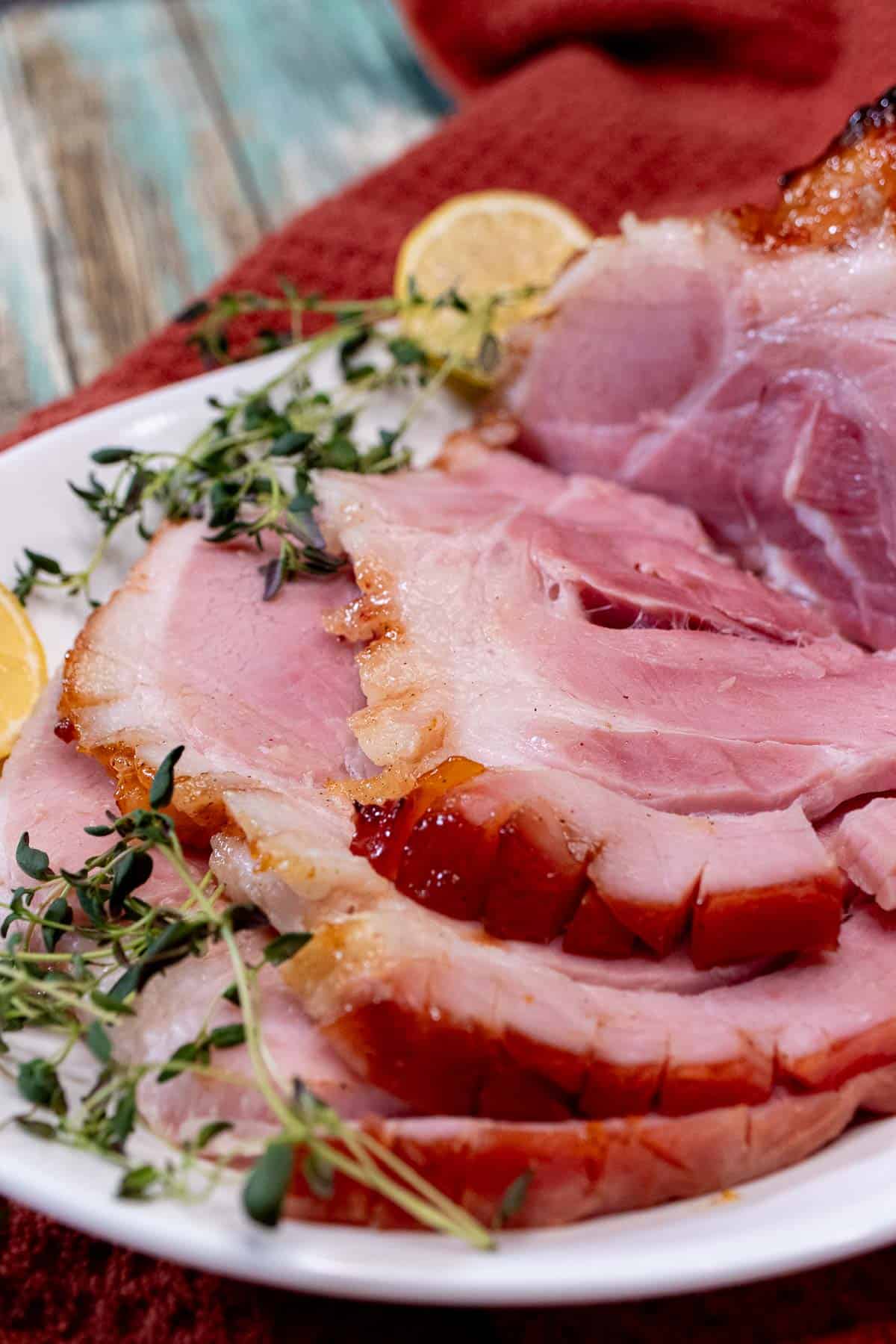
An Easter centerpiece, this peach and bourbon glazed ham combines the sweet and tangy flavor of peaches with the smoky and spiced notes of bourbon. Great for any holiday or anytime you crave some ham, this glazed, baked ham is full of flavor.
I love baked ham for holidays, especially around Christmas and Easter with my family. They’re easy to make and mostly hands-off, but a good glaze can really make hams stand out.
Some of the ingredients are added at the start of cooking to flavor the basting liquid. This helps to flavor the ham as it steams in a sealed environment, keeping the moisture and aroma locked in as well.
While I absolutely love my maple bourbon glazed ham, the flavors can feel more fall focused for some people. This recipe brings in some summer stone fruit flavor to a springtime ham glaze perfect for Easter. I also use jarred peach jam or preserves so that you can make this any time of the year without relying on fresh peaches being in season.
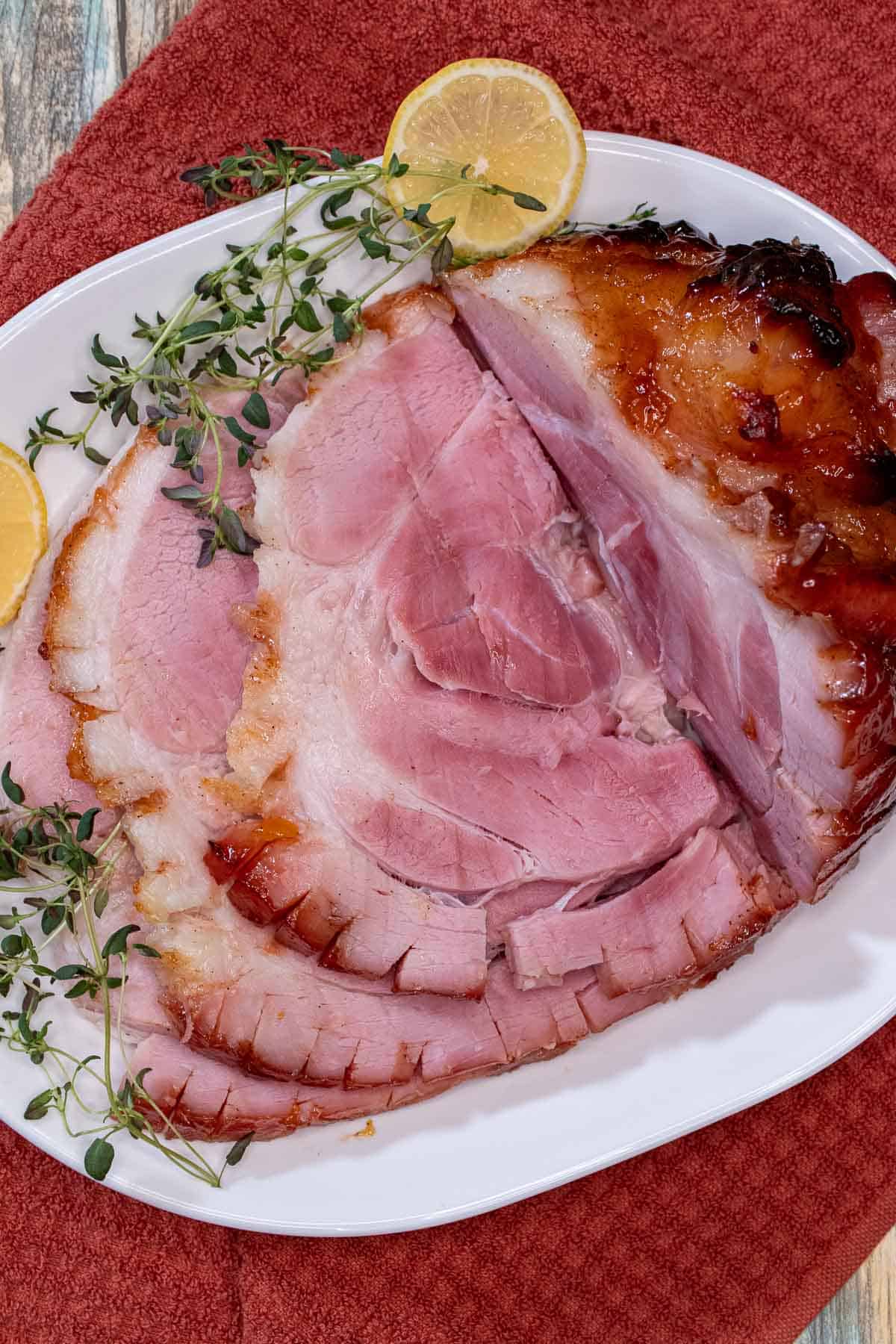
Be sure to keep the ham bone as well for making homemade ham stock or adding to dishes like red beans and rice. I also love having enough leftovers for some ham sliders or things like my ham and cheddar scones or creamy ham and potato soup.
Jump to:
🥘 Peach & Bourbon Glazed Ham Ingredients
Other than the ham, peach, and bourbon, you’ll just need a few spices and herbs to make the glaze. Read further down for more information about different types of ham as well.
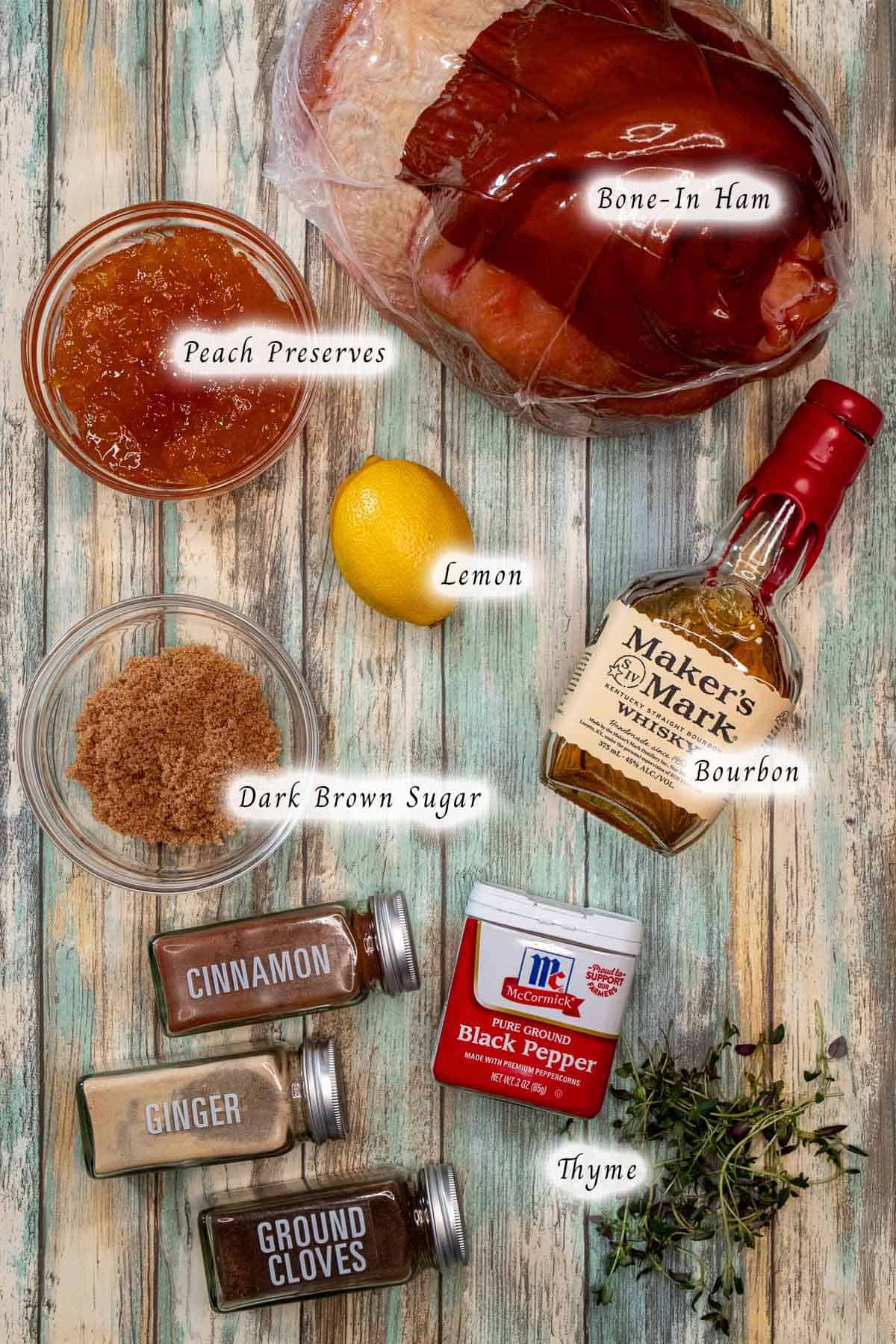
Ham – For the ham, I prefer to use an 8-10-pound fully cooked, smoked, bone-in shank or butt ham that isn’t spiral cut. While you could use spiral-cut ham, I find they tend to dry out more easily and are more thinly sliced than I prefer.
Peach – Fresh peaches can be a bit difficult to find outside of their season, and I find canned peaches to be a bit bland for this recipe. Because of this, I prefer to use jarred peach preserves or jam. I also find this easier to use as a glaze instead of blending down fresh peaches which can end up too watery.
Bourbon – The main rule of thumb here is use something you would drink. If you’re not a drinker, look for a bourbon that’s not super cheap and sold on the bottom shelf, but not something that costs $50+ either. You can find some decent bourbons for a reasonable price and buy a smaller 350ml bottle. If you’re concerned about the alcohol in the ham, it gets cooked out.
Lemon – A bit of fresh lemon juice brightens up the flavor and adds a bit of acidity to both the basting liquid and the glaze.
Sugar – Since the peach jam or preserves likely contain sugar already, I add just a bit of dark brown sugar. This helps to sweeten the glaze and make it thicker.
Spices & Herbs – For the rest of the seasoning, I use a combination of cinnamon, black pepper, ginger, clove, and fresh thyme. These flavors pair well with both the peach and bourbon flavors.
🐖 Choosing a Ham for Cooking
While there are many types of ham out there, including things like Black Forest ham, prosciutto, Jamón Ibérico etc., I’m only going to focus on the types of ham sold in stores that people use for baked and glazed styles of ham for the holidays.
At its core, ham is from the rear leg of a pig. A whole ham can be over 20 pounds and isn’t found as often. Typically, the leg is broken down and sold as half-hams in the butt or shank portion. Most ham found in supermarkets and grocery stores are sold pre-cooked, often cured and smoked.
Types of Ham
- City Ham – The most common type of ham is called “city ham” and refers to ham that is usually wet-brined and probably smoked. This is the one you’ll find most often in stores and is fully cooked and usually sold as shank, butt, or spiral sliced ham.
- Country Ham – Less common and typically only sold in the South, country ham is dry-brined in salt and usually uncooked. This style of ham is a bit of an acquired taste and usually needs to be soaked 24 hours before cooking to remove the salt. Still quite salty and a bit dry, these hams aren’t normally used for baked hams.
- Fresh Ham – Also called “green ham”, fresh ham is sold uncured and uncooked. This type of ham is the most difficult to find normally, and you may need to special-order it from a butcher.
Pre-cooked hams are typically safe to eat cold out of the package, but are usually reheated and cooked to an internal temperature of 140°F. Fresh ham needs to be cooked to at least an internal temperature of 145-160°F.
Cuts of Ham
The main cuts of ham sold in stores are bone-in, spiral cut (typically bone-in), and boneless. Bone-in hams can be sold whole but are typically sold as either a butt or shank portions. I’ve made this maple bourbon glazed ham recipe with both butt and shank cuts, and both work well. It mostly comes down to personal preference.
- Shank – The shank end of the ham is cut from the lower portion of the hind leg. It is typically leaner than the butt, less expensive, and has a larger bone. Because it contains just the femur bone, it can be a little easier to carve than the butt end.
- Butt – The butt end comes from the upper portion of the hind leg. It can be a little more expensive than the shank because it has smaller bones and tends to be more tender with fattier meat. Since it contains a T-shaped bone, however, the butt can be a bit harder to carve.
- Spiral Cut – These hams can be made from the shank or the butt portion. An oscillating blade cuts around the ham making pre-sliced cuts to the bone. Many of these come pre-glazed or with a glaze packet. Some people prefer this cut for the ease of carving, but they can also dry out more easily in the oven and aren’t always an idea choice for glazed ham recipes.
- Boneless – These hams are usually sold in smaller portions and come from half-hams that have been deboned and trimmed. The ham is then typically pressed into an oval shape and cured with salt and water that causes the proteins to break down and rebind with one another. This is what gives it a cohesive look in the end.
Ham Tips
- How much ham? If buying a bone-in ham, aim for about ¾ pound per person. For a boneless ham, go for about ½ pound per person. If you’re cooking a ham alongside another large protein like a turkey for Thanksgiving, a ½ pound per person with bone-in ham is enough. Always consider buying more ham than you think you’ll need so you have leftovers, or enough for any hungry or surprise guests.
- The ham bone. Don’t throw that out! Keep the ham bone that’s left behind after carving as much meat from it as you can. Ham bones are great for things like ham-bone soup, split pea soup, homemade ham stock, and even Southern collard greens.
🔪 How to Make Peach & Bourbon Baked Ham
Before baking your ham, remove it from the refrigerator and allow it to sit at room temperature for 1-2 hours.
Prepping and Baking the Ham
When ready, preheat your oven to 325°F / 160°C and move a rack to the lower third of the oven.
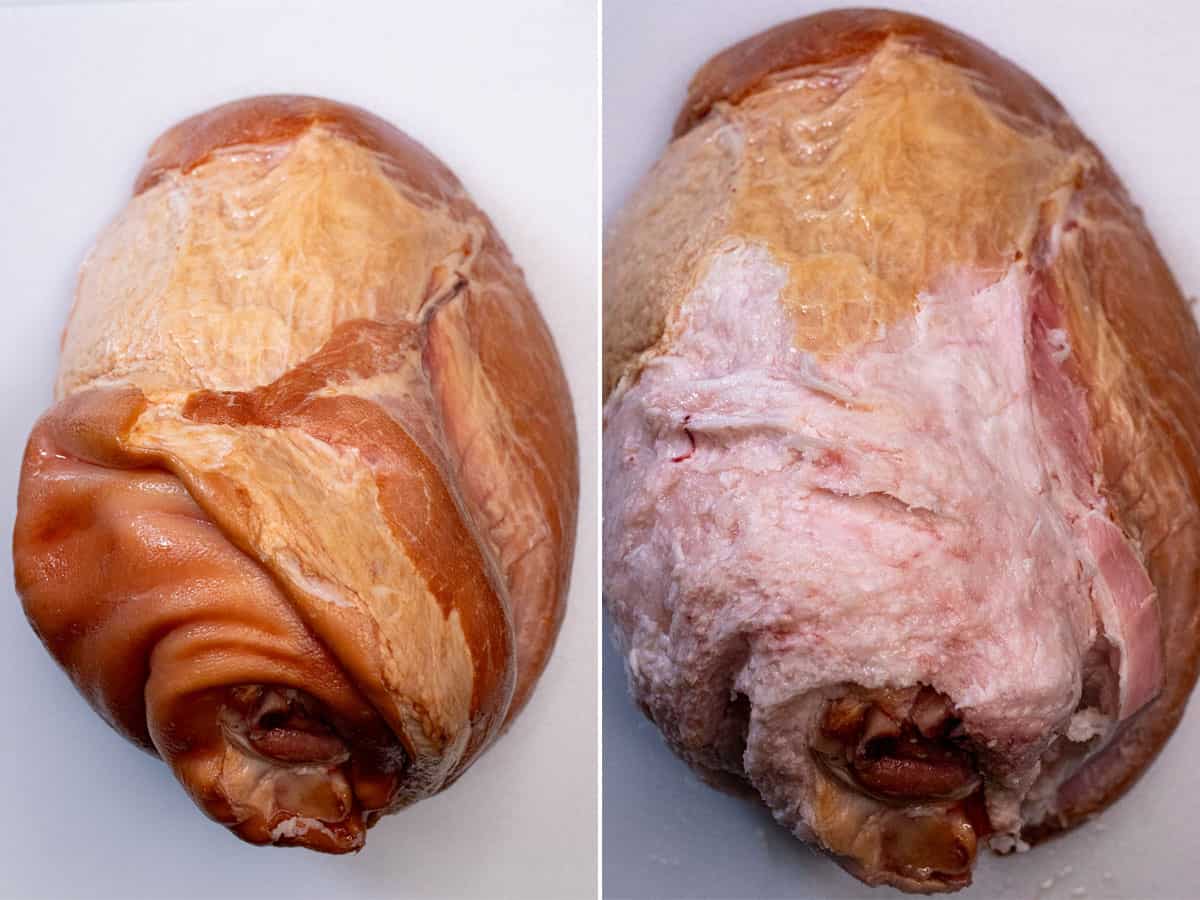
If the ham has skin on, carefully score it and it should pull from the fat layer. If the ham is particularly fatty, you can trim some of that down to about a ¼-inch thickness.
Using a sharp knife, carefully score the fat layers in a roughly 1-inch diamond pattern about 75% of the way into the fat. Try to avoid cutting into the meat.
In a bowl, juice half the lemon and add in ¼ cup of the peach preserves and 1 tablespoon of the bourbon. Mix it together until the preserves are loosened up and set it aside.
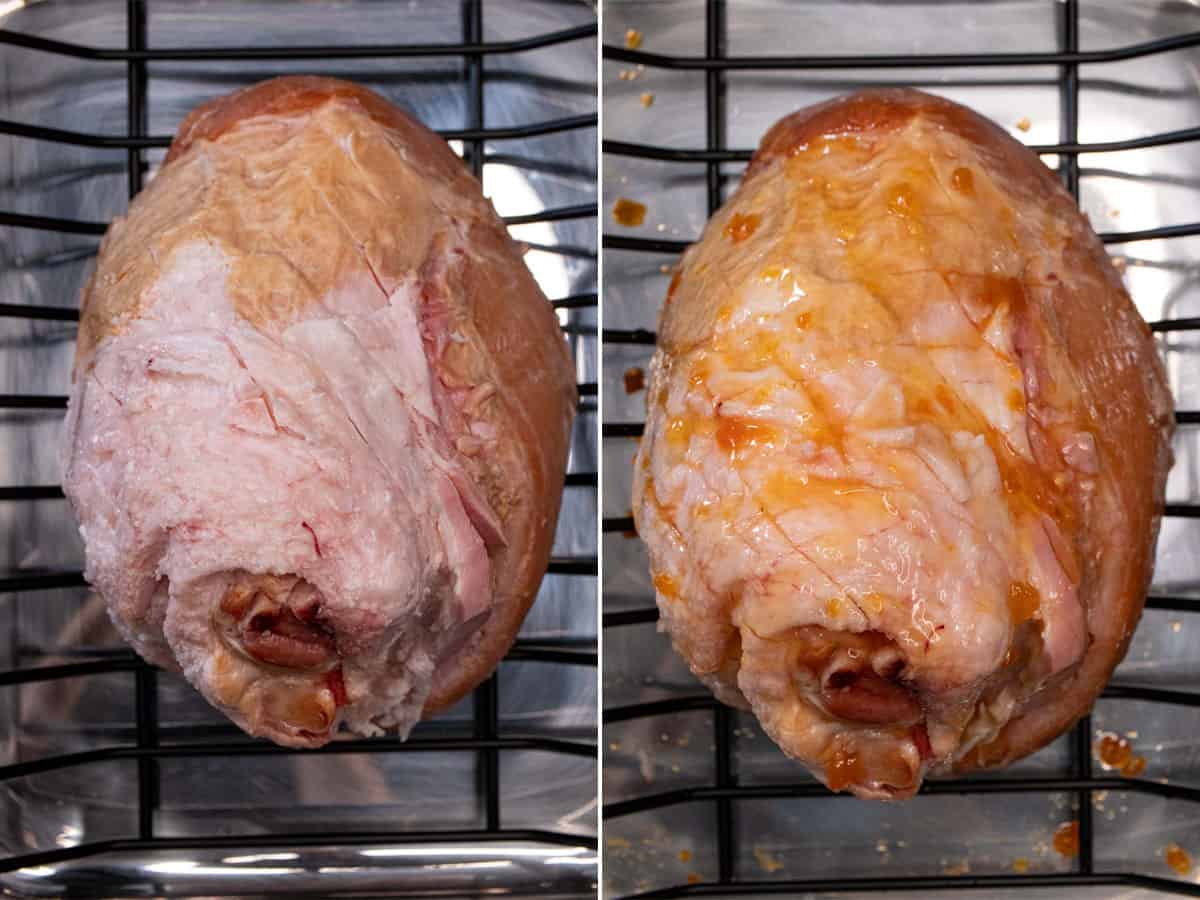
Place the scored ham cut side down into a roasting pan on a rack. Pour enough water into the bottom of the pan so that it is at least a ½-inch or so deep. Now brush on or drizzle the peach-bourbon mixture evenly over the ham.
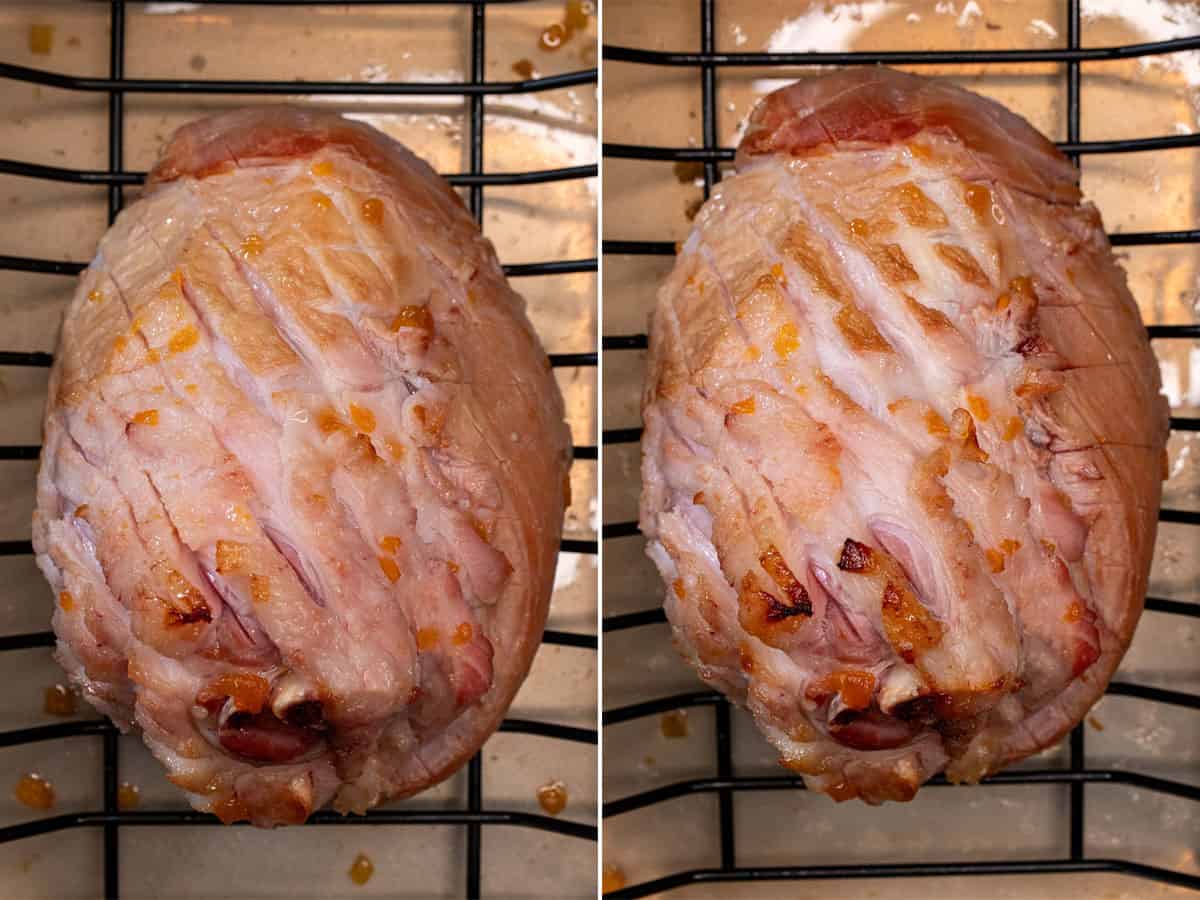
Cover with foil and place the ham into the bottom third of the oven and bake for about 1.5 - 2 hours or until the internal temperature in the thickest part of the ham registers about 120°F / 49°C. While it cooks, baste the ham with the drippings once every 20-30 minutes. Be sure to check the temperature early and keep an eye on it since the time can vary.
Making the Glaze and Finishing the Ham
When the ham is getting close to finishing, make the glaze.
In a pot on your stove over medium heat, add the rest of the peach preserves, bourbon, dark brown sugar, cinnamon, black pepper, ginger, cloves, and thyme sprigs. Stir and heat until the sugar has dissolved and the rest of the ingredients have combined fully.
Let the glaze come to a light simmer and continue to cook and thicken for 5 minutes or so. Remove from the heat and stir in the rest of the lemon juice.
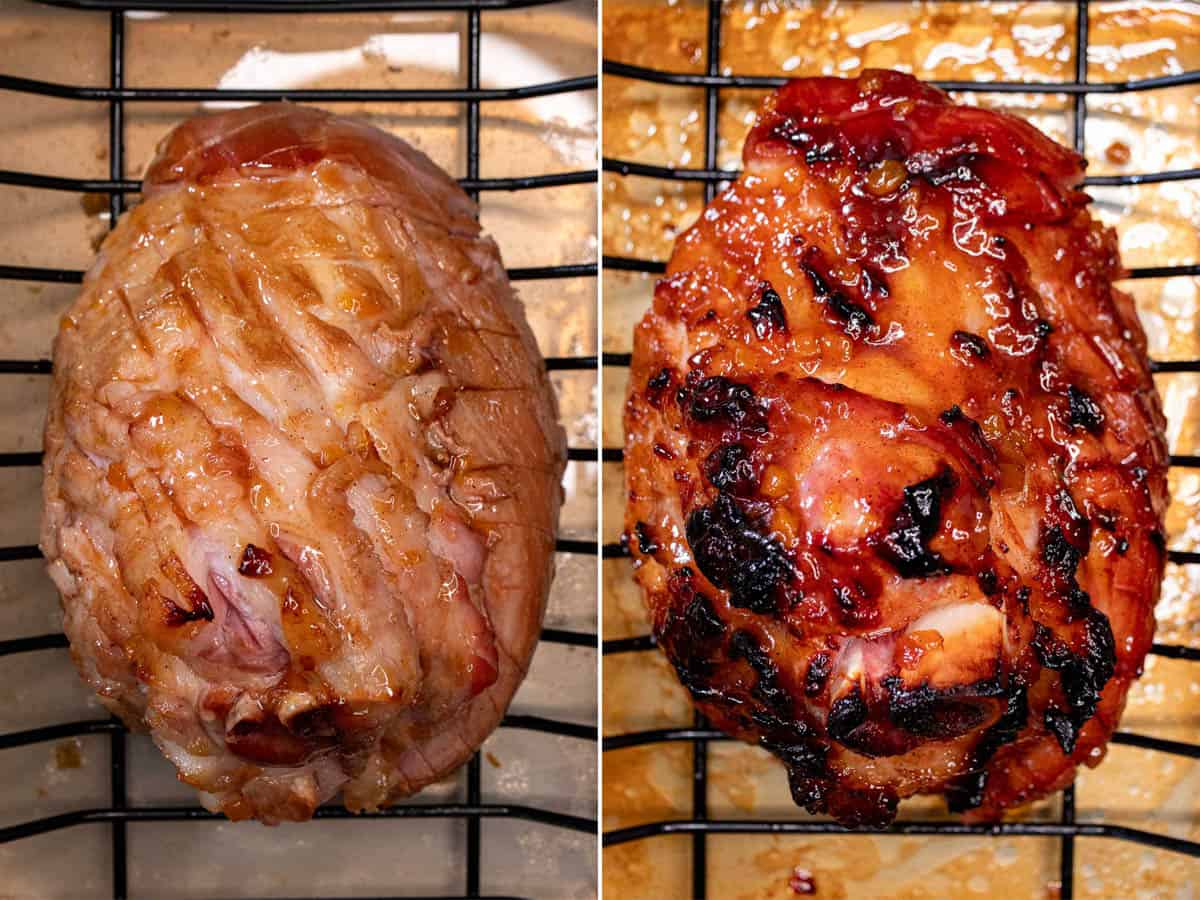
Once the ham reaches roughly 120°F, crank the heat up to 400°F / 200°C. Pull the ham out of the oven and you can remove the foil for the rest of the cooking time. Remove the thyme sprigs from the glaze and brush some of it all over the ham and place it back into the oven.
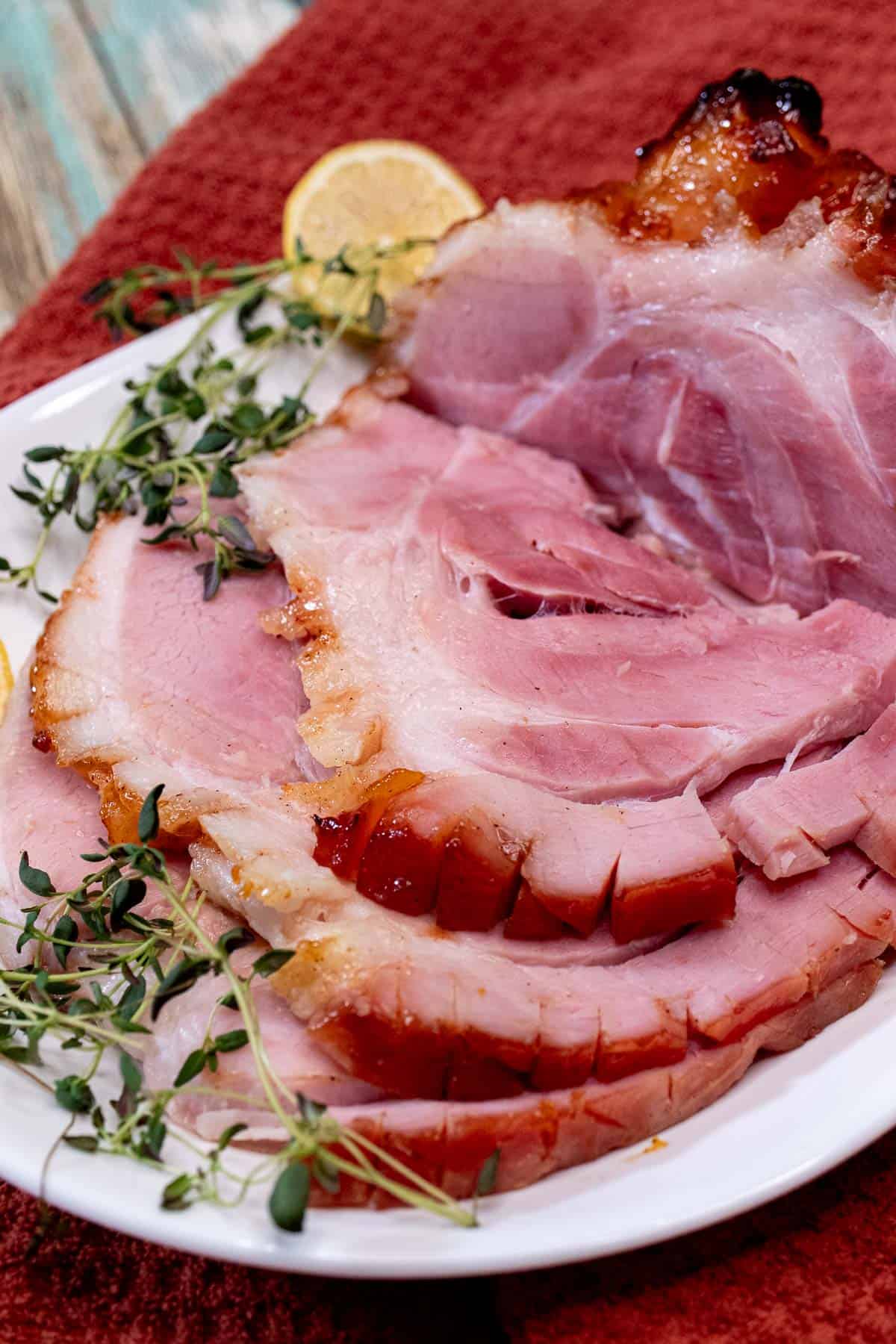
Continue baking the ham at higher heat for about 25-40 minutes, brushing with more glaze every 10 minutes until the ham reaches an internal temperature of 140°F / 60°C. If the ham starts to darken too much during this process, gently tent the foil back over it.
Once done cooking, remove the ham from the oven and cover with any remaining glaze. Let the ham rest for at least 20-30 minutes before carving and serving.
⏲️ Cooking Times for Ham
The following table is a partial guideline from the USDA’s website. All these times are based on baking the ham at 325°F / 160°C. As you can see below, the times can vary a lot from cut to cut and have a range of 2-6 minutes/pound from the minimum to maximum cooking times.
Like roasting chicken, turkey, and other large proteins, never rely on average ranges or even times given in a recipe. Always, always, always go by the internal temperature and use a quality instant-read digital thermometer.
| Cut | Weight (pounds) | Minutes/lb | Minimum Internal Temperature |
| Smoked Ham, Cook-Before-Eating | |||
| Whole, Bone in | 10-14 | 18 to 20 | 145°F |
| Half, Bone in | 5-7 | 22 to 25 | |
| Shank or Butt Portion, Bone in | 3-4 | 35 to 40 | |
| Smoked Ham, Cooked | |||
| Whole, Bone in | 10-14 | 15 to 18 | 140°F |
| Half, Bone in | 5-7 | 18 to 24 | |
| Canned Ham, Boneless | 3-10 | 15 to 20 | |
| Vacuum Packed, Boneless | 6-12 | 10 to 15 | |
| Spiral Cut, Whole or Half | 7-9 | 10 to 18 | |
| Fresh Ham, Uncooked | |||
| Whole Leg, Bone in | 12-16 | 22 to 26 | 145°F |
| Whole Leg, Boneless | 10-14 | 24 to 28 | |
| Half, Bone in | 5-8 | 35 to 40 | |
🍽 Recommended Equipment
If you have an oven and a deep, large pan, that’s all you really need to make this peach and bourbon glazed ham. However, here are 3 items I highly recommend.
Roasting Pan – Whether you’re making this ham, a turkey, or a good-sized chicken, I recommend getting a decent quality roasting pan with high sides, a rack, and comfortable handles that don’t get in the way.
Baster – I don’t always recommend basting in my recipes, but you can get a decent quality turkey baster for a low price, and some come with a brush to make cleaning easy.
Thermometer – I highly recommend investing in a high quality, instant-read digital thermometer. When you spend the money on a quality one, they can last almost forever, truly are instant read within 1-2 seconds, and can be used for anything from steaks to turkeys to bread to checking on fry oil temperature.
❄️ How to Store Peach & Bourbon Ham
Once cooled completely, you can store the leftover ham in the refrigerator for 3-5 days wrapped in plastic wrap and again in foil. However, I recommend completely carving the rest of the ham and saving the leftovers in two zipper-locked bags in the refrigerator. Separate the ham into nice slices and chunks.
Carve what meat you can from the bone and be sure to save that bone, either refrigerated for 3-5 days or in the freezer for 2-3 months. The bone can be used to make stock, soups, or in recipes that use ham shanks for added flavor.
If you can’t eat all your leftovers within 5 days, you can also freeze the ham for 1-2 months. Or check out some of my great recipes made with leftover ham like my savory ham and cheese scones or creamy ham and potato soup.
📋 Recipe
Peach and Bourbon Glazed Ham
Ingredients
- 1 8-10 pound bone-in ham, see note
- 1 cup peach preserves, divided, see note
- ⅓ cup bourbon, divided
- 1 large lemon, juiced, divided
- ¼ cup dark brown sugar, packed
- ½ teaspoon ground cinnamon
- ¼ teaspoon ground black pepper
- ¼ teaspoon ground ginger
- ⅛ teaspoon ground cloves
- 4-5 sprigs fresh thyme
Directions
- Before baking your ham, remove it from the refrigerator and allow it to sit at room temperature for 1-2 hours.
Prepping and Baking the Ham:
- When ready, preheat your oven to 325°F / 160°C and move a rack to the lower third of the oven.
- If the ham has skin on, carefully score it and it should pull from the fat layer. If the ham is particularly fatty, you can trim some of that down to about a ¼-inch thickness.
- Using a sharp knife, carefully score the fat layers in a roughly 1-inch diamond pattern about 75% of the way into the fat. Try to avoid cutting into the meat.
- In a bowl, juice half the lemon and add in ¼ cup of the peach preserves and 1 tablespoon of the bourbon. Mix it together until the preserves are loosened up and set it aside.
- Place the scored ham cut side down into a roasting pan on a rack. Pour enough water into the bottom of the pan so that it is at least a ½-inch or so deep. Now brush on or drizzle the peach-bourbon mixture evenly over the ham.
- Cover with foil and place the ham into the bottom third of the oven and bake for about 1.5 - 2 hours or until the internal temperature in the thickest part of the ham registers about 120°F / 49°C. While it cooks, baste the ham with the drippings once every 20-30 minutes. Be sure to check the temperature early and keep an eye on it since the time can vary.
Making the Glaze and Finishing the Ham:
- When the ham is getting close to finishing, make the glaze.
- In a pot on your stove over medium heat, add the rest of the peach preserves (¾ cup), bourbon (¼ cup), ¼ cup dark brown sugar, ½ teaspoon ground cinnamon, ¼ teaspoon ground black pepper, ¼ teaspoon ground ginger, ⅛ teaspoon ground cloves, and 4-5 thyme sprigs. Stir and heat until the sugar has dissolved and the rest of the ingredients have combined fully.
- Let the glaze come to a light simmer and continue to cook and thicken for 5 minutes or so. Remove from the heat and stir in the rest of the lemon juice.
- Once the ham reaches roughly 120°F, crank the heat up to 400°F / 200°C. Pull the ham out of the oven and you can remove the foil for the rest of the cooking time. Remove the thyme sprigs from the glaze and brush some of it all over the ham and place it back into the oven.
- Continue baking the ham at higher heat for about 25-40 minutes, brushing with more glaze every 10 minutes until the ham reaches an internal temperature of 140°F / 60°C. If the ham starts to darken too much during this process, gently tent the foil back over it.
- Once done cooking, remove the ham from the oven and cover with any remaining glaze. Let the ham rest for at least 20-30 minutes before carving and serving.

Comments
No Comments