


This Mexican cactus salad, or ensalada de nopales, is a popular side dish in Mexican cuisine. Tangy and slightly tart, cactus salad is a refreshing salad that pairs well with lots of dishes and meats.
Cactus salad is made from the pads of the prickly pear cactus that grows in Mexico. While recipes vary for the salad, the cactus is typically cooked and mixed with onions, tomatoes, chiles, cilantro, and lime juice. The pads can also be eaten raw.
If you have never eaten this cactus, or nopalitos, it has a slightly tangy flavor that is somewhat earthy and citrusy as well. Most people describe it as similar to green beans and okra. Besides making this salad, it is also quite popular mixed with eggs (huevos con nopales), made into tacos, or mixed with meats.
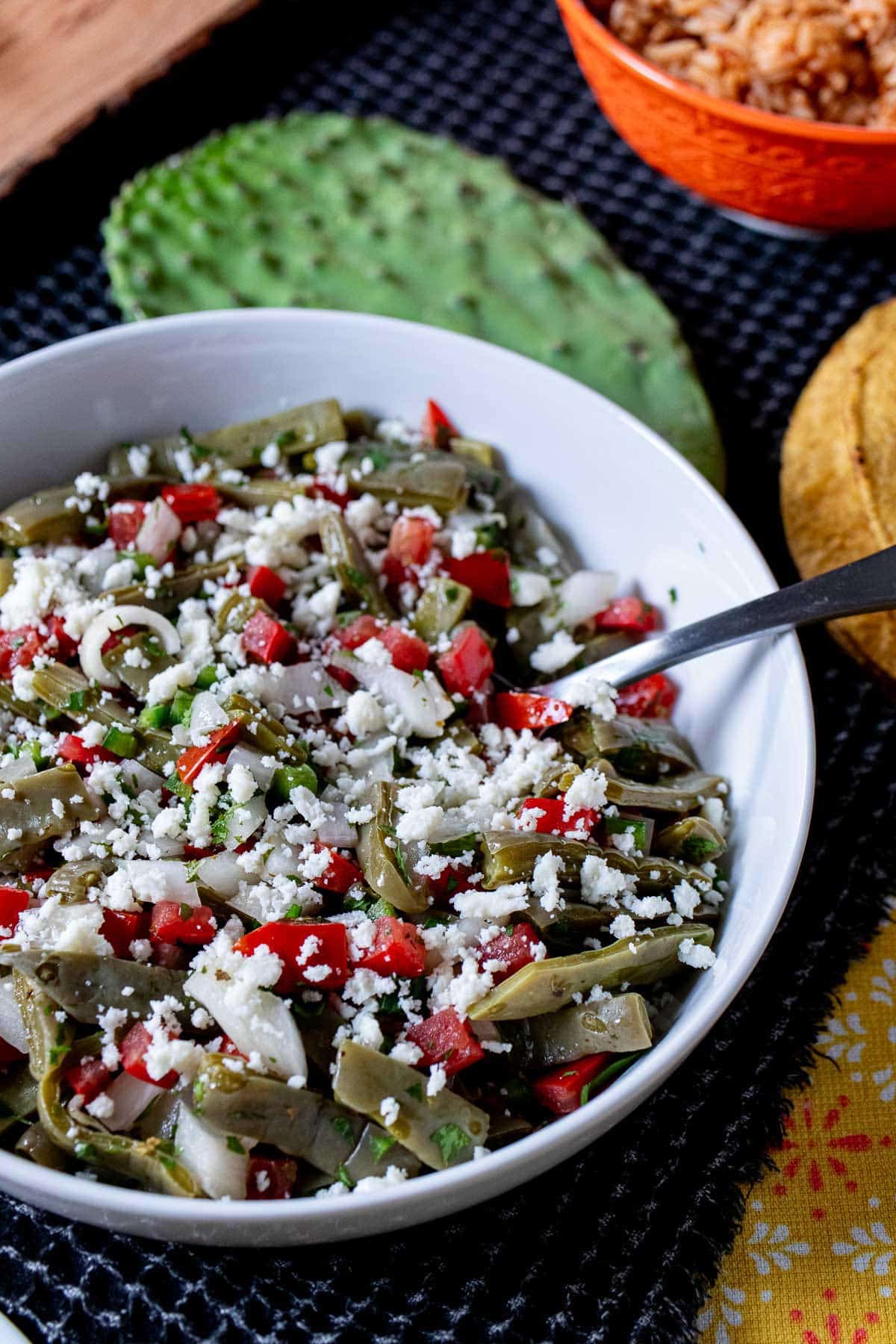
Mixed with other vegetables and tossed with lime juice or a quick dressing, cactus salad is a refreshing side dish. Popular with carne asada, both the meat and general cookouts, the vegetables are both crisp and tender and letting the salad sit for a bit before serving really marries the flavors together.
Jump to:
🥘 Ingredients for Cactus Salad
If you’ve done much Mexican cooking, the ingredients will be familiar and are widely available. The nopales can be cooked multiple ways, however, so read further down for various options on making this recipe.
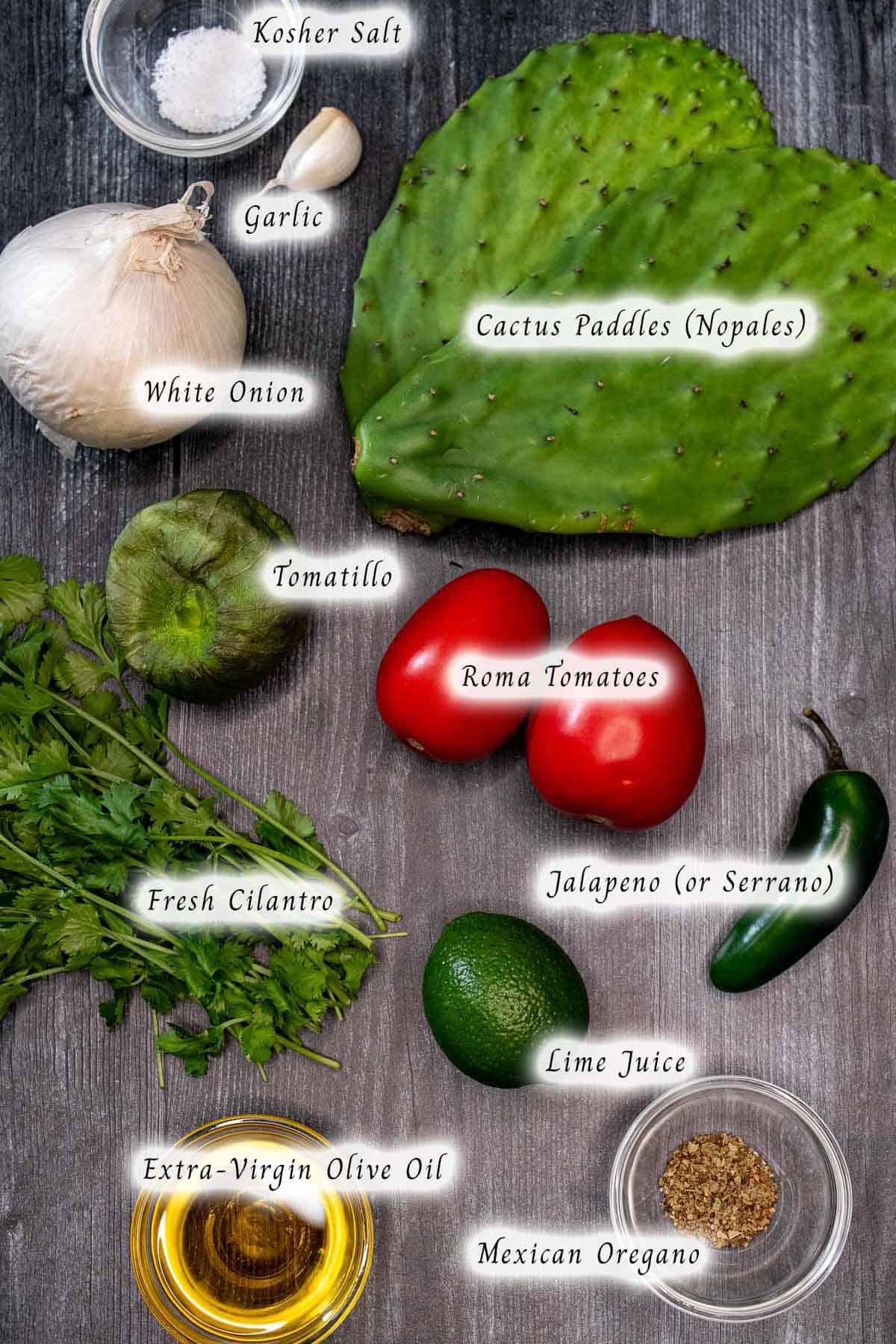
Nopales – The cactus used in this recipe can typically be found in 3 different ways. If you go to an international or Latin market, you can usually find fresh cactus paddles whole with the spines still attached or cleaned and cut in bags. If you cannot find fresh, many grocery stores have jarred versions available in the Hispanic section.
Vegetables – Like many Mexican recipes, you will use a mixture of onion, tomato, and chiles here. I use Roma tomatoes, white onion, and your choice of jalapeno (mild) or serrano (spicy). I also use garlic for cooking the cactus with, as well as an optional tomatillo husk (explained later).
Herbs – Also common is the addition of fresh cilantro. If you really dislike the taste, feel free to omit or replace it with fresh parsley. For the dressing, I also like to use dried Mexican oregano. You can find this in international or Latin markets or online. If you can’t find it, you can omit or replace it with dried marjoram.
Liquid – Fresh squeezed lime juice works great here, and you use just that, but I like to mix it with extra virgin olive oil and the Mexican oregano for an easy dressing. If you prefer, fresh lemon juice also works nicely.
Seasoning – For seasoning I use just kosher salt, both when cooking the cactus and in the dressing. Ground black pepper isn’t typical, but feel free to add some if you like. The salad can also handle more salt than you would think.
Cheese – Not included in the above photo, but cheese is a common addition here. The most commonly used cheese is either crumbled queso fresco or cubed queso panela, both are great and aren’t hard to find these days.
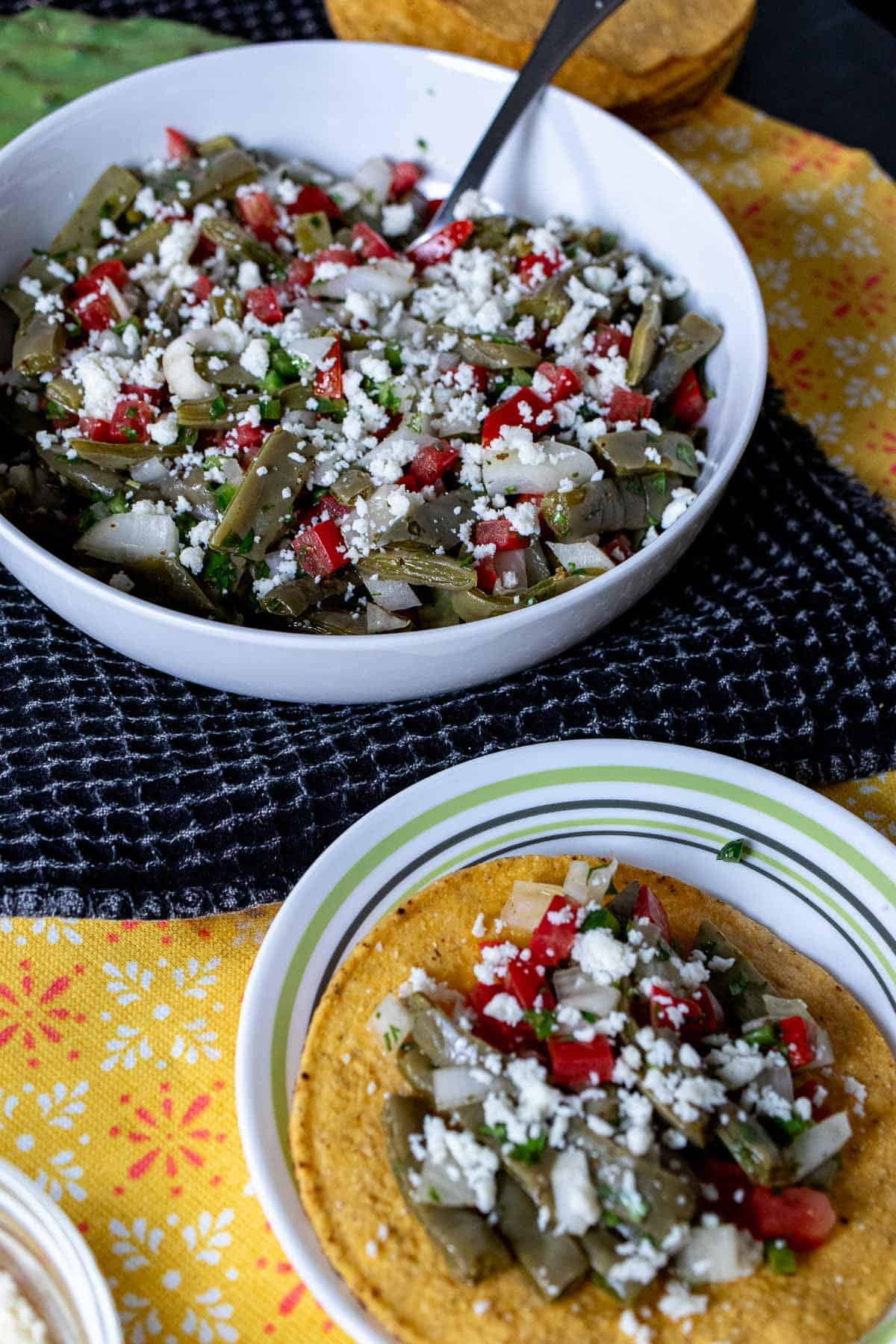
Additions & Toppings – Besides topping or mixing with cheese, other common toppings include more jalapeno or serrano cut into rings, sliced avocado, and thinly sliced radishes. The salad is also commonly served with tortilla chips or on top of tostadas.
🌵 What Are Nopales?
As mentioned earlier, nopales are the edible paddles of the prickly pear cactus plant. Over 100 species can be found throughout Mexica, while the most farmed pads are from the Opuntia ficus-indica or Opuntia matudae species.
A very popular ingredient in Mexican cuisine, the pads can be eaten raw, but are often boiled, grilled, or sauteed until they are tender but still crispy. Like okra, cactus has a slimy gel (referred to as “baba”) that is released when cut and can ooze out while cooking. Most cooking methods try to remove as much of that gel as possible for a better eating experience.
If you’ve never had nopalitos before, they are commonly compared to green beans, asparagus, and okra. They have a grassy, earthy flavor that can be a bit tart and tangy. It also has a bit of citrusy flavor tasting a little of lemon. When raw, they should have a bright green color, and when cooked they take on a duller color closer to an olive green.
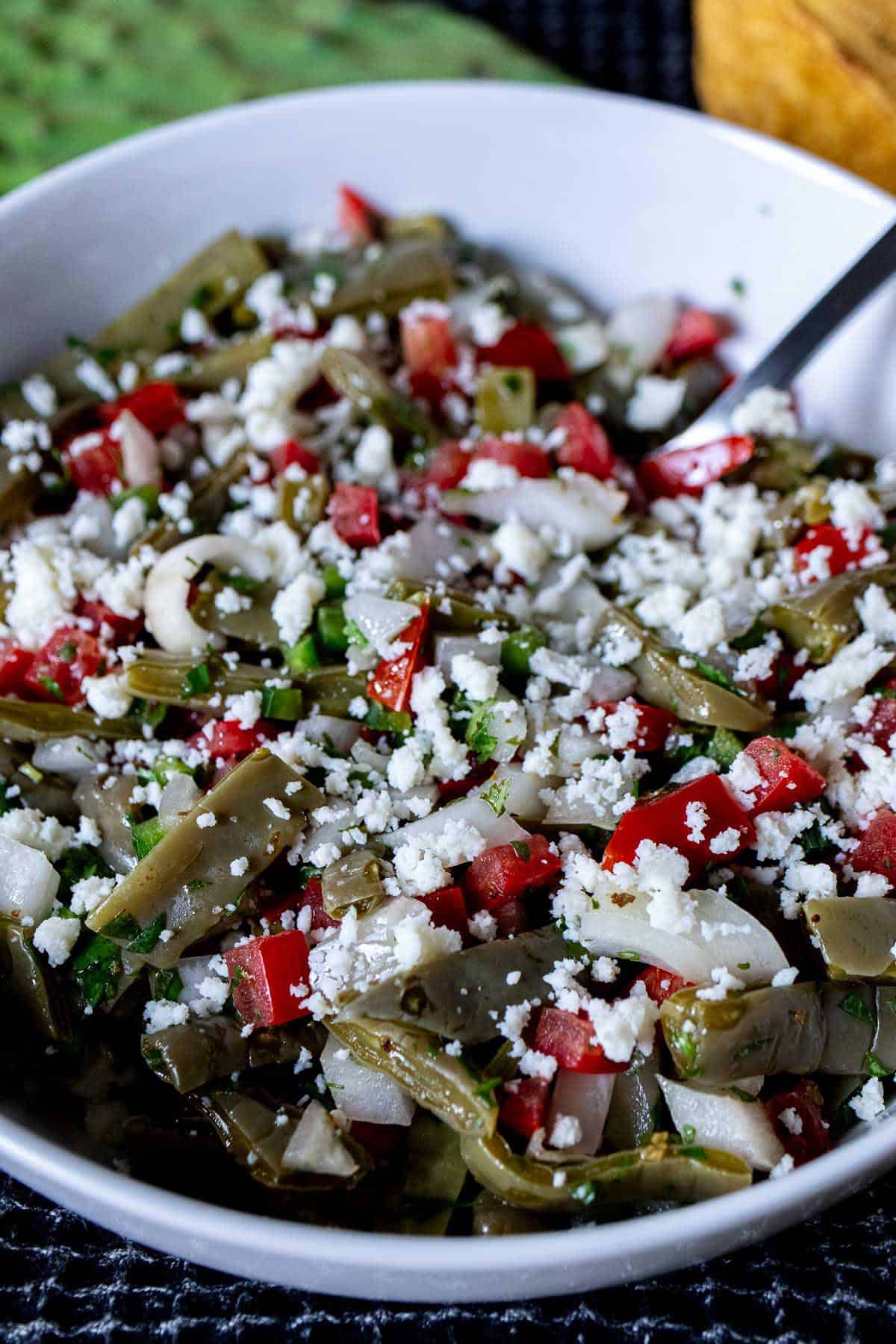
🔪 How to Make Ensalada de Nopales
Fresh, whole cactus pads will need to be prepped first by removing the spines and cutting them down. If using fresh, but cleaned and cut pads, skip to the next section. Finally, if you are using jarred nopalitos, simply drain and rinse them thoroughly with cold water and you can skip ahead to putting the salad together.
How to Prepare Fresh Nopales
If you’re using fresh, whole paddles, you will need to remove the spines and cut the pads into strips or cubes. To remove them carefully, grip the bottom of the cactus pad with tongs, a thick kitchen towel, or wear gloves (actual work gloves, not vinyl ones).
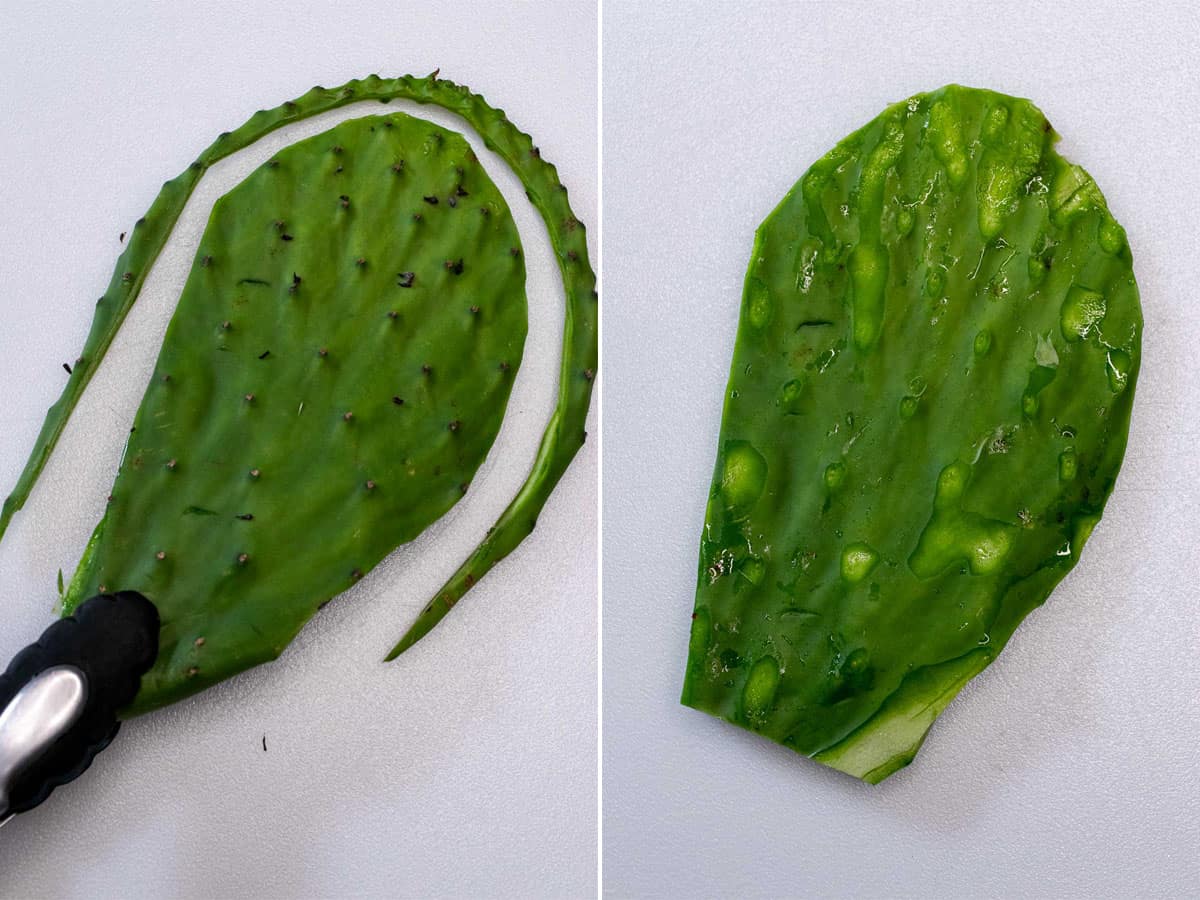
While holding the bottom of the cactus pad, run a sharp knife around the outer edge of the paddle to remove those spines. Now run the knife along the flat side of the pad at a slight angle to remove the surface spines. Try to remove as little extra skin and flesh as possible. Flip the pad over and repeat the process until all spines are removed.
While still gripping the bottom of the paddle, rinse under cold water to remove the cut spines and any other debris. Finally, cut off the bottom of the paddle where you were gripping it to remove the last spines.
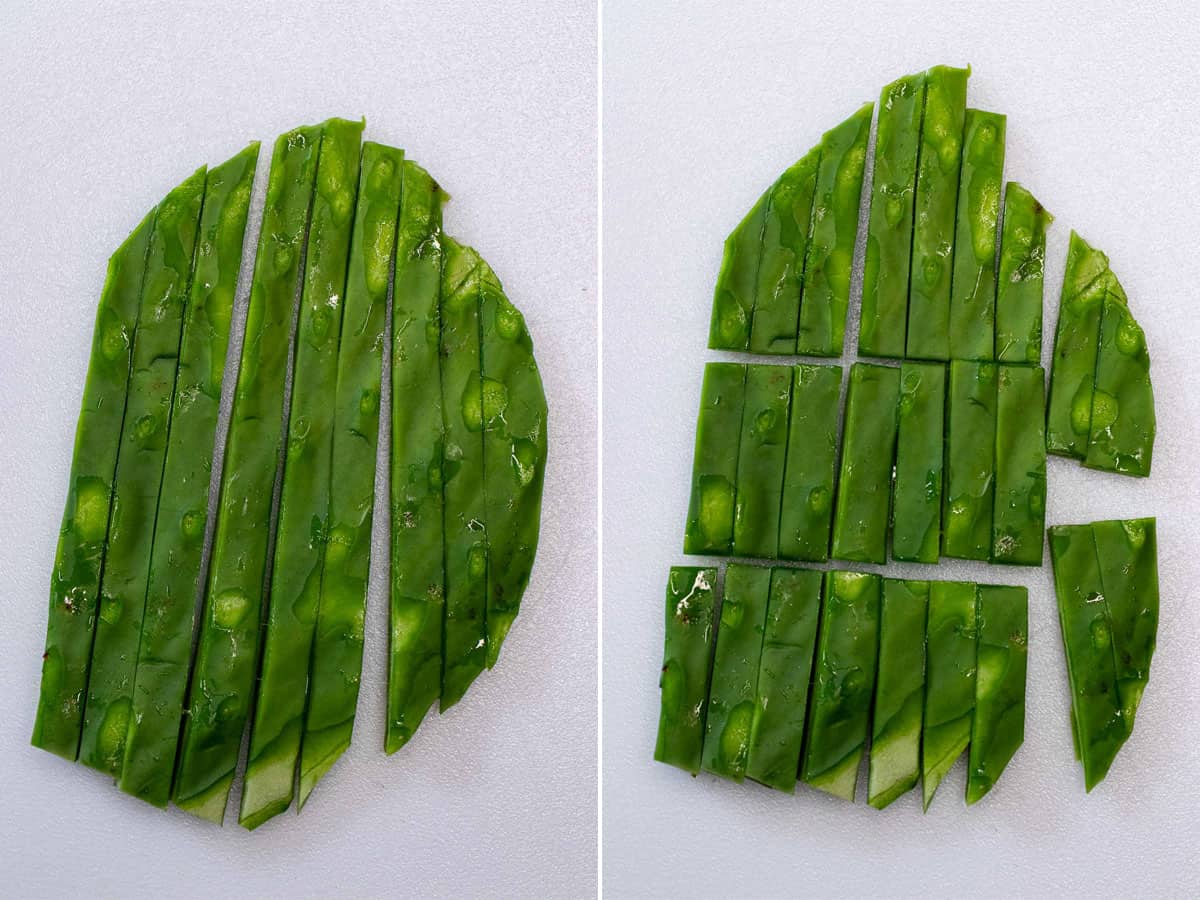
From here you can make long cuts across the length of the cactus. Now slice in the opposite direction to make either strips or cubes. Nopales are typically cut into strips roughly a half-inch wide by 1-2-inches long or cut into ½-1-inch-wide cubes.
While cutting through the cactus you may notice a clear, sticky substance leaking out. This is normal and you’ll try to cook out as much as possible.
Cook the Prepared Cactus
Once the nopales are cleaned and cut, you can bring a pot of water to boil on the stove. Depending on the size of the pot, you’ll need around 6-8 cups of water. It should be enough to cover the cactus by 2-3-inches.
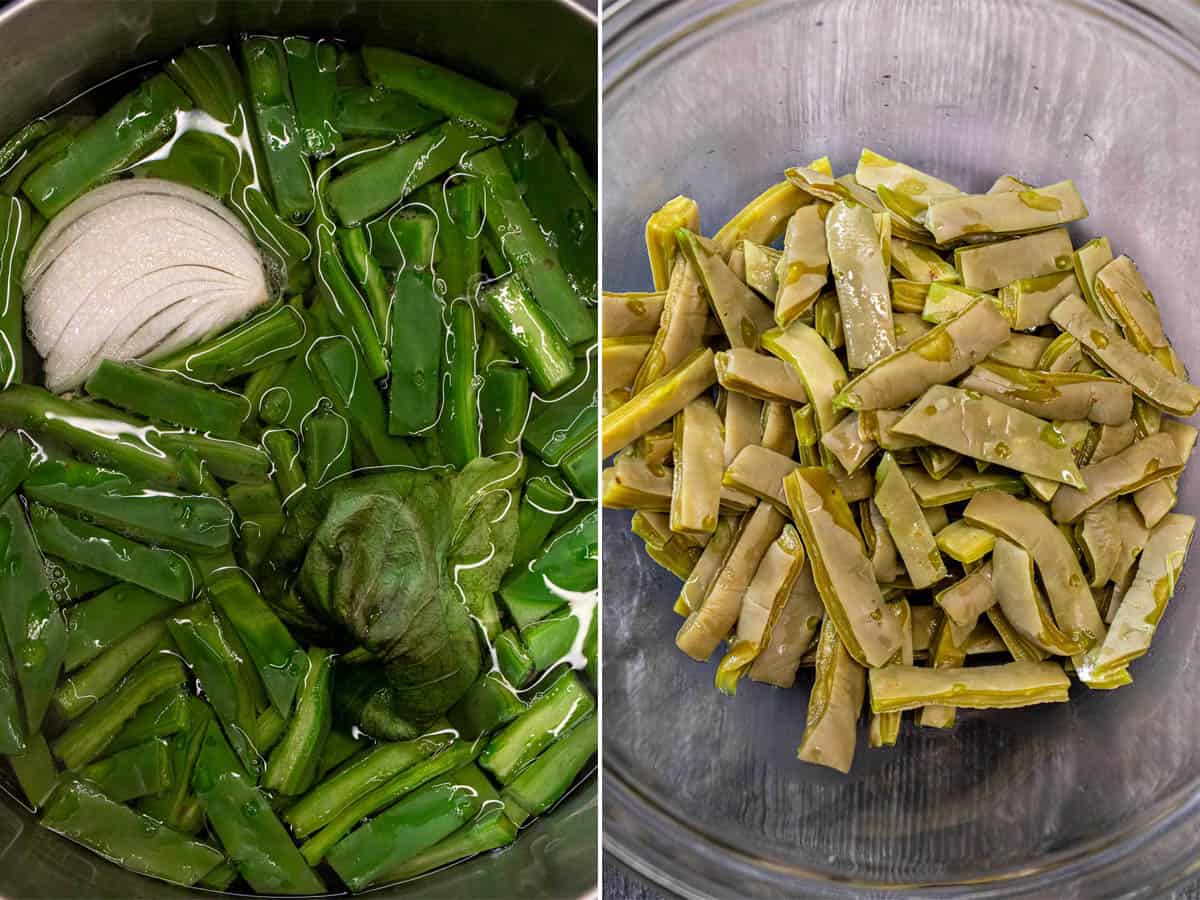
When the water starts boiling, add the nopales, salt, onion, garlic, and a tomatillo husk if using. Lower the heat and simmer for about 8-10 minutes. The nopales should go from bright green to an olive-green color and become tender, but still crisp.
While cooking, the cactus will release more of the sticky gel (baba) which can cause a foam to form. Keep an eye on this so that it doesn’t foam up and over the top of the pot. The tomatillo husk is there to help keep this from being an issue.
Once cooked, discard the onion, garlic, and husk and drain the nopales through a colander. Rinse under cold running water. This will help remove any remaining baba and cool the cooked cactus. Leave in the colander to drain and cool before adding to the salad.
Prepare the Salad
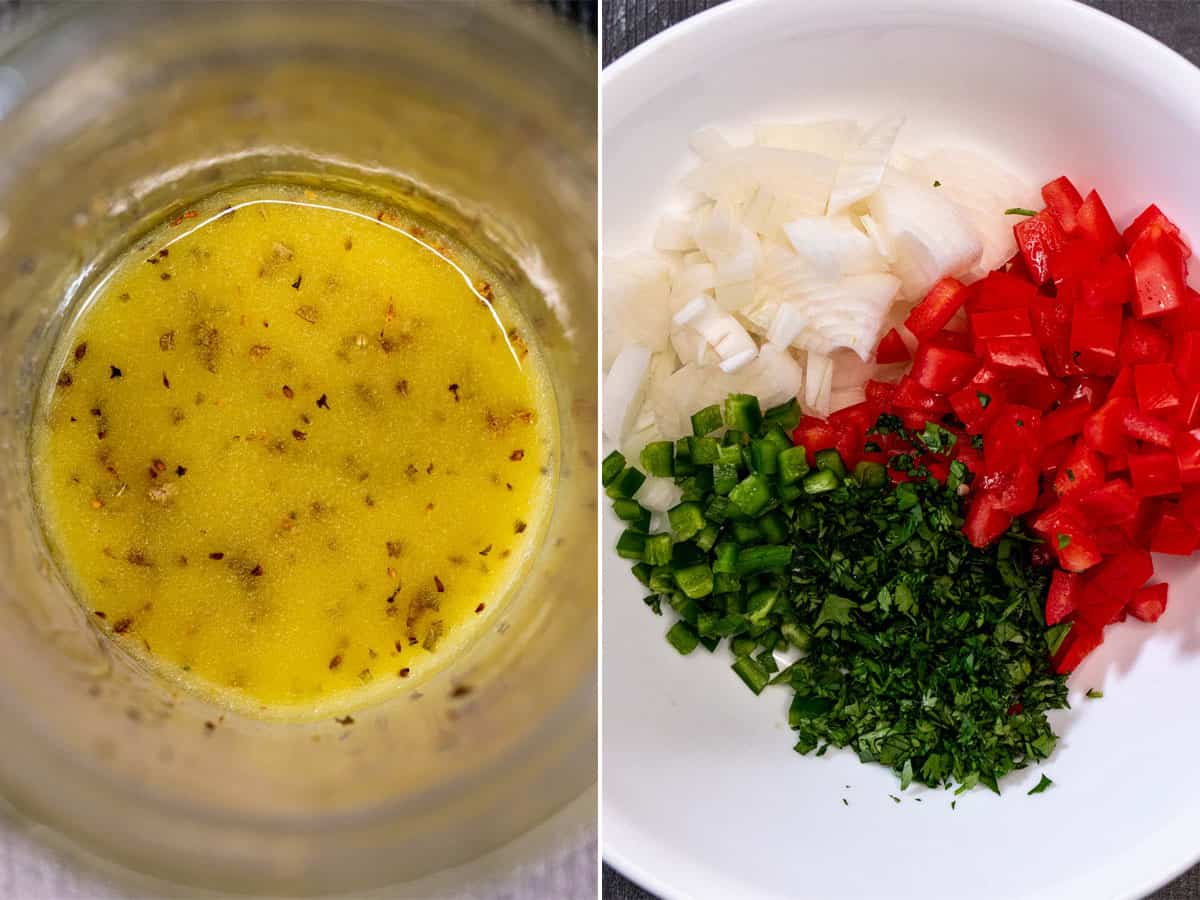
In a small jar, add the olive oil, lime juice, Mexican oregano, and salt. Shake vigorously for a few seconds and set aside. Alternatively, add the ingredients to a bowl and whisk thoroughly.
Dice the remaining half onion, 2-3 Roma tomatoes, jalapeno (or serrano), and finely chop the cilantro. Add all of them to a large serving bowl and combine them with a wooden spoon.
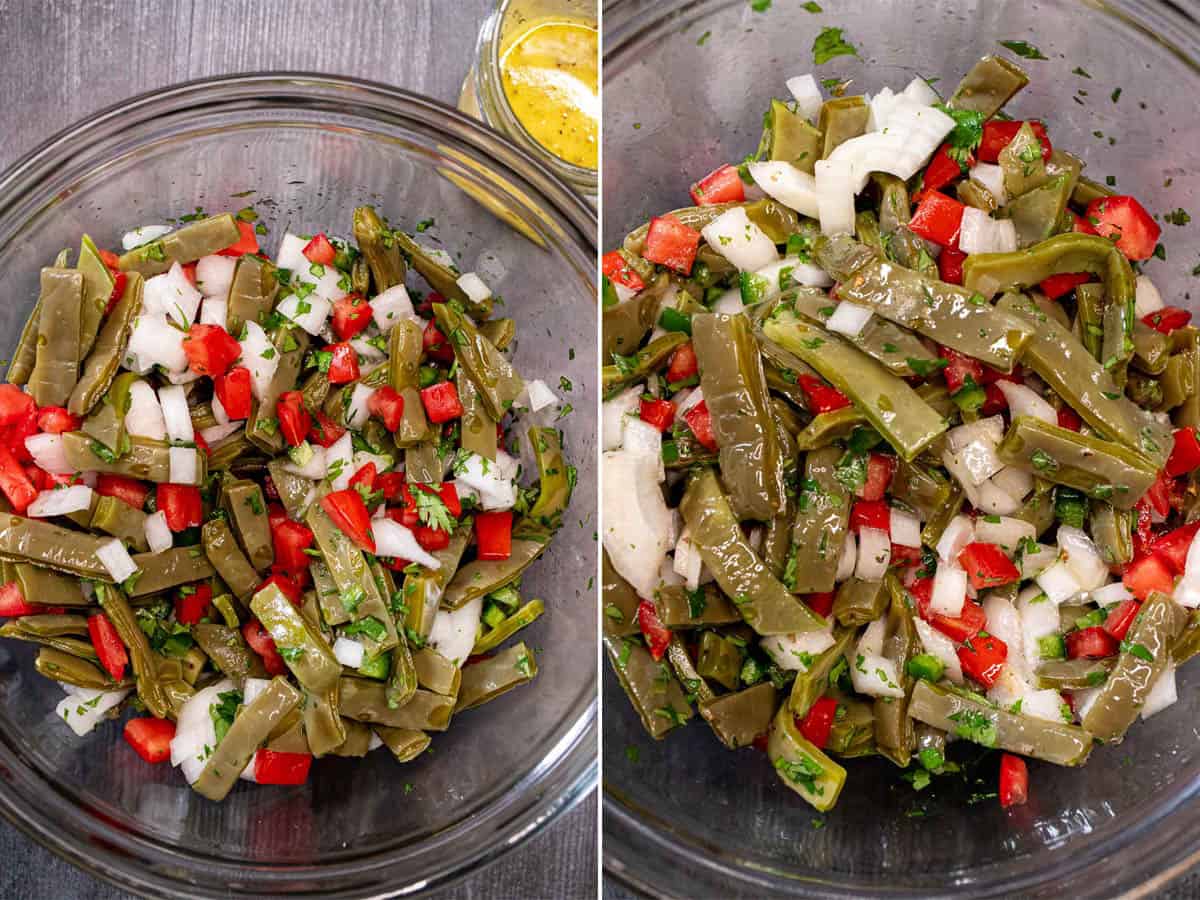
Now add the cooled nopales and the dressing and stir together again.
If using queso panela, you can slice into roughly 1-inch cubes and toss with the salad. For queso fresco, I like to crumble it over the salad once it has been mixed or let people do that themselves for their own portions.
You can serve immediately, but it’s even better if you refrigerate for at least 1-2 hours so the flavors can marinade together.
Serve with various garnishes on the side such as sliced radishes or avocados, tortilla chips, or tostadas.
📖 Cactus Salad Variations
While boiling the cactus is a common way to cook them, here are some other variations. Most of these variations will require fresh nopales.
Raw Nopales Salad – You can eat this salad without cooking fresh nopales as well, but you will want to prepare them first. Once cleaned and cut, place them in a bowl and toss with about 2 tablespoons of kosher salt. Give them a gentle squeeze and continue to mix and fold with the salt for a minute or two. The sticky gel will keep extruding as you do this.
Allow salted nopales to sit for about 20 minutes. They will continue to release more water and baba during this time. Now transfer them to a colander or fine mesh strainer. Rinse thoroughly under cold running water to remove the excess salt and gel. Now make the salad as normal.
Grilled Nopales Salad – To make a grilled version, you will clean the paddles as normal, then make a few slices down the length of the cactus pad so it looks like an open hand with fingers. Grill the paddles over a med-high heat for 4-6 minutes on each side, until you no longer see the baba leaking out. Finish chopping into bite-sized pieces and use it in the salad as usual. Optionally, you can also grill some of the other vegetables to give them a fire-roasted flavor.
Pan Seared Cactus – Another option is to sauté the cleaned and cut cactus pads. In a pan, add about 2 tablespoons of oil and heat over medium to med-high heat. Add the nopales and a pinch of salt and cook, stirring frequently. The baba liquid will leech out a lot at first and then cook off as you sauté the cactus pieces. This will take around 10-12 minutes to cook. Optionally, you can also cook the diced onion and jalapeno with the cactus for a cooked version of the salad.
Quick & Easy Salad – For a super quick version you can make in 5 minutes, use jarred nopalitos and prepared pico de gallo. Simply drain and rinse the jarred cacti and toss with the pico de gallo, then toss again with the dressing. Use a little less lime juice since the pico probably has some already in it. The flavor won’t be as good as freshly made, but if you’re in a pinch for time, this is a simple version.
🥗 What to Serve with Cactus Salad
Mexican cactus salad is popularly served with cheeses like queso panela, queso fresco, or queso añejo. It can be served with tortilla chips to scoop the salad with or served on top of a tostado. Some people will even mix in some salsa verde.
Because of its bright and acidic flavor, cactus salad pairs really well with rich and fatty dishes, especially hearty meats like carne asada or pork or chicken dishes. When served at a carne asada or Mexican barbeque, it can be served as a side dish alongside other dishes like charro beans, boraccho beans, queso fundido, elote, and esquitas.
If you’re looking to keep things vegetarian, the salad also pairs well with refried beans and Mexican rice or cilantro rice.
❄️ How to Store Cactus & Cactus Salad
If you’re not making this immediately, you can store uncut and uncooked cactus paddles in the refrigerator for about a week. Place in a container and layer the pads with paper towels to prevent too much moisture from forming.
You can also prepare and cook the nopalitos ahead of time to save a lot of time the day you wish to make and serve the salad. Cook the cacti as normal and wait for it to cool completely. Now transfer to an airtight container and refrigerate for 4-5 days. I recommend lining the top and bottom of the container with paper towels and giving them a rinse before using.
As for the cactus salad itself, you can store leftovers in an airtight container in the fridge for 2-3 days. Ensalada de nopales is best eaten the day it is made, and the longer it is stored, the more of the sticky gel slowly releases. While it is still fairly good within 24-48 hours of having been made, each day longer begins to deteriorate the texture of the vegetables.
📋 Recipe
Cactus Salad
Ingredients
The Nopales:
- 4-5 medium nopales paddles, about 2-3 cups when cut, see note
- ½ medium white onion
- 1 clove garlic, smashed
- 1 teaspoon kosher salt
- 1 tomatillo husk, optional, see note
The Cactus Salad:
- ½ medium white onion, diced
- 2-3 medium Roma tomatoes, diced
- 1 jalapeño, small diced, or 1 serrano
- ¼ cup finely chopped fresh cilantro
Lime Dressing:
- ¼ cup extra-virgin olive oil
- 2 tablespoons fresh lime juice
- ½ teaspoon Mexican oregano
- ½ teaspoon kosher salt, add more to taste
For Serving and Topping:
- Queso panela
- Queso fresco
- Sliced radishes
- Sliced avocado
- Tortilla chips
- Tostados
Directions
- Fresh, whole cactus pads will need to be prepped first by removing the spines and cutting them down. If using fresh, but cleaned and cut pads, skip to the next section. Finally, if you are using jarred nopalitos, simply drain and rinse them thoroughly with cold water and you can skip ahead to putting the salad together.
How to Prepare Fresh Nopales:
- If you’re using fresh, whole paddles, you will need to remove the spines and cut the pads into strips or cubes. To remove them carefully, grip the bottom of the cactus pad with tongs, a thick kitchen towel, or wear gloves (actual work gloves, not vinyl ones).
- While holding the bottom of the cactus pad, run a sharp knife around the outer edge of the paddle to remove those spines. Now run the knife along the flat side of the pad at a slight angle to remove the surface spines. Try to remove as little extra skin and flesh as possible. Flip the pad over and repeat the process until all spines are removed.
- While still gripping the bottom of the paddle, rinse under cold water to remove the cut spines and any other debris. Finally, cut off the bottom of the paddle where you were gripping it to remove the last spines.
- From here you can make long cuts across the length of the cactus. Now slice in the opposite direction to make either strips or cubes. Nopales are typically cut into strips roughly a half-inch wide by 1-2-inches long or cut into ½-1-inch-wide cubes.
- While cutting through the cactus you may notice a clear, sticky substance leaking out. This is normal and you’ll try to cook out as much as possible.
Cook the Prepared Cactus:
- Once the nopales are cleaned and cut, you can bring a pot of water to boil on the stove. Depending on the size of the pot, you’ll need around 6-8 cups of water. It should be enough to cover the cactus by 2-3-inches.
- When the water starts boiling, add the 2 cups of nopales, ½ a white onion, 1 smashed clove garlic, 1 teaspoon kosher salt, and a tomatillo husk if using. Lower the heat and simmer for about 8-10 minutes. The nopales should go from bright green to an olive-green color and become tender, but still crisp.
- While cooking, the cactus will release more of the sticky gel (baba) which can cause a foam to form. Keep an eye on this so that it doesn’t foam up and over the top of the pot. The tomatillo husk is there to help keep this from being an issue.
- Once cooked, discard the onion, garlic, and husk and drain the nopales through a colander. Rinse under cold running water. This will help remove any remaining baba and cool the cooked cactus. Leave in the colander to drain and cool before adding to the salad.
Prepare the Salad:
- In a small jar, add ¼ cup extra-virgin olive oil, 2 tablespoons fresh lime juice, ½ teaspoon Mexican oregano, and ½ teaspoon kosher salt. Shake vigorously for a few seconds and set aside. Alternatively, add the ingredients to a bowl and whisk thoroughly.
- Dice the remaining half of the white onion, 2-3 Roma tomatoes, 1 jalapeno (or serrano), and finely chop ¼ cup of fresh cilantro. Add all of them to a large serving bowl and combine them with a wooden spoon.
- Now add the cooled nopales and the dressing and stir together again.
- If using queso panela, you can slice into roughly 1-inch cubes and toss with the salad. For queso fresco, I like to crumble it over the salad once it has been mixed or let people do that themselves for their own portions.
- You can serve immediately, but it’s even better if you refrigerate for at least 1-2 hours so the flavors can marinade together.
- Serve with various garnishes on the side such as sliced radishes or avocados, tortilla chips, or tostadas.


Comments
No Comments