

A traditional carne asada steak is tender and juicy and incredibly flavorful from its fresh ingredient marinade. Enjoyed on its own, or as a protein in tacos, burritos, quesadillas and other dishes, this grilled beef recipe is a keeper.
Carne asada is an amazing Mexican dish and can be made in so many ways. While the traditional cooking method is on a charcoal grill, the marinade itself can be very simple or made with a ton of ingredients. I like to keep it somewhere in between but lean towards more ingredients that set this dish apart from other steaks.
While the steak itself is the star of the show, I find the marinade to be the real hero that props up the star. Full of typical Mexican ingredients and seasoning (other than tomatoes), the citrus juices add a surprisingly good and strong flavor that comes through in the beef.
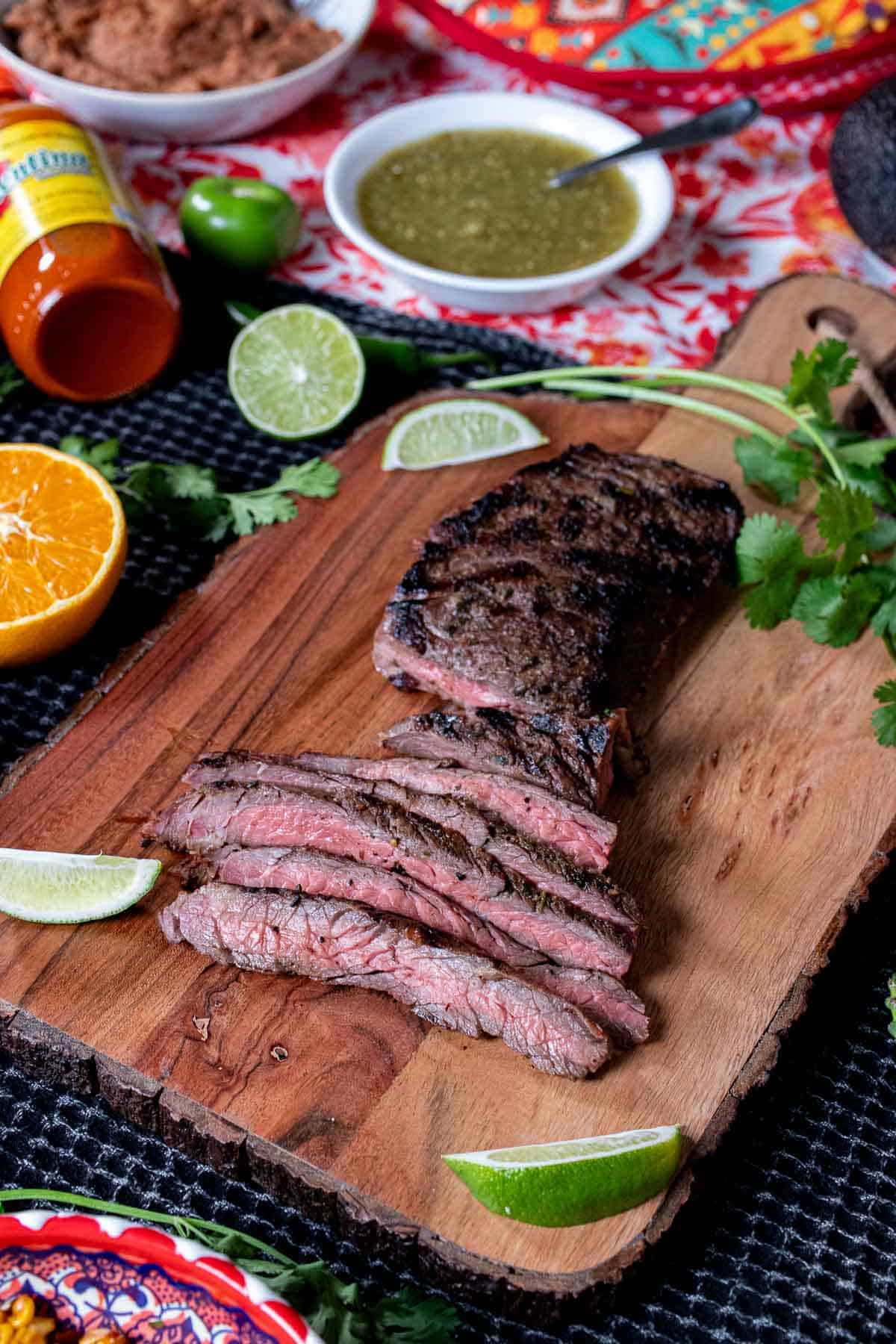
As mentioned, carne asada can be enjoyed on its own as a steak with a few sides like refried beans and Mexican rice, or as a component in other dishes like a simple taco or burrito. At a big cookout, you’ll see it eaten in every way imaginable as side dishes and toppings are passed all around.
Jump to:
🥘 Carne Asada Ingredients
Other than the steak choice, the ingredients shown for carne asada are for the marinade. Further down I’ll mention other ingredients that are typical accompaniments for serving the steak.
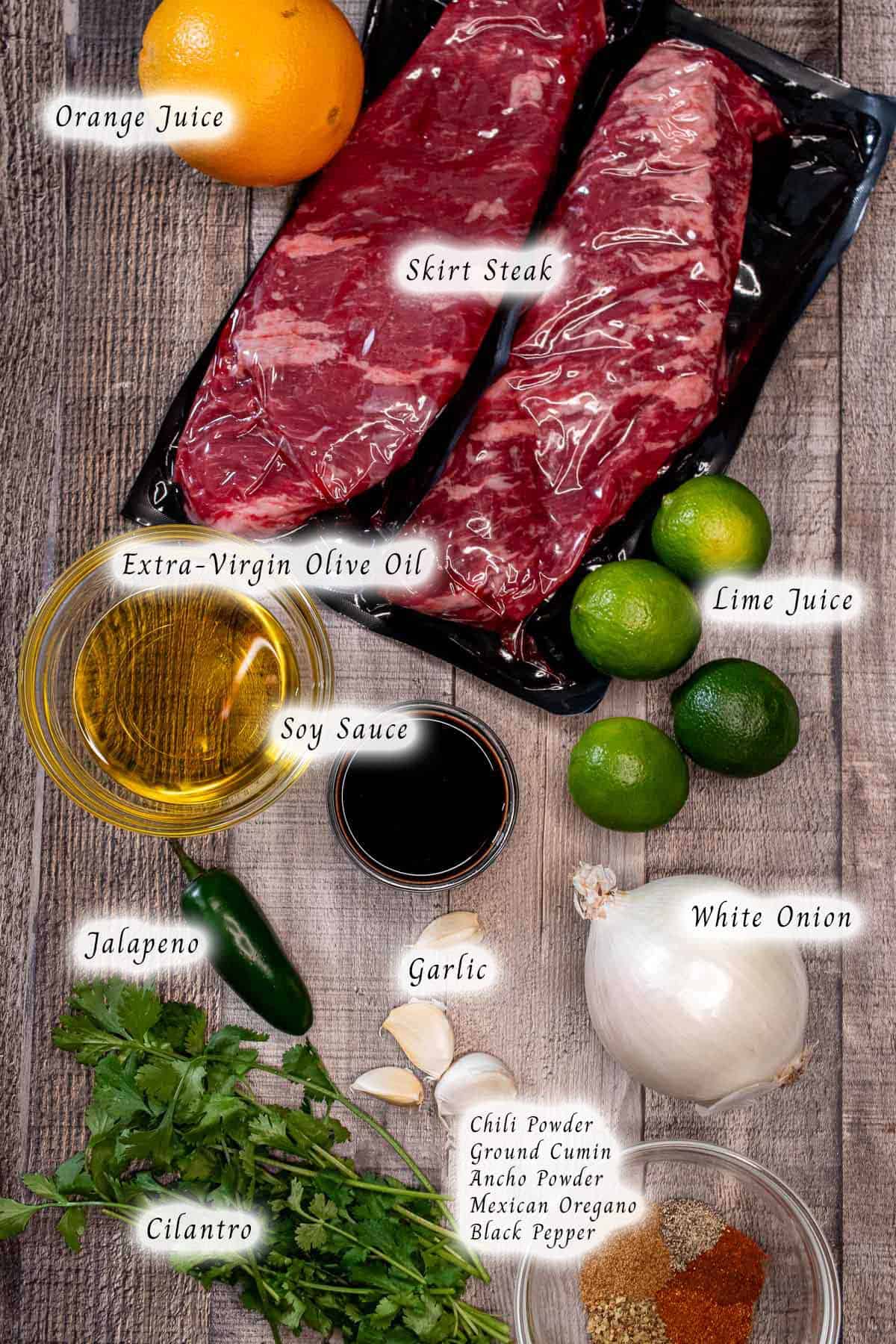
Steak – For this recipe, look for about 2-pounds of skirt steak or flank steak. Skirt tends to run thin and a little fatty but takes better to a marinade than most beef cuts. Flank runs a bit leaner and thicker but is also a good choice and only takes a few minutes longer to cook. Look further down to see more on steak choices and options.
Citrus – In older recipes, sour orange was a common ingredient. Depending on where you live, though, these can be difficult to find. Most modern recipes are made with a mix of fresh orange juice and fresh lime juice to give a sweet and sour flavor.
Oil – Olive oil is common, but you can use pretty much any oil here. This helps keep the steak moist while also acting as a binder for the other ingredients to stick to the meat.
Soy Sauce – Not exactly a Mexican cuisine ingredient, many modern carne asada recipes use it for good reason. Soy sauce adds a nice salty component that adds umami and actually reinforces the “beefy” flavor of the beef cut you use. This is optional.
Vegetables & Herbs – I like to use some minced garlic, jalapeno, and cilantro in the marinade here. Before adding the marinade, I also slice a white onion and scatter it across the steaks.
Seasoning – There a lot of good seasoning options here, but I tend to keep things a bit simple with a mix of chili powder, cumin, ancho powder, Mexican oregano, and a bit of black pepper. Other good options include chipotle powder, and smoked paprika.
🥩 What is Carne Asada?
While hard to pinpoint an origin, and having no real standard “authentic” recipe, it is a dish most often found in Northern Mexican states where cattle ranching is a large part of the economy and history. Grilling meat outdoors in this area is almost a cultural heritage. Not that it can’t be found across most of the country.
While the term carne asada literally means “grilled meat”, the phrase is also used to describe the Mexican cookout or barbeque that usually takes place around the cooking of the meat. These carne asadas can include many friends, family, and neighbors enjoying good drinks, great company, and awesome food.
Growing up in Louisiana, this reminds me of the big crawfish/shrimp boils we would have outdoors with lots of neighbors bringing over food. Or when I lived in the Chicago suburbs on a cul-de-sac and the neighbors would have 3-4 grills going with tons of food in the summer for a neighborhood cookout.
So, while carne asada is the name of a steak dish that is marinated and charred on a grill, the term also invokes a sense of family and neighborhood pride. A barbeque where everyone comes together to have a great day.
🔪 How to Make Carne Asada
While a charcoal grill is traditional, I made this recipe indoors on a griddle plate on the stove to be more accessible. Check below for other options.
Make the Marinade
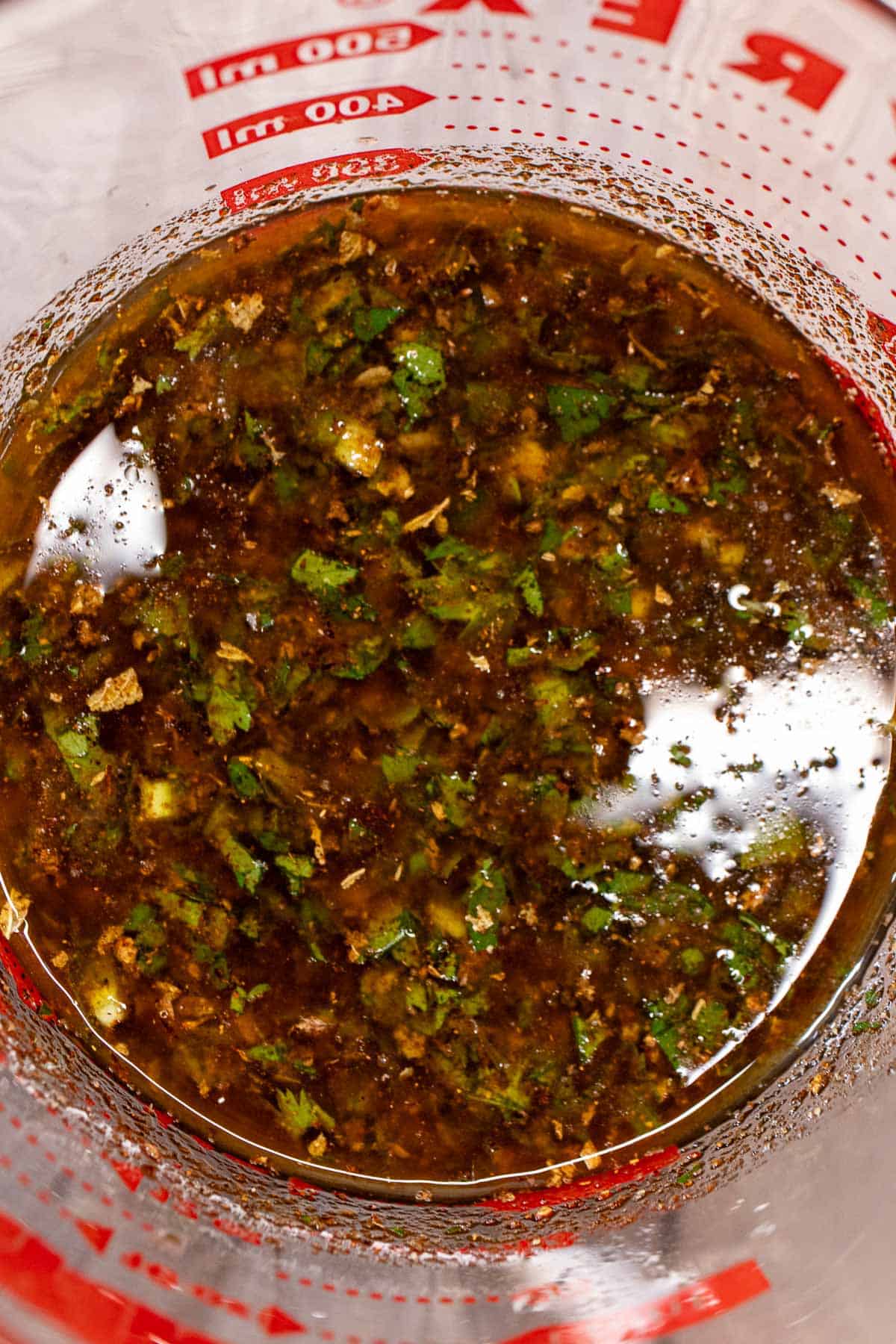
In a large bowl, add the freshly squeezed orange and lime juice, olive oil, soy sauce (if using), and the seasonings. Now mince some garlic, a jalapeno, and some fresh cilantro. Add this to the marinade and whisk together.
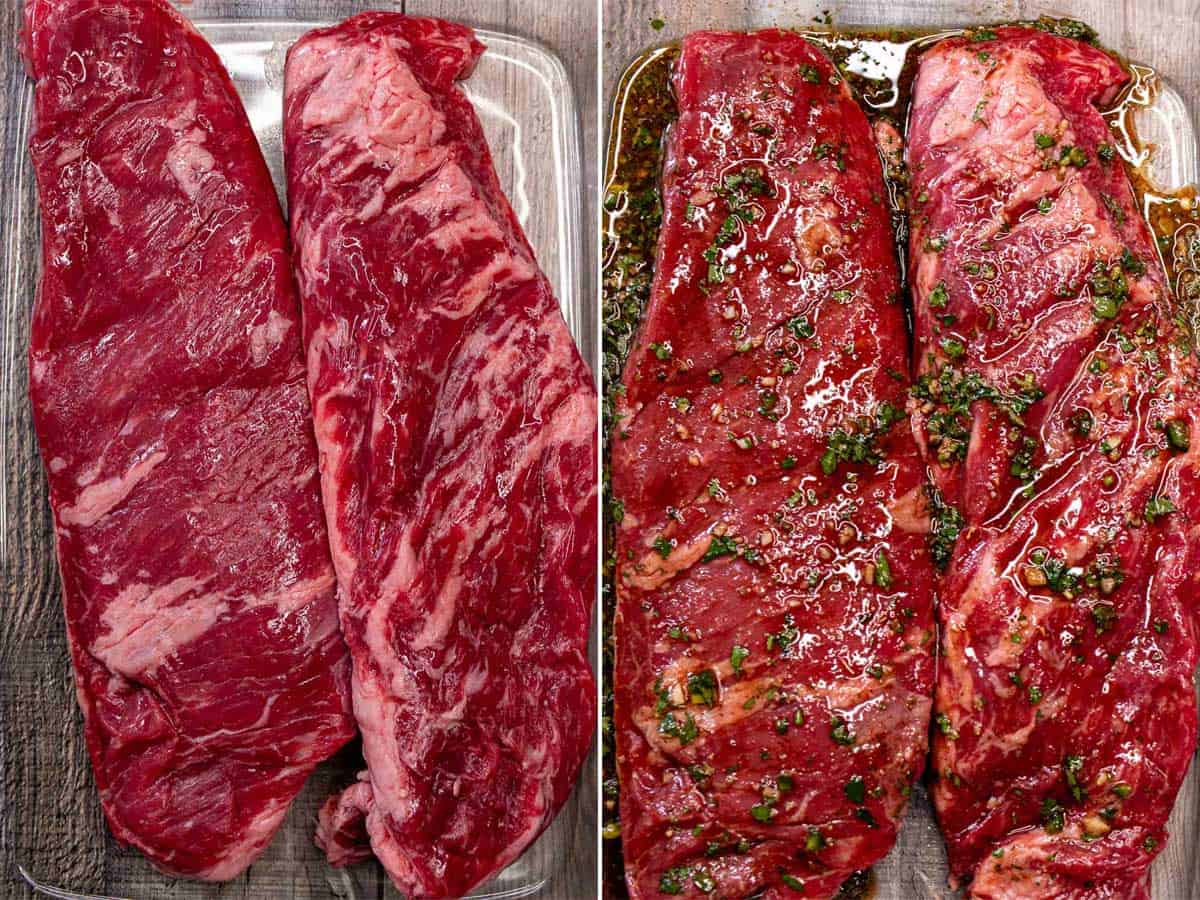
Next, I pour about half the marinade into a glass baking dish or any other casserole dish you have that’s large enough to fit the steaks. Add the steaks and run them through the marinade, then flip and repeat on the other side.
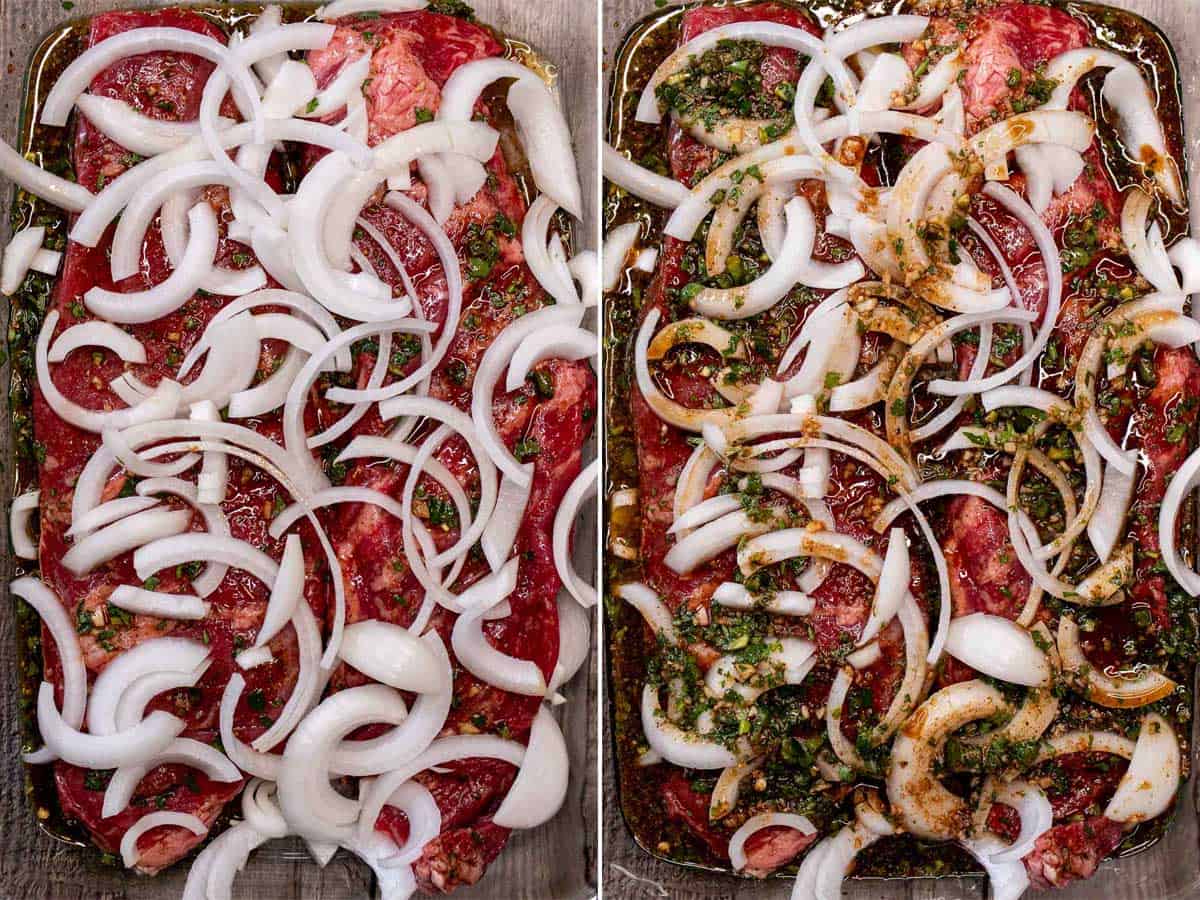
If using, I cut a white onion into slices and arrange them over the top of the steaks. Finally, pour the rest of the marinade over the top and give the dish a shake, then cover.
Marinate in the refrigerator for 4-6 hours, giving it an occasional shake. You can do as little as 1 hour, but I wouldn’t go more than 8 hours. Because of the acidity in the marinade, letting it go for too long will cause the acid to begin breaking down the muscle fibers in the steak. This will give the cooked steak a mealy, or gummy texture.
Alternatively, you can add the steaks and marinade to a large plastic bag. Avoid marinating in a metal dish, however.
Cook the Steak
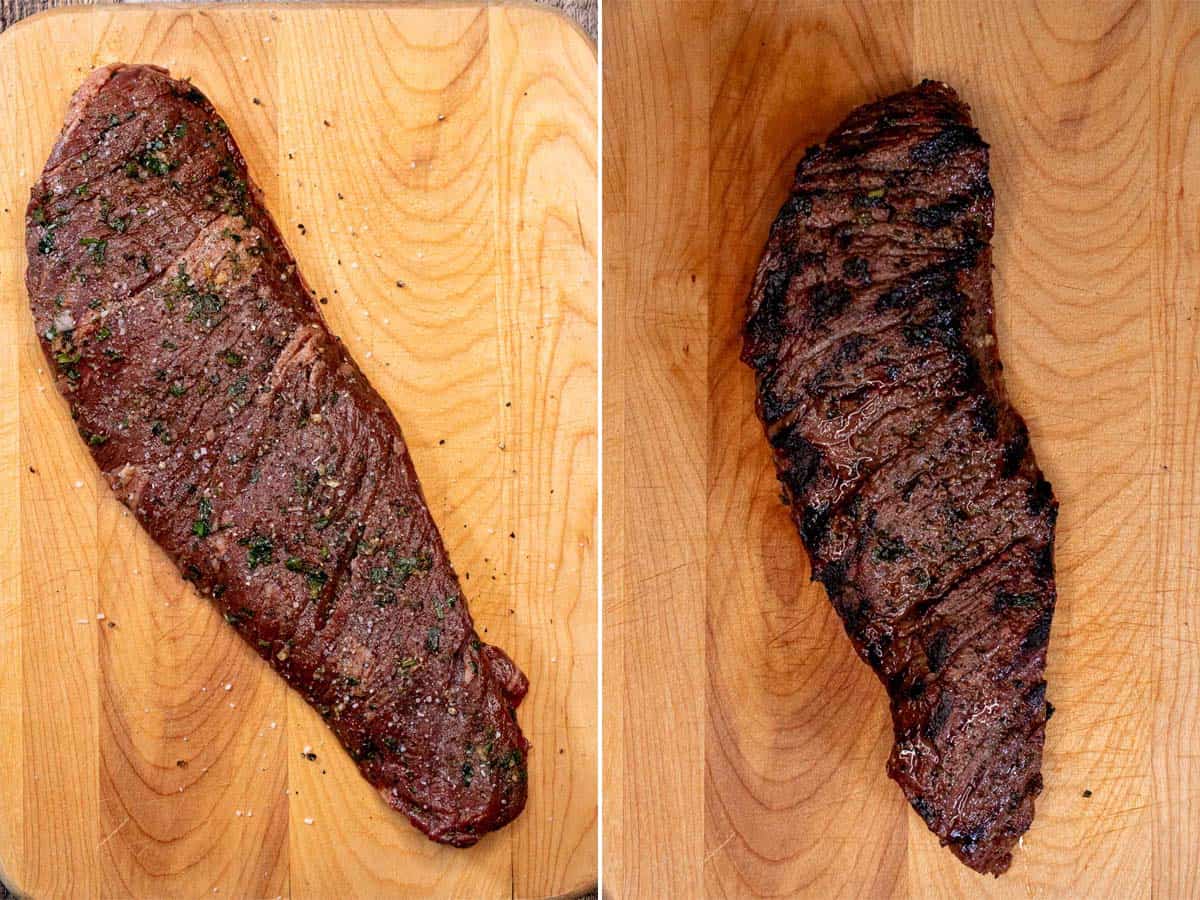
Remove the steaks from the marinade and pat the outside of the meat dry with a paper towel. Add salt and freshly cracked black pepper to both sides and set aside.
Heat a griddle pan (one with ridges like grill marks) over medium-high heat on your stove. Once hot, add some oil and rub down the grates. Be sure that your exhaust fan over your stove is turned on and place the steaks on the hot griddle pan.
Let the steaks sear and cook without flipping for 5-6 minutes. Then, flip once, and continue cooking on the other side for 5-6 minutes longer. Check around the second 5-minute mark for temperature. I like to pull the steaks when they reach about 130-135°F / 54-57°C for somewhere between medium rare and medium.
Your choice of steak and its thickness will dictate how long it needs to cook for your desired temperature. Flank steak will take roughly 7-8 minutes on each side when cooked the same way, but other cuts can vary. I personally find medium-rare to medium a good option for skirt, while rare and well done can be a bit too chewy. Use an instant-read digital thermometer to get it perfect for your preference.
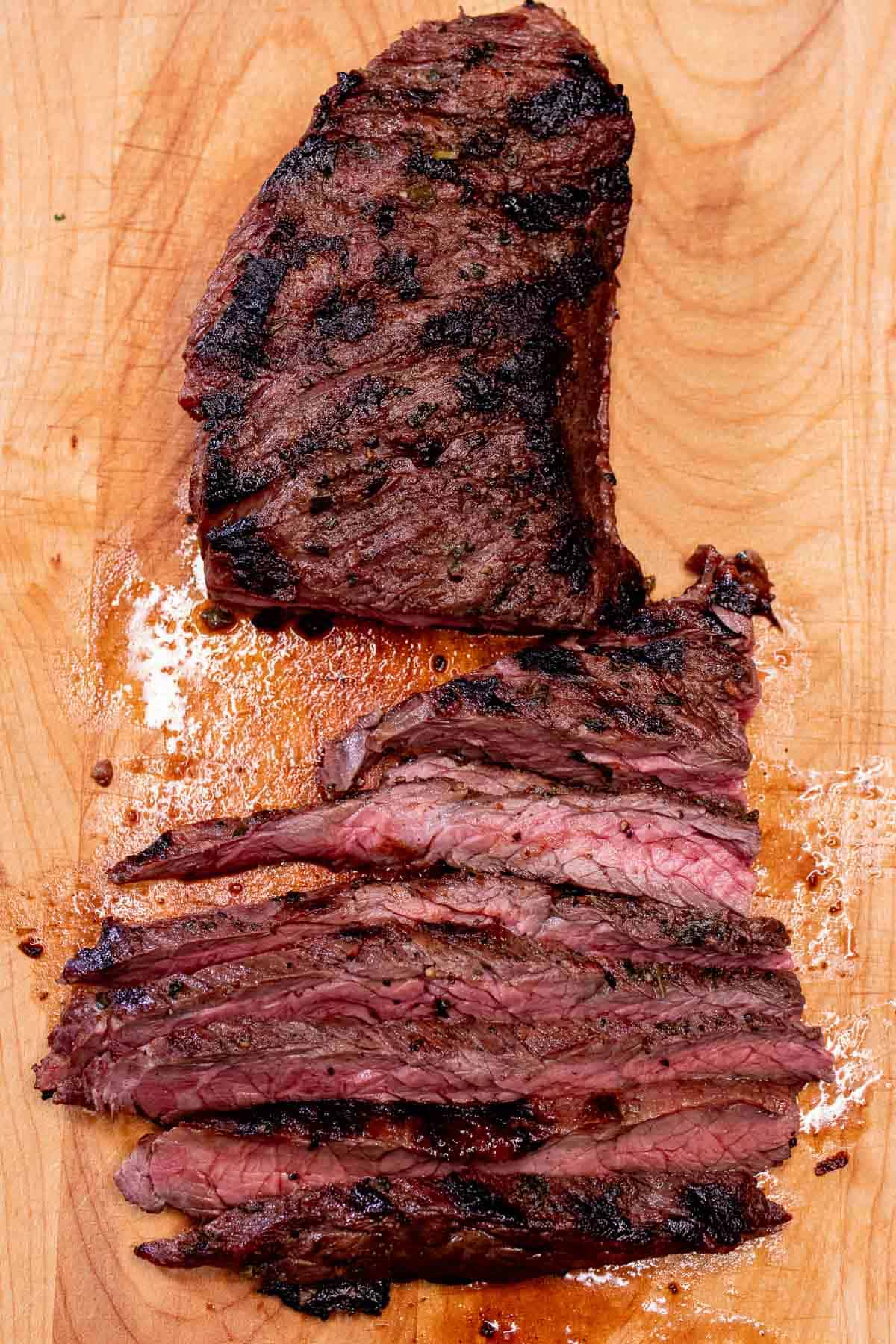
Let the steak rest for about 10 minutes before slicing. Be sure to slice the steak thinly across the grain. This keeps the texture tender instead of chewy. For smaller, bite-sized pieces, you cut the skirt steak with the grain into 2-3 smaller portions, then slice across the grain for serving.
🐄 What is the Best Steak for Carne Asada?
The best cut of beef for carne asada is usually outside skirt steak (arrachera). The next most common cut used is flank steak (falda de res) or inside skirt steak/flap meat. While I love skirt steak for this recipe, depending on where you live, it can be a bit more difficult to find. Because there are only two skirt cuts on cattle, many restaurants and wholesalers tend to buy them up before they can reach the consumer market.
If you can’t find skirt, flank is a good option as well, and a little more available. Inside skirt is typically sold as flap meat or “fajita” meat which may or may not be pre-marinated. While this cut is fine, it is typically sold pre-sliced a lot of times, which I don’t like for carne asada. If you’re planning to cook it straight for tacos or other items where you’ll cut it into small strips or pieces, then this could be fine.
Baring skirt steak or flank options, almost any quick-cooking steak can be used here. NY strip, ribeye, T-bone/porterhouse, and sirloin (aguayón) can all work, so use what you find on sale if needed. Avoid cuts with lots of intramuscular fibers that need long cooking methods like chuck, London broil, eye of round, etc.
📖 Carne Asada Variations
While I absolutely love the way this steak comes out as written, here are a few options on cooking methods and marinating.
No Marinade – The simplest form of carne asada basically rubs a garlic clove against the raw steaks, adds salt and pepper, and squeezes lime over it as it cooks. You get a bit of the citrus flavor, but I prefer the marinade flavor.
Over Marinading – As mentioned, you shouldn’t marinade the steaks for more than 8 hours or the acidity will begin to denature the proteins in the muscle fibers. This basically starts to “cook” the steak like ceviche. However, sometimes life happens and you realize you won’t be able to cook before the 8-hour period is over (this actually happened to me before). Remove the steaks before hitting 8-hours and transfer to a zipper loc bag without the marinade. Try to cook within 24-48-hours, but this will help keep the texture of the steak from becoming mushy.
Using a Grill – Prepare a charcoal grill for direct heat cooking (or a gas grill if that’s what you have). Cook the steaks at a temperature around 4-500°F for slightly less time than the indoor method. A skirt steak is roughly 4-5 minutes per side for medium-rare to medium. As usual, use an instant-read digital thermometer for your preferred temperature, but try to flip only once.
Broiler Method – Another indoor method is to cook the steak under the broiler. Personally, this method always makes me leery as it can overly char the outside before the inside is done, but it can work. Set the broiler to high and place the steaks on a baking sheet about 3-4-inches below the heating element/flame. Cook for about 4-5 minutes on each side and allow it to rest for at least 10 minutes, as usual.
🥗 What to Serve with Carne Asada
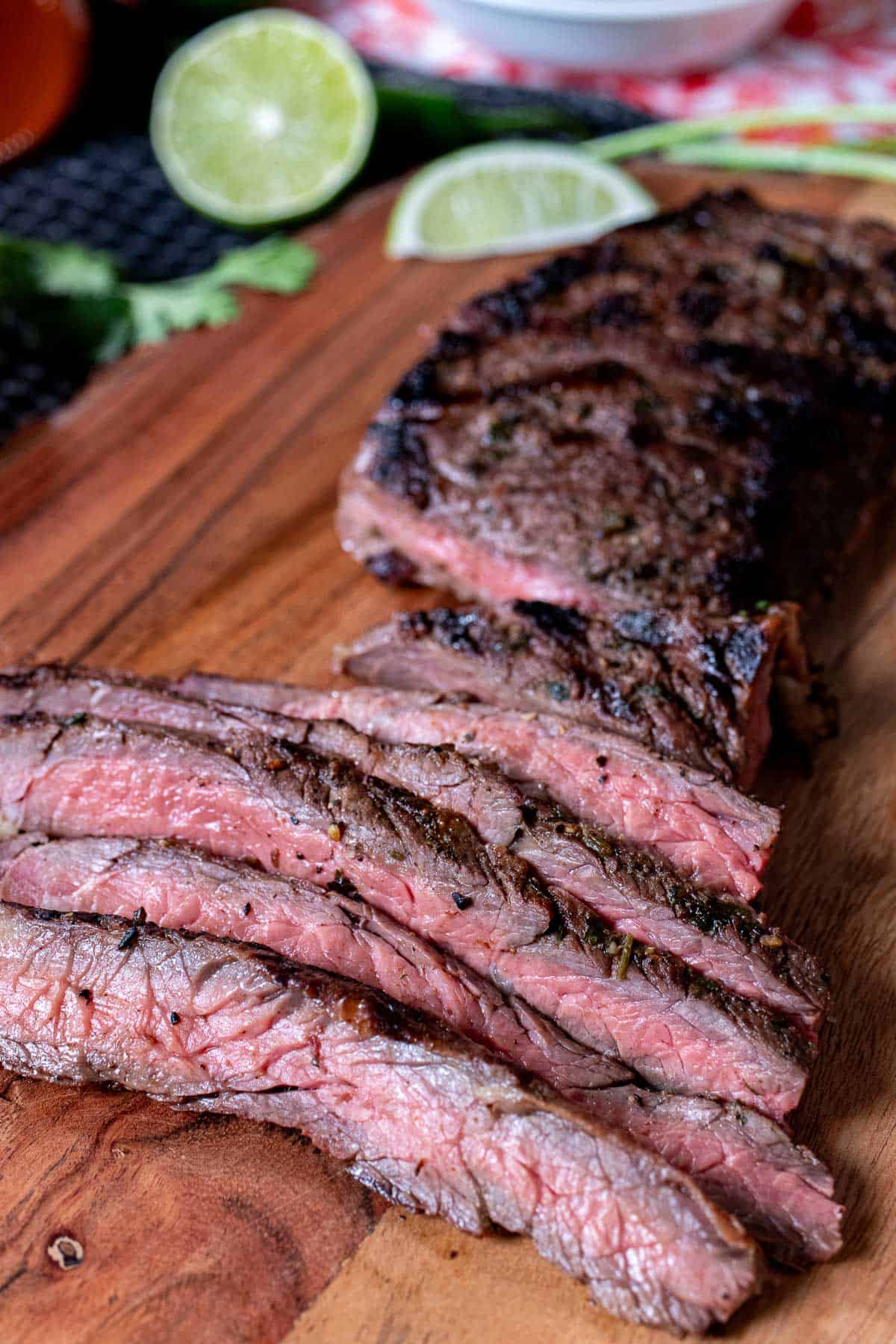
There is an almost endless way to serve carne asada, and no one way is correct or better than another. They are all absolutely delicious. I enjoy eating it as a small steak served with things like warm corn or flour tortillas, sliced avocado, diced onion and tomato, cilantro, and salsas like salsa verde, salsa rojo, or pico de gallo.
Common sides found served at a carne asada cookout/barbeque include things like refried beans, frijoles charros, barracho beans, Mexican rice, lime and cilantro rice, elote or esquitas, queso fundido, ensalada de nopales, or simply grilled vegetables like green onion, spring onion bulbs, potatoes, etc.
Other popular options are to cut the steak into strips or bite-sized pieces to make carne asada tacos, carne asada burritos, carne asada nachos, carne asada fries, or make them into quesadillas with the steak and queso Oaxaca.
🍽 Recommended Equipment
I won’t recommend any grills here, so that’s a personal choice and options vary so widely. Here are a couple of items I do recommend, however, especially if you make this Mexican dish indoors.
Glass Baking Dish – A large enough cut of skirt or flank steak will be a bit large for a gallon zipper-loc bag, so you will need something larger. Personally, I like to marinade in a 13x9 glass baking dish. Whatever you choose to use, avoid metal baking dishes as it can interact poorly with the acidic marinade.
Cast Iron Griddle – When cooking indoors on the stovetop, I recommend this Lodge cast iron griddle. Cast iron retains heat well and uniformly. This will sear and cook at high heat almost like a hot charcoal grill.
Instant-Read Thermometer – For any cooking where temperature is important, I cannot recommend enough this instant-read digital thermometer from ThermoWorks. A bit of an investment, but it literally gives you accurate readings within 1-2 seconds, and I use it from everything from meat to bread to check oil temperature.
❄️ How to Store Grilled Meat
As mentioned, I recommend marinating the meat for 4-6 hours, or 1 hour at the minimum and 8 hours at the max. If something comes up, remove the steaks before the 8-hour mark and you can place them in a plastic bag for up to 1-3 days. This is only a good option as a backup plan, however, and should NOT be used a way to prep ahead of time.
If you have leftovers after cooking, wait for the steaks or cut pieces to cool to room temperature. Store leftovers in an airtight container in the refrigerator for 3-5 days. To reheat, you can microwave leftovers until hot, but I recommend reheating them in a skillet over medium heat or in a 350°F oven until hot.
When you want longer storage, you can also freeze leftovers in an airtight container for up to 3 months. Thaw overnight in the refrigerator and reheat as above.
📋 Recipe
Carne Asada
Ingredients
- 2 pounds skirt or flank steak, see note
- ¼ cup freshly squeezed orange juice
- ⅓ cup freshly squeezed lime juice
- ¼ cup soy sauce, optional
- ⅓ cup extra-virgin olive oil
- 3-4 cloves garlic, minced
- 1 medium jalapeno or serrano, minced
- ½ cup finely chopped fresh cilantro
- 1 teaspoon chili powder
- 1 teaspoon ground cumin
- 1 teaspoon ancho powder, optional
- 1 teaspoon Mexican oregano, see note
- ½ teaspoon ground black pepper
- 1 medium white onion, sliced
- Salt and freshly ground black pepper to taste, for cooking
Directions
- While a charcoal grill is traditional, I made this recipe indoors on a griddle plate on the stove to be more accessible. Check the post above for other options.
Make the Marinade:
- In a large bowl, add ¼ cup freshly squeezed orange, ⅓ cup freshly squeezed lime juice, ¼ cup soy sauce (if using), ⅓ cup extra-virgin olive oil, 1 teaspoon chili powder, 1 teaspoon ground cumin, 1 teaspoon ancho powder, 1 teaspoon Mexican oregano, and ½ teaspoon ground black pepper. Now mince 3-4 cloves of garlic, a jalapeno, and a ½ cup of fresh cilantro. Add this to the marinade and whisk together.
- Next, I pour about half the marinade into a glass baking dish or any other casserole dish you have that’s large enough to fit the steaks. Add 2-pounds of skirt or flank steak and run them through the marinade, then flip and repeat on the other side.
- If using, I cut 1 medium white onion into slices and arrange them over the top of the steaks. Finally, pour the rest of the marinade over the top and give the dish a shake, then cover.
- Marinate in the refrigerator for 4-6 hours, giving it an occasional shake. You can do as little as 1 hour, but I wouldn’t go more than 8 hours. Because of the acidity in the marinade, letting it go for too long will cause the acid to begin breaking down the muscle fibers in the steak. This will give the cooked steak a mealy, or gummy texture.
- Alternatively, you can add the steaks and marinade to a large plastic bag. Avoid marinating in a metal dish, however.
Cook the Steak:
- Remove the steaks from the marinade and pat the outside of the meat dry with a paper towel. Add kosher salt and freshly cracked black pepper to both sides and set aside.
- Heat a griddle pan (one with ridges like grill marks) over medium-high heat on your stove. Once hot, add some oil and rub down the grates. Be sure that your exhaust fan over your stove is turned on and place the steaks on the hot griddle pan.
- Let the steaks sear and cook without flipping for 5-6 minutes. Then, flip once, and continue cooking on the other side for 5-6 minutes longer. Check around the second 5-minute mark for temperature. I like to pull the steaks when they reach about 130-135°F / 54-57°C for somewhere between medium rare and medium.
- Your choice of steak and its thickness will dictate how long it needs to cook for your desired temperature. Flank steak will take roughly 7-8 minutes on each side when cooked the same way, but other cuts can vary. I personally find medium-rare to medium a good option for skirt, while rare and well done can be a bit too chewy. Use an instant-read digital thermometer to get it perfect for your preference.
- Let the steak rest for about 10 minutes before slicing. Be sure to slice the steak thinly across the grain. This keeps the texture tender instead of chewy. For smaller, bite-sized pieces, you cut the skirt steak with the grain into 2-3 smaller portions, then slice across the grain for serving.

Comments
No Comments