


This New Mexican pork pozole verde recipe is a flavorful twist on a Mexican classic. Utilizing New Mexican Hatch chiles in place of some of the regular ingredients, this version of pozole brings an earthy, smokey flavor to the traditional pozole verde.
If you’ve never had pozole before, it is a classic Mexican soup or stew typically made with pork, chicken, or beef in a flavorful broth seasoned with fresh or dried chiles and hominy. Normally made in large batches to feed a crowd during a holiday or celebration, pozole is also popular year-round and not complicated to make.
My version of this New Mexican spin on pozole verde uses the popular Hatch green chile to flavor the sauce. Slow cooked pork shoulder becomes fall-apart tender and hominy is added near the end to give the dish an earthy, slightly sweet corn flavor and additional texture. As with all pozole, never skimp on the toppings!
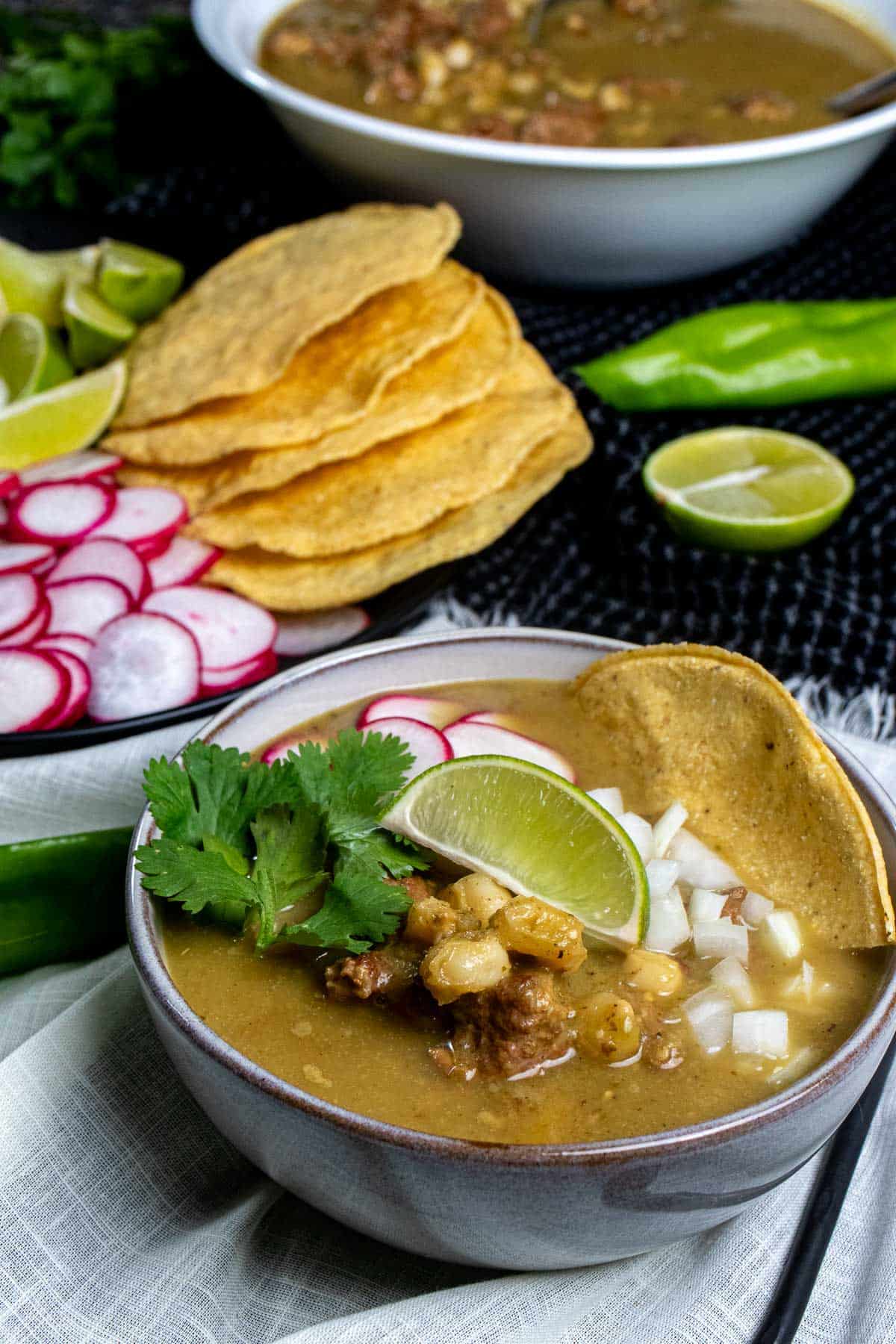
If you love Hatch chiles in other popular Mexican or Tex-Mex variations, consider my Hatch green chile chicken enchiladas or my super popular Hatch chile sausage quiche as well.
Jump to:
🥘 Ingredients for New Mexican Pozole Verde
Pork pozole verde is made up of 3 distinct layers: the broth with the protein, the sauce, and the toppings. Most of the ingredients for pozole can be found in most common grocery stores across the country.
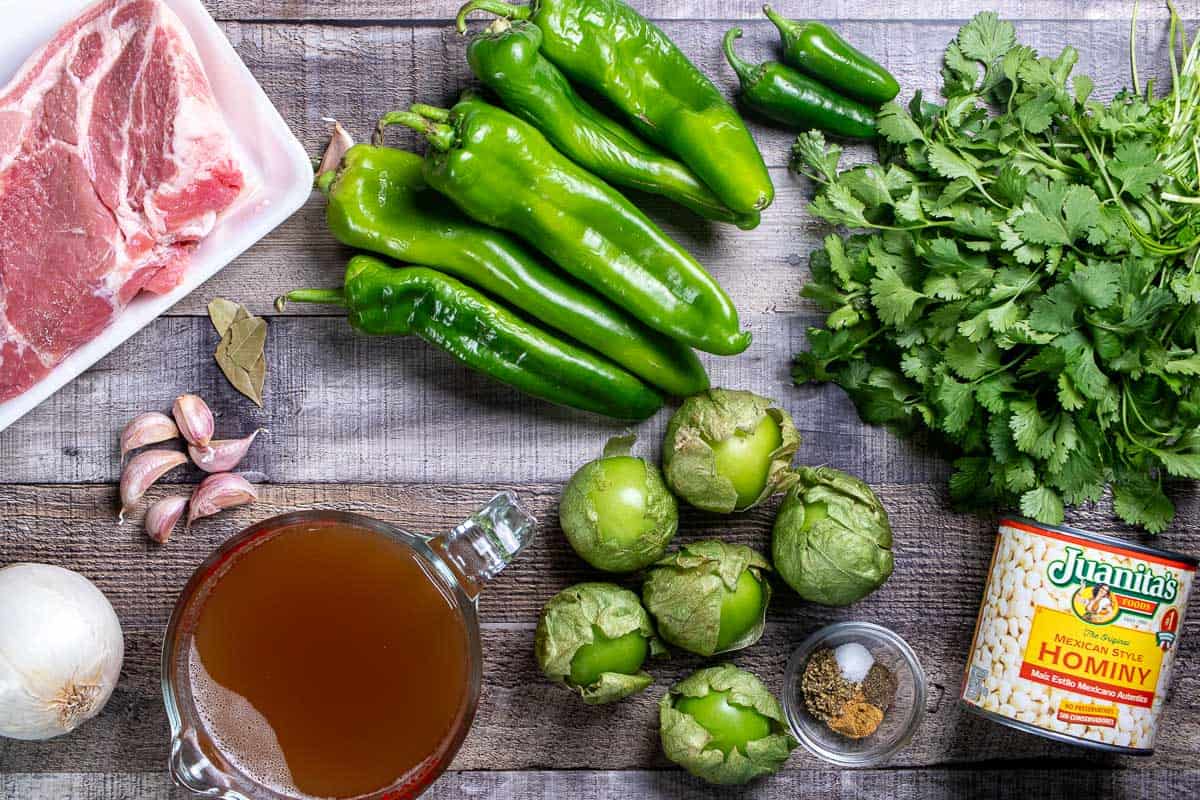
Pozole Broth
Pork – Use a boneless pork shoulder/butt for this recipe. You can use other cuts as well but avoid lean cuts. Tougher, fattier cuts work best for a slow cook like pozole since they’ll become fork-tender, and the fat flavors the dish and keeps the pork from drying out.
Vegetables – I like to use a bit of white onion and garlic in both the broth and the sauce. If you get a large white onion, you can dice half of it and sauté it here. Not a vegetable, but I also add a few bay leaves when you get to the simmering part.
Stock – I use chicken stock here for added flavor, but you could also use water, a mixture, or vegetable broth instead.
Hominy – If you use dry hominy, you’ll want to soak it for a few hours, or overnight. For ease, I suggest two 25oz cans of hominy that only need to be heated through late in the recipe. If you have trouble locating this in the store, it’s typically sold in the Hispanic section.
Salsa Verde (Green Sauce)
Vegetables – For the base of the salsa verde, use a combination of white onion, garlic, Hatch green chiles, tomatillos, jalapeno and/or serrano chiles, and cilantro. I recommend roasting all of these for the best flavor.
Seasoning – I typically keep things simple here with some salt, black pepper, cumin, and Mexican oregano. If you can’t find Mexican oregano (online option), you can use regular oregano instead, but I highly suggest it as it has a different flavor than the more common Mediterranean version. Mexican oregano tends to be stronger with a more citrusy flavor with just a hint of licorice.
Broth – Late into the cooking process, scoop out ½ - 1 cup of the broth that the pork is cooking in. Add just enough to the sauce to help it blend smoothly.
Toppings
You don’t need to use every single item listed here, but these are some of the most common toppings for pozole.
- Sliced radishes
- Diced white or red onion
- Shredded cabbage or lettuce
- Chopped cilantro
- Lime wedges
- Corn or flour tortillas or chips or tostados
- Chicharrónes (fried pork rinds)
- Pepitas (hulled pumpkin seeds)
- Sliced or cubed avocado
- Crumbled Cotija cheese
- Mexican oregano
- Sliced jalapenos
- Hot sauce

🍲 What is Pozole?
Pozole is a Mexican dish that is basically a thickened soup or stew typically containing a protein like pork or chicken and sometimes beef with hominy. The name pozole comes from the Nahuatl language and means frothy, or foamy, or boiled, which refers to how hominy puffs up when cooked.
Pozole, sometimes spelled Posole in the US, especially in the Southwest, typically comes in 3 varieties: pozole blanco, verde, and rojo. The green (verde) version uses fresh green chiles and peppers as well as tomatillos, while the red (rojo) version uses fresh and dried red chilies and usually tomatoes. The blanco or white version omits the sauce made with chilis for a clearer broth to showcase the flavors of just the protein and hominy.
As a dish, pozole can be made in many ways, and every family tends to have their own favorite recipe. While it can be made anytime of the year, it is quite popularly served for New Year’s Eve to celebrate the coming of the new year. Pozole is considered a celebratory or festive dish and is often served on holidays like Christmas or for birthdays.
🔪 How to Make New Mexican Pozole Verde
Make the Broth
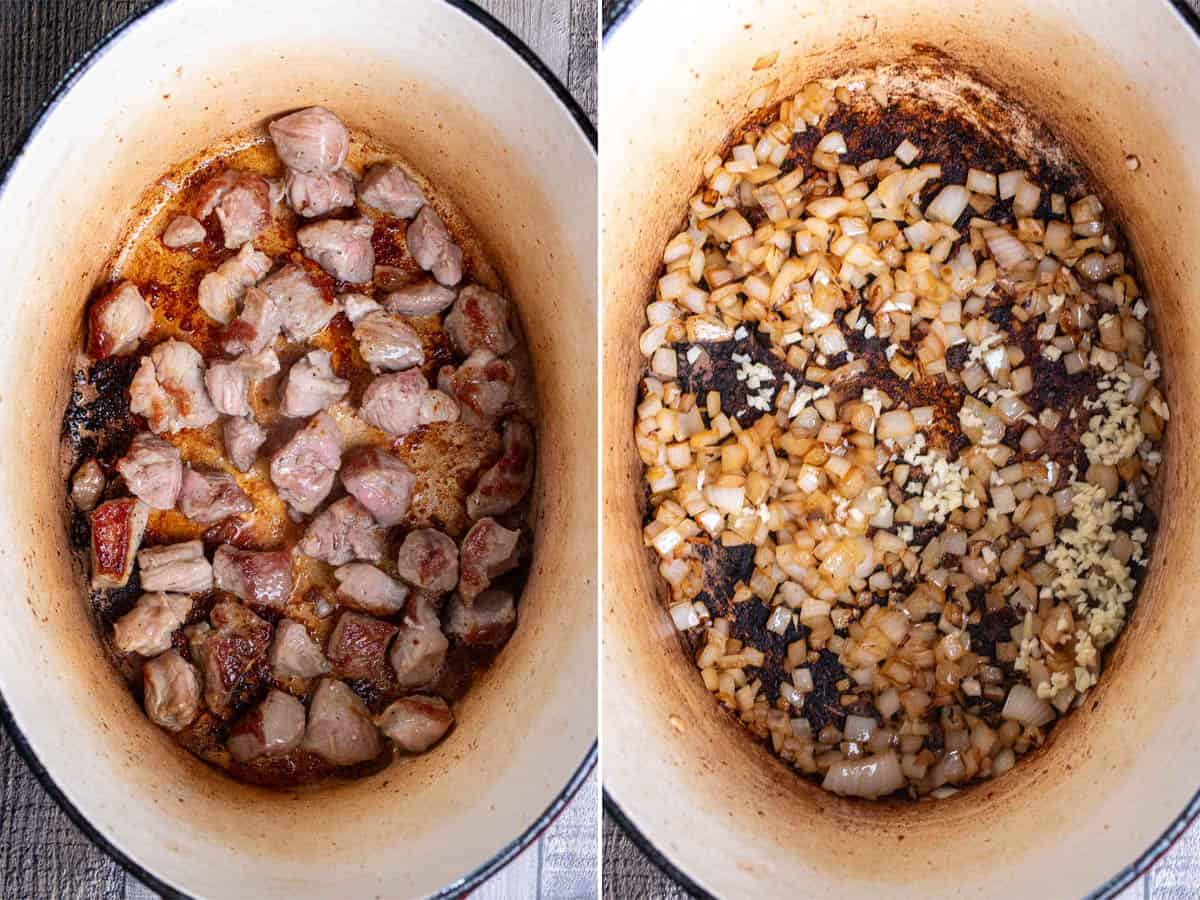
Start by chopping the pork shoulder into small chunks. You can trim some of the fat off if there’s a large fat cap on it. Heat a large pot or Dutch-oven over medium-high heat with a bit of oil in it. Place the pork inside and sear it on all sides in batches so you don’t overcrowd the pot. Once seared, set aside.
If the pot is getting dry, add a bit more oil. Dice half the large white onion and sauté it until softened and slightly translucent, about 6-8 minutes. Mince 2-3 garlic cloves and add them in when the onions are about done, cook until fragrant, about 1 minute longer.
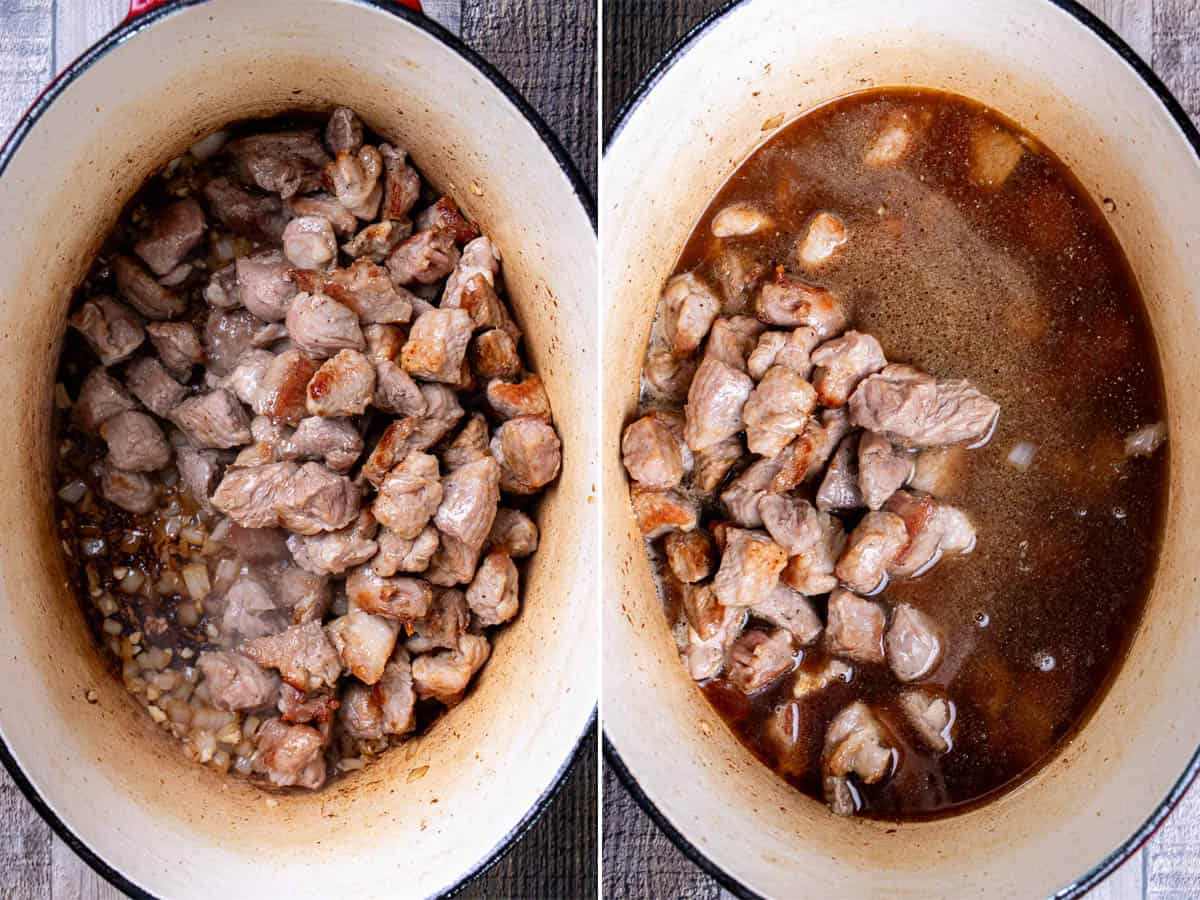
Add the seared pork back into the pot and mix with the onions and garlic. Pour some of the stock into the pot and deglaze the bottom with a wooden spoon. Add the rest of the stock and two bay leaves. Bring to a boil, then lower to a simmer and cook, uncovered for 1 ½ - 2 hours, until the pork is fork-tender.
Once the pork is tender and cooked through, you can either leave it as-is if you cut it into small chunks, or you can remove the pork and roughly shred it. This is down to personal preference.
Make the Salsa Verde
While the pork is simmering, you can start on the green sauce.
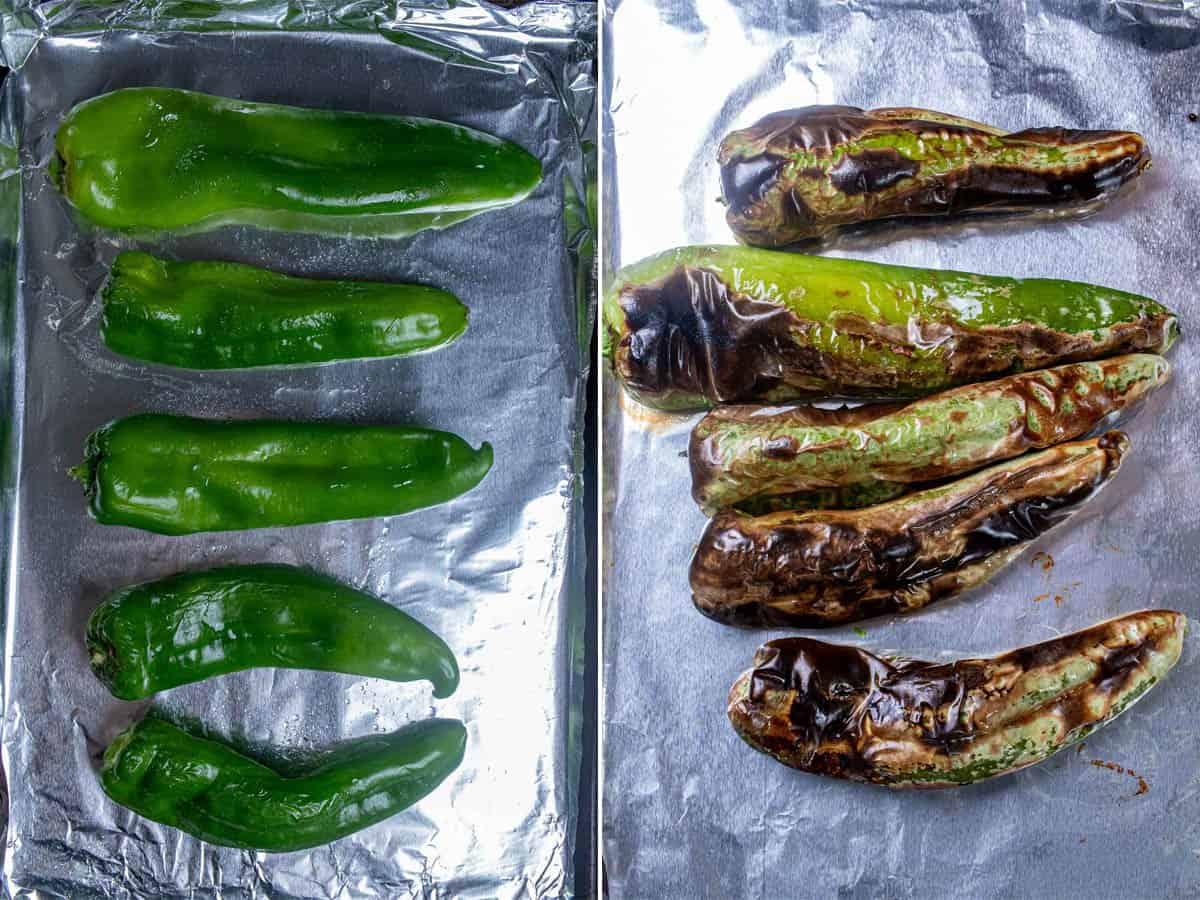
Preheat your oven to broil and move your top rack to the highest position or second highest if the top is too close to the broiler. Drizzle the Hatch chiles with a bit of oil and place them on a foil lined sheet tray. Broil the chiles on all sides until blackened and place them into a plastic storage bag to steam for 10 minutes. Alternatively, you can place them into a large mixing bowl without stacking them and cover the bowl with plastic wrap.
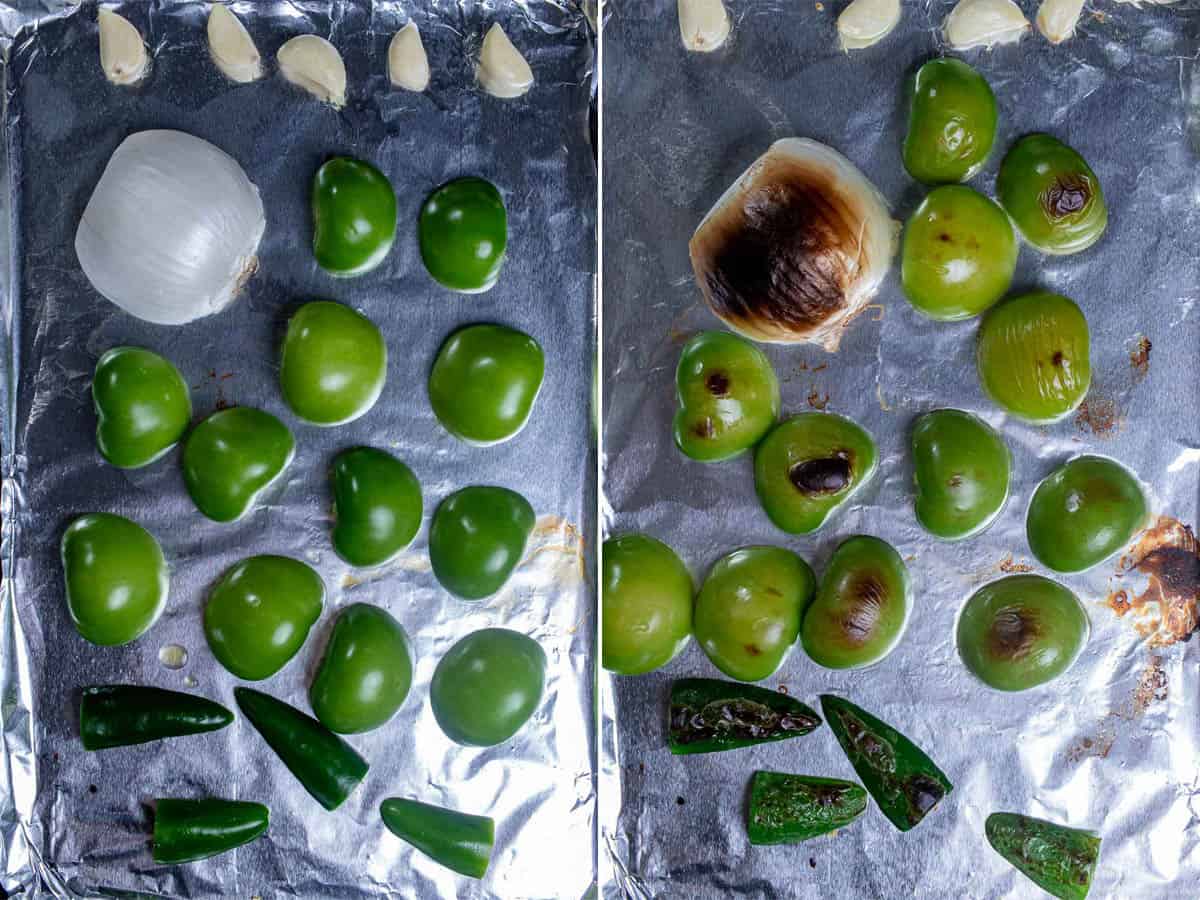
Remove the outer leaves from the tomatillos and rinse them until they are no longer sticky and slice in half. Cut the jalapenos (or serrano) in half and remove the stem and seeds. Place both onto a foil lined sheet tray along with the remaining half of white onion and garlic cloves. Broil 3-5 minutes, until the skin starts to blister and blacken a bit. Remove and set aside.
After the Hatch chiles have steamed for 10 minutes, remove from container and set aside until cool enough to handle. Pull the charred skin off the flesh of the chiles and remove the seeds from the inside of the chile.
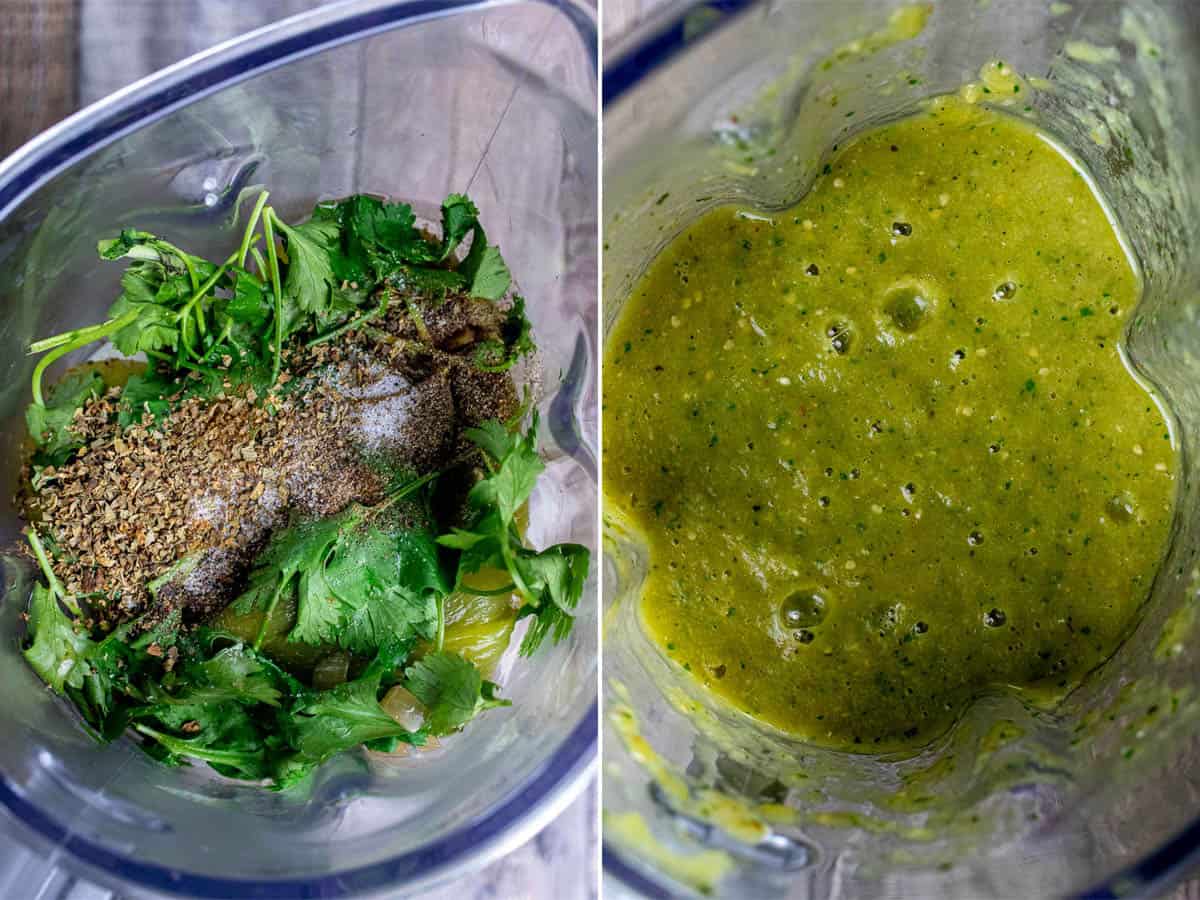
Place all the charred vegetables into a blender along with the cilantro, salt, pepper, cumin, and Mexican oregano. Using a measuring cup, scoop out about 1 cup of the simmering broth. Add about ½ a cup to the blender and puree the vegetables. If it feels a little dry or thick, add the rest of the broth. Blend on high until completely smooth. If your blender can’t quite make the sauce smooth enough, you can filter it through a fine mesh strainer afterwards.
Finish the Pozole
Once the broth and pork have cooked long enough for the pork to be tender, you are ready for the final step. As mentioned before, at this point you can remove the pork and shred it if you wish and add it back into the pot.
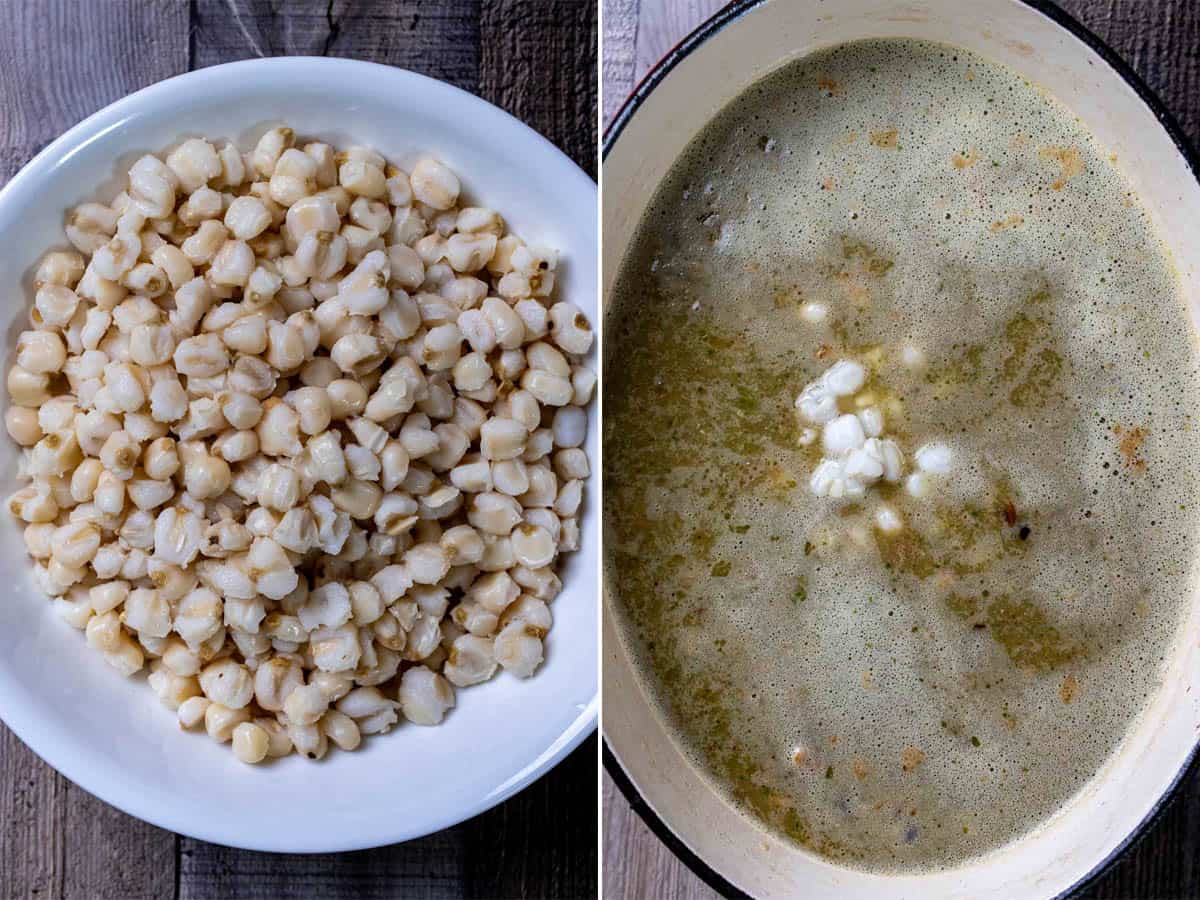
Strain the hominy from the cans and give it a light rinse. Remove the bay leaves from the pot and add in the salsa verde and hominy. Stir everything until combined and continue simmering until the hominy is heated through, about 10 minutes. The hominy should still have a bit of a chewy texture, so don’t overcook it or it will become mushy. Taste the soup and adjust the seasoning if needed.
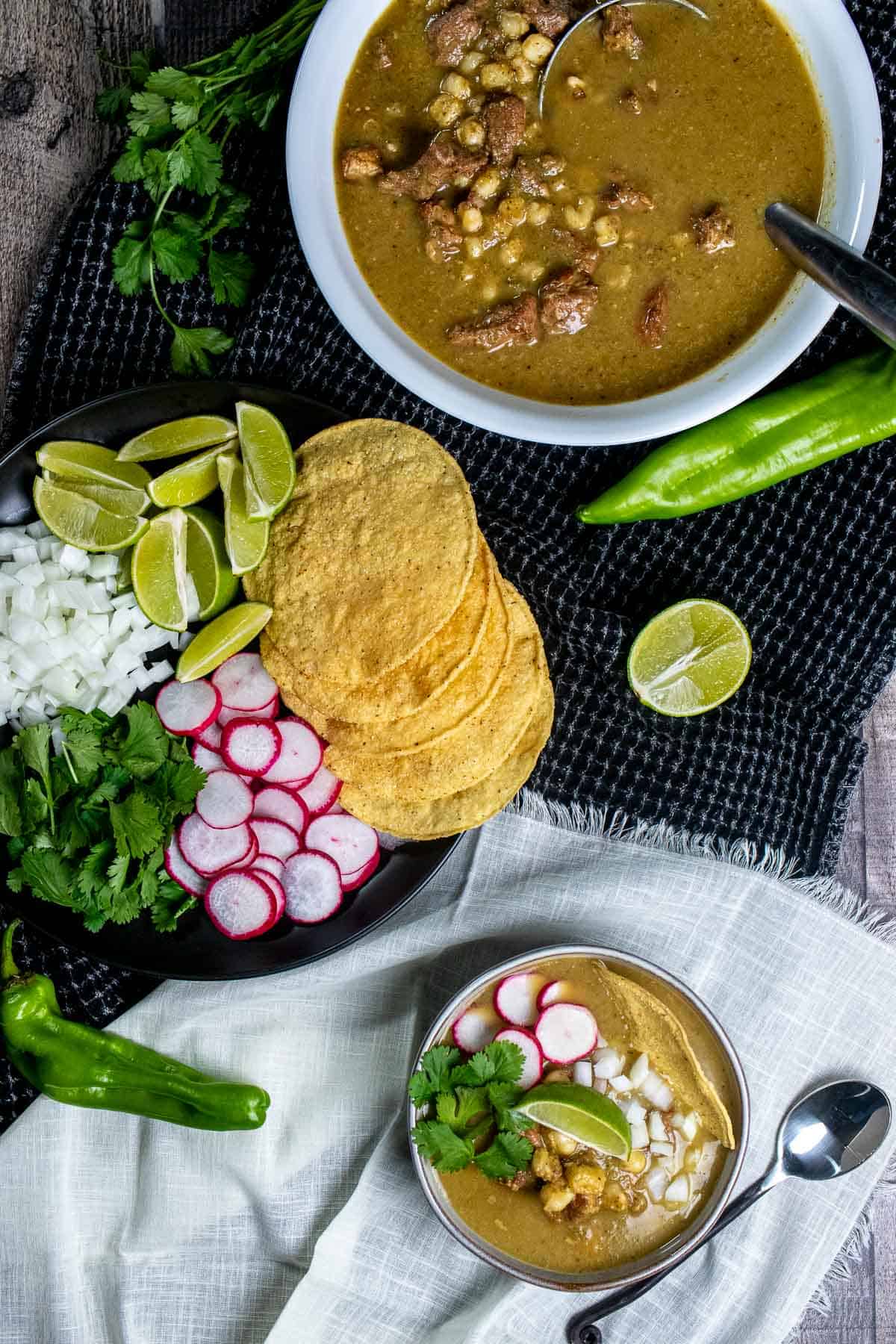
Serve hot with various toppings available for people to choose from.
🌽 What is Hominy?
Basically, hominy is just corn kernels. The corn kernels are dried and go through a process called nixtamalization. The dried kernels are treated with an alkali solution (usually lye or lime) which loosens the hull and kills the germ.
This process turns the corn from tender and sweet kernels into a puffy version that has more of an earthy, slightly nutty taste with a chewy texture. Available in both white and yellow versions, the yellow hominy is slightly sweeter in flavor. White hominy is more commonly used in pozole, however.
🌶 What Are Hatch Chiles?
Hatch chiles are New Mexican chiles specifically grown in the Hatch Valley area of New Mexico. There’s a large set of land that runs up and down the Rio Grande where this chile is grown and gives it it’s unique flavor. They’re a big deal in New Mexico and they celebrate with a Hatch Chile Festival every Labor Day weekend each year. They have a short season as well, usually starting in August and ending in September.
Almost identical in look, the Anaheim, or California chile, was cultivated as an offshoot from Hatch chiles and bred to be milder in heat. While the Anaheim can vary between 500-2500 on the Scoville scale, Hatch chiles can vary between 1,000-8,000 SHU depending on the exact variety. This places their heat somewhere between a poblano and a hot jalapeno. Recognized around the world for their earthy taste, Hatch chiles really shine when roasted and have an earthy, smoky, buttery flavor that’s very unique.
📖 Pozole Verde Variations
As mentioned above, pozole can be made in many ways. Pozole rojo and blanco are completely different recipes, however, so I won’t go into details on those, but here are a few variations for pozole verde.
No Fresh Hatch Chiles – While I love cooking with fresh Hatch chiles, their harvest window and availability is quite small, typically just a few weeks in August every year. If you can’t find them fresh, you can usually find them in the Hispanic section of most grocery stores either diced in small cans or already roasted and peeled in glass jars. Though it is a bit more expensive, I recommend the jarred Hatch chilis if you can find them.
Classic Pozole Verde – I love this New Mexican Hatch chile pozole verde recipe, but if you’re looking for a more traditional version, it’s an easy switch. Omit the Hatch chiles and use about 1 ½ pounds of tomatillos, up the jalapenos from 2 to 4, and swap the Hatch with 3-4 poblano chiles instead (or Anaheim if you can’t find poblanos).
Chicken Pozole Verde – If you’d prefer to make this with chicken instead of pork, it’s an easy swap, but requires much less cooking time. You can use almost any cut, but I recommend bone-in, skin-on chicken thighs. The added collagen helps thicken the soup, but you could also use boneless, skinless thighs if you prefer. Cook the thighs for about 30-45 minutes in the broth, then remove them and let them cool enough to handle. Remove the skin and pull the meat off the bones in chunks or shred it if you prefer and continue the recipe as normal.
Quick & Easy Pozole Verde – If you’d love to make pozole verde, but don’t have the time for a long simmer and making your own salsa verde, this variation is perfect for you. Keep in mind that this quick version will lack the depth of flavor from a long simmer, however. Buy a rotisserie chicken or some pulled pork that hasn’t been mixed with BBQ sauce along with a 16oz jar of salsa verde. In a large part, sauté some onion and garlic, then add the chicken stock and bring it to a boil. Lower to a simmer and add in the pulled chicken or pork and simmer for 5-10 minutes. Now add in the rinsed hominy and salsa verde and simmer for another 10 minutes or so, until the meat and hominy is warmed throughout. Serve as usual.

🍽 Recommended Equipment
You don’t need any fancy or specialized equipment to make this New Mexican pork pozole verde with Hatch chiles. I just like to recommend these two items for people that may not have them.
Dutch-Oven – While pozole can be made in a large pot or stock pot, I always recommend a Dutch-oven for this type of cooking. Dutch-ovens usually have a lighter inner ceramic coating making it easier to see how things are cooking, and they cook more evenly and hold their heat well.
Blender – I don’t advocate for a fancy $500 blender for most home cooks, but I do find a massive difference between a cheap $20-30 blender and a good quality blender in the $100 or so range. I recommend this stand blender because it will do a much better job at pureeing things like soup and the salsa verde used in this recipe.
❄️ Storing New Mexican Pozole Verde
First off, never add toppings to the main serving dish of pozole. Serve the toppings table-side so that each person can choose their own toppings. This also makes storing any leftovers easier since you won’t have toppings turning mushy in the fridge inside the pozole.
Once cooled completely, pour the pozole into a large, airtight container, or multiple small ones for individual portions if you prefer. Refrigerated, pozole of any style should last 4-5 days. Toppings will vary depending on what you serve. Chopped onions, shredded cabbage, and sliced radishes or jalapenos can be stored separately in the fridge for 2-3 days. Dry toppings like pepitas, tostadas, tortillas, or pork rinds can be stored at room temperature.
For longer storage, you can also freeze leftover pozole in an airtight container for 2-3 months. Thaw overnight in the refrigerator and reheat in the microwave or (preferably) on the stove top.
📋 Recipe
New Mexican Pork Pozole Verde
Ingredients
Pork Broth:
- 3 pounds boneless pork shoulder/butt, trimmed and cut into cubes
- ½ large white onion, diced
- 2-3 cloves garlic, minced
- 8-10 cups chicken stock, see note
- 2 bay leaves
- 2 25-ounce cans white hominy, drained and rinsed
Hatch Salsa Verde:
- ½ large white onion
- 5-6 cloves garlic, peeled
- 5-6 green Hatch chiles
- 5-6 tomatillos
- 2-3 medium jalapenos, or serrano for more heat
- 1 teaspoon Mexican oregano
- ½ teaspoon ground cumin
- ½ teaspoon table salt
- ½ teaspoon ground black pepper
- 8-10 sprigs fresh cilantro
Toppings:
- Sliced radishes
- Diced white or red onion
- Toasted pepitas, pumpkin seeds
- Lime wedges
- Tortillas or tostados
- Chopped cilantro
- See notes for more options
Directions
Make the Broth:
- Start by chopping 3 pounds of pork shoulder into small chunks. You can trim some of the fat off if there’s a large fat cap on it. Heat a large pot or Dutch-oven over medium-high heat with a bit of oil in it. Place the pork inside and sear it on all sides in batches so you don’t overcrowd the pot. Once seared, set aside.
- If the pot is getting dry, add a bit more oil. Dice half the large white onion and sauté it until softened and slightly translucent, about 6-8 minutes. Mince 2-3 garlic cloves and add them in when the onions are about done, cook until fragrant, about 1 minute longer.
- Add the seared pork back into the pot and mix with the onions and garlic. Pour some of the chicken stock into the pot and deglaze the bottom with a wooden spoon. Add the rest of the 8-10 cups of chicken stock and two bay leaves. Bring to a boil, then lower to a simmer and cook, uncovered for 1 ½ - 2 hours, until the pork is fork-tender.
- Once the pork is tender and cooked through, you can either leave it as-is if you cut it into small chunks, or you can remove the pork and roughly shred it. This is down to personal preference.
Make the Salsa Verde:
- While the pork is simmering, you can start on the green sauce.
- Preheat your oven to broil and move your top rack to the highest position or second highest if the top is too close to the broiler. Drizzle 5-6 green Hatch chiles with a bit of oil and place them on a foil lined sheet tray. Broil the chiles on all sides until blackened and place them into a plastic storage bag to steam for 10 minutes. Alternatively, you can place them into a large mixing bowl without stacking them and cover the bowl with plastic wrap.
- Remove the outer leaves from 5-6 tomatillos and rinse them until they are no longer sticky and cut them in half. Cut 2-3 jalapenos (or serrano) in half and remove the stem and seeds. Place both onto a foil lined sheet tray along with the remaining half of white onion and 5-6 peeled garlic cloves. Broil 3-5 minutes, until the skin starts to blister and blacken a bit. Remove and set aside.
- After the Hatch chiles have steamed for 10 minutes, remove from container and set aside until cool enough to handle. Pull the charred skin off the flesh of the chiles and remove the seeds from the inside of the chile.
- Place all the charred vegetables into a blender along with 8-10 stems of cilantro, ½ teaspoon table salt, ½ teaspoon ground black pepper, ½ teaspoon ground cumin, and 1 teaspoon of Mexican oregano. Using a measuring cup, scoop out about 1 cup of the simmering broth. Add about ½ a cup to the blender and puree the vegetables. If it feels a little dry or thick, add the rest of the broth. Blend on high until completely smooth. If your blender can’t quite make the sauce smooth enough, you can filter it through a fine mesh strainer afterwards.
Finish the Pozole:
- Once the broth and pork have cooked long enough for the pork to be tender, you are ready for the final step. As mentioned before, at this point you can remove the pork and shred it if you wish and add it back into the pot.
- Strain the hominy from the two 25oz cans and give it a light rinse. Remove the bay leaves from the pot and add in the salsa verde and hominy. Stir everything until combined and continue simmering until the hominy is heated through, about 10 minutes. The hominy should still have a bit of a chewy texture, so don’t overcook it or it will become mushy. Taste the soup and adjust the seasoning if needed.
- Serve hot with various toppings available for people to choose from.
Notes
- Sliced radishes
- Diced white or red onion
- Shredded cabbage or lettuce
- Chopped cilantro
- Lime wedges
- Corn or flour tortillas or chips or tostados
- Chicharrónes (fried pork rinds)
- Pepitas (hulled pumpkin seeds)
- Sliced or cubed avocado
- Crumbled Cotija cheese
- Mexican oregano
- Sliced jalapenos
- Hot sauce



Mike Vesey says
I followed your recipe for pozole verde with pork and it tastes great! So much depth of flavor.
I used mild Hatch green chiles(from my freezer that I had bought at our local grocery store) and a few homegrown Serranos.
I will be making this again.
Chris Pezzana says
So glad you enjoyed this! I love fresh Hatch chiles in recipes, they just have such a great and unique flavor in my opinion. Love that you grow your own Serranos too. I have bags of red jalapenos and ghost peppers in my freezer too that I grew.