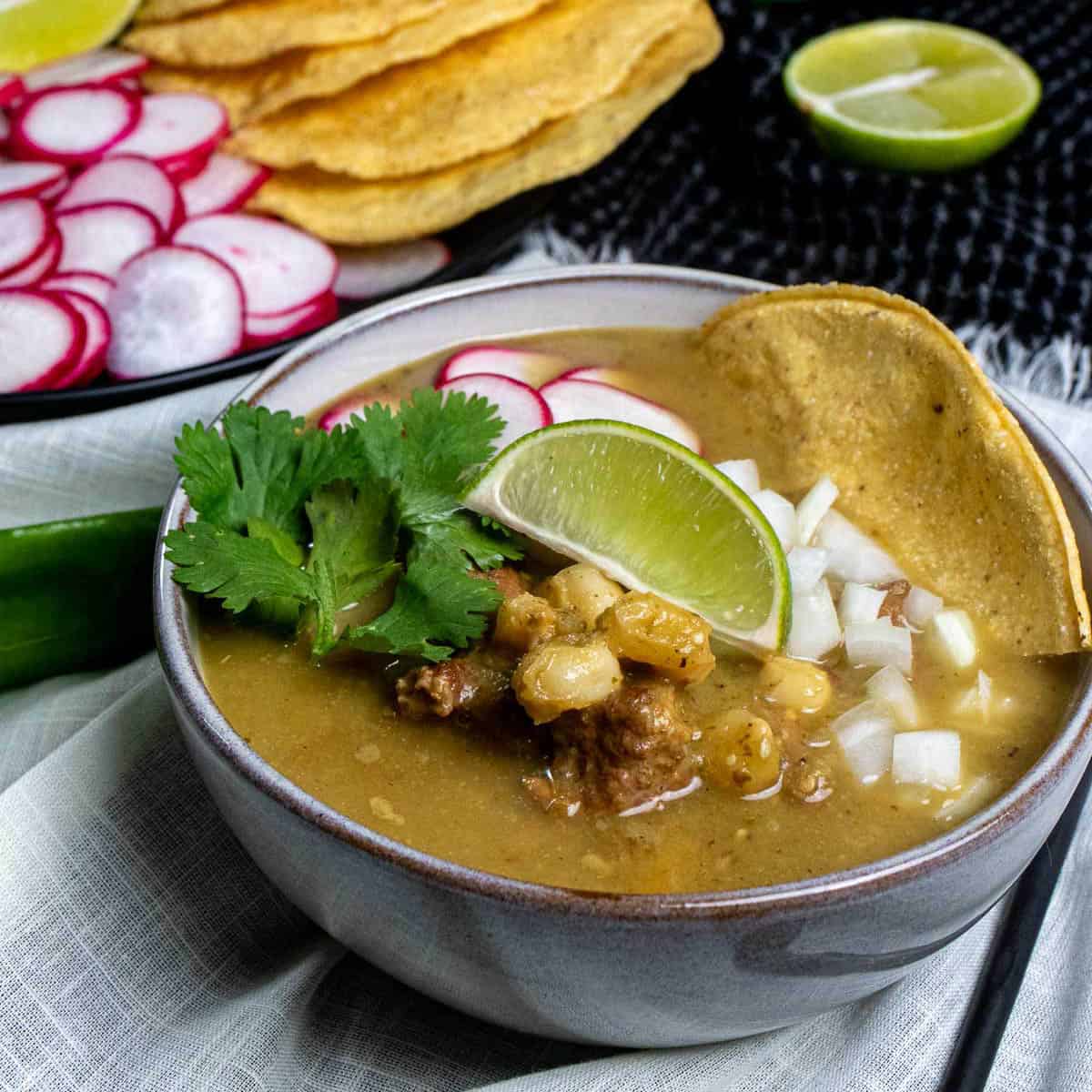
New Mexican Pork Pozole Verde
This New Mexican pork pozole verde recipe utilizes Hatch chiles, bringing an earthy, smokey flavor to the traditional pozole verde.
Ingredients
Pork Broth:
- 3 pounds boneless pork shoulder/butt, trimmed and cut into cubes
- ½ large white onion, diced
- 2-3 cloves garlic, minced
- 8-10 cups chicken stock, see note
- 2 bay leaves
- 2 25-ounce cans white hominy, drained and rinsed
Hatch Salsa Verde:
- ½ large white onion
- 5-6 cloves garlic, peeled
- 5-6 green Hatch chiles
- 5-6 tomatillos
- 2-3 medium jalapenos, or serrano for more heat
- 1 teaspoon Mexican oregano
- ½ teaspoon ground cumin
- ½ teaspoon table salt
- ½ teaspoon ground black pepper
- 8-10 sprigs fresh cilantro
Toppings:
- Sliced radishes
- Diced white or red onion
- Toasted pepitas, pumpkin seeds
- Lime wedges
- Tortillas or tostados
- Chopped cilantro
- See notes for more options
Directions
Make the Broth:
- Start by chopping 3 pounds of pork shoulder into small chunks. You can trim some of the fat off if there’s a large fat cap on it. Heat a large pot or Dutch-oven over medium-high heat with a bit of oil in it. Place the pork inside and sear it on all sides in batches so you don’t overcrowd the pot. Once seared, set aside.
- If the pot is getting dry, add a bit more oil. Dice half the large white onion and sauté it until softened and slightly translucent, about 6-8 minutes. Mince 2-3 garlic cloves and add them in when the onions are about done, cook until fragrant, about 1 minute longer.
- Add the seared pork back into the pot and mix with the onions and garlic. Pour some of the chicken stock into the pot and deglaze the bottom with a wooden spoon. Add the rest of the 8-10 cups of chicken stock and two bay leaves. Bring to a boil, then lower to a simmer and cook, uncovered for 1 ½ - 2 hours, until the pork is fork-tender.
- Once the pork is tender and cooked through, you can either leave it as-is if you cut it into small chunks, or you can remove the pork and roughly shred it. This is down to personal preference.
Make the Salsa Verde:
- While the pork is simmering, you can start on the green sauce.
- Preheat your oven to broil and move your top rack to the highest position or second highest if the top is too close to the broiler. Drizzle 5-6 green Hatch chiles with a bit of oil and place them on a foil lined sheet tray. Broil the chiles on all sides until blackened and place them into a plastic storage bag to steam for 10 minutes. Alternatively, you can place them into a large mixing bowl without stacking them and cover the bowl with plastic wrap.
- Remove the outer leaves from 5-6 tomatillos and rinse them until they are no longer sticky and cut them in half. Cut 2-3 jalapenos (or serrano) in half and remove the stem and seeds. Place both onto a foil lined sheet tray along with the remaining half of white onion and 5-6 peeled garlic cloves. Broil 3-5 minutes, until the skin starts to blister and blacken a bit. Remove and set aside.
- After the Hatch chiles have steamed for 10 minutes, remove from container and set aside until cool enough to handle. Pull the charred skin off the flesh of the chiles and remove the seeds from the inside of the chile.
- Place all the charred vegetables into a blender along with 8-10 stems of cilantro, ½ teaspoon table salt, ½ teaspoon ground black pepper, ½ teaspoon ground cumin, and 1 teaspoon of Mexican oregano. Using a measuring cup, scoop out about 1 cup of the simmering broth. Add about ½ a cup to the blender and puree the vegetables. If it feels a little dry or thick, add the rest of the broth. Blend on high until completely smooth. If your blender can’t quite make the sauce smooth enough, you can filter it through a fine mesh strainer afterwards.
Finish the Pozole:
- Once the broth and pork have cooked long enough for the pork to be tender, you are ready for the final step. As mentioned before, at this point you can remove the pork and shred it if you wish and add it back into the pot.
- Strain the hominy from the two 25oz cans and give it a light rinse. Remove the bay leaves from the pot and add in the salsa verde and hominy. Stir everything until combined and continue simmering until the hominy is heated through, about 10 minutes. The hominy should still have a bit of a chewy texture, so don’t overcook it or it will become mushy. Taste the soup and adjust the seasoning if needed.
- Serve hot with various toppings available for people to choose from.
Notes
Hatch Chiles – While I love cooking with fresh Hatch chiles, their harvest window and availability is quite small, typically just a few weeks in August every year. If you can’t find them fresh, you can usually find them in the Hispanic section of most grocery stores either diced in small cans or already roasted and peeled in glass jars. Though it is a bit more expensive, I recommend the jarred Hatch chiles if you can find them.
Chicken Stock – I prefer to use chicken stock in this recipe for the added depth of flavor, but you could also use vegetable broth or just water, or a mix of half water and stock.
Chicken Pozole Verde – If you’d prefer to make this with chicken instead of pork, it’s an easy swap, but requires much less cooking time. You can use almost any cut, but I recommend bone-in, skin-on chicken thighs. The added collagen helps thicken the soup, but you could also use boneless, skinless thighs if you prefer. Cook the thighs for about 30-45 minutes in the broth, then remove them and let them cool enough to handle. Remove the skin and pull the meat off the bones in chunks or shred it if you prefer and continue the recipe as normal.
Dried Hominy – If using dry hominy instead of the canned version that is already cooked, you’ll need to treat them like dried beans. Rinse and sort the dried hominy and place them in a large container. Cover with 2-3 inches of water and allow it to soak at least 4-6 hours, or overnight ideally. Once done soaking, drain and rinse the hominy. They will need to cook about 1 ½ - 2 hours, so instead of adding them at the end of cooking, add them to the pork and chicken stock and let them cook with the pork the whole time. They should be tender and a little chewy when fully cooked, but not mushy.
Pozole Toppings – Unlike some soups and stews that might have an optional topping or two, a huge part of the pozole experience is the toppings provided. Never skimp on the toppings! The following is a list of common and some less common toppings.
- Sliced radishes
- Diced white or red onion
- Shredded cabbage or lettuce
- Chopped cilantro
- Lime wedges
- Corn or flour tortillas or chips or tostados
- Chicharrónes (fried pork rinds)
- Pepitas (hulled pumpkin seeds)
- Sliced or cubed avocado
- Crumbled Cotija cheese
- Mexican oregano
- Sliced jalapenos
- Hot sauce
Nutrition
Serving: 1 bowlCalories: 285kcalCarbohydrates: 10gProtein: 44gFat: 8gSaturated Fat: 2gCholesterol: 102mgSodium: 428mgPotassium: 968mgFiber: 2gSugar: 3gCalcium: 40mgIron: 2mg
Tried this recipe?Let us know how it was!
