

A traditional Mexican salsa, classic Pico de Gallo is made with only a handful of fresh ingredients. This is a quick and easy recipe that can pack a bunch of flavors into any dish it is served with. Pico is also a great summer recipe for the home gardener with lots of tomatoes and onions on hand.
Recipe updated 7/6/2026 with new photos and new writing. Recipe mostly the same.
Taking a handful of fresh produce, sprinkling it with lime juice, and then letting it marinade in the fridge, you’re able to make a surprisingly easy pico de gallo. This pico is great on its own with some tortilla chips or used in lots of dishes from tacos to scrambled eggs (migas) to chicken quesadillas.
This is a common and classic recipe for pico de gallo that I have made for many years at several restaurants that I have worked at across the country. The main difference in the restaurant was that we didn’t cut the vegetables by hand. We had a huge dicing machine that we just slammed the vegetables through, but we were also making like 5 gallons a day.
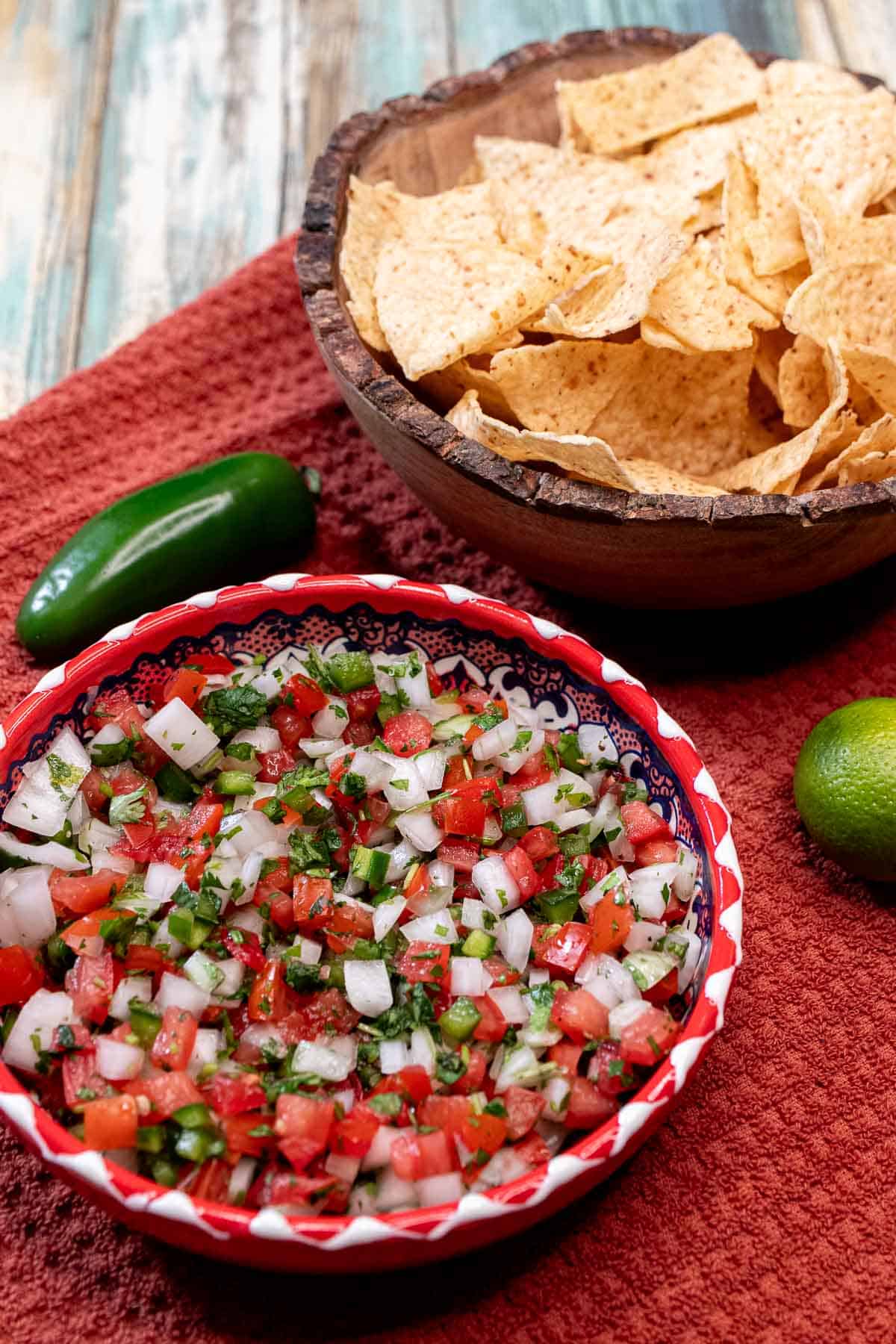
Fresh and authentic pico de gallo is a great way to add fresh flavor to a dish, or to use the acidic nature of the salsa to cut through rich, fatty dishes. Top enchiladas with some pico as soon as they’re done cooking or use it as a condiment with heavier dishes like carne asada. It also pairs well with leaner proteins like shrimp and fish, or as a salsa for beef barbacoa tacos.
Jump to:
🥘 Ingredients for Fresh Pico de Gallo
Other than a pinch of salt and (optionally) black pepper to taste, the best pico de gallo found in most restaurants only contains 5 fresh ingredients:
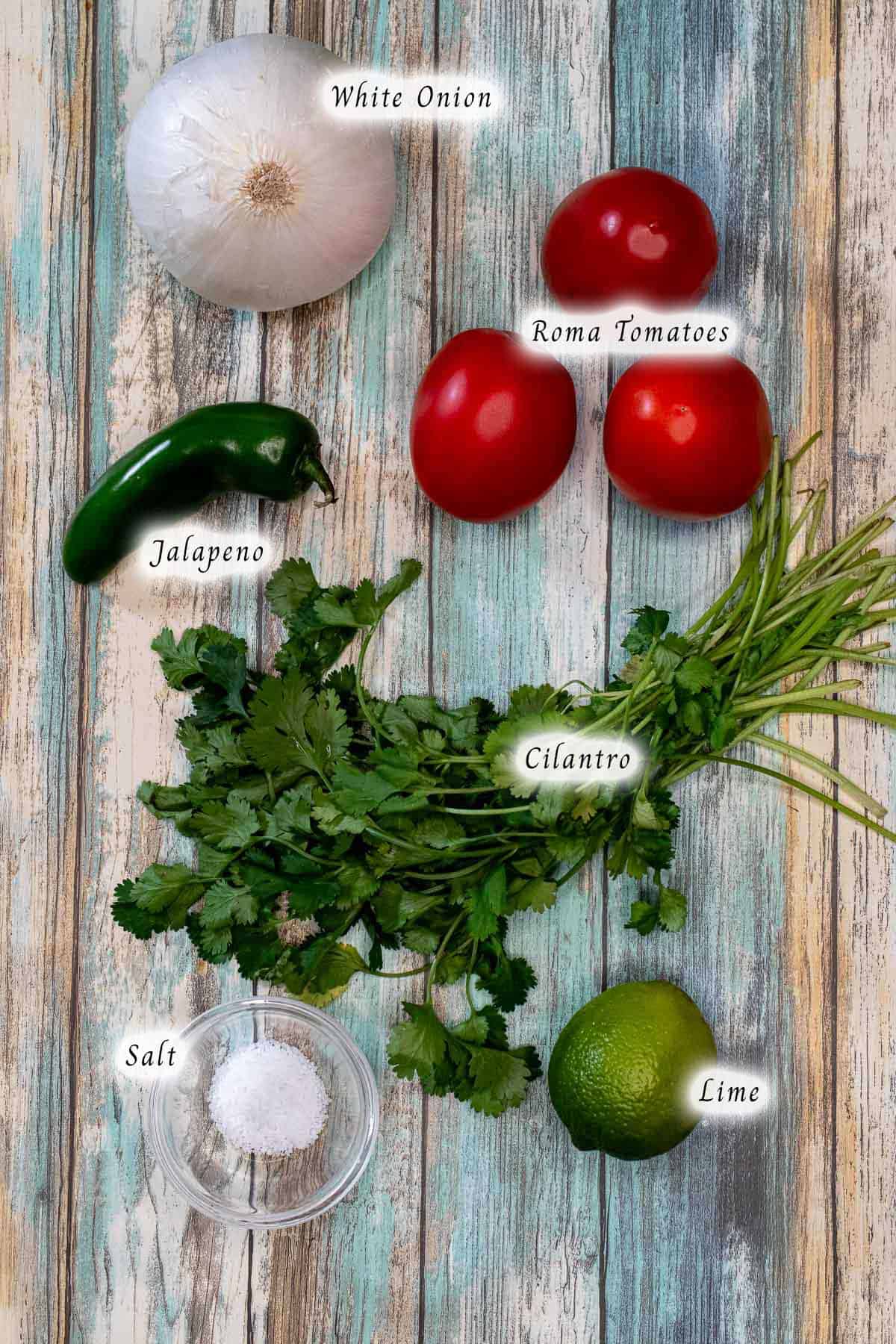
Tomatoes – Whatever season you make this in, always pick the freshest and most ripe tomatoes available in your area for the best flavor. I typically use Roma tomatoes / plum tomatoes, or red vine tomatoes and avoid ones like Beefsteak or green tomatoes. Cherry tomatoes or grape tomatoes also work well.
White Onion – Can use any onion you prefer really, white is just the most traditional because the ingredients are meant to resemble the red, white, and green flag of Mexico. Red onion is a common substitute.
Serrano or Jalapeno Pepper – Can omit if you don’t like the heat, but I would recommend at least one jalapeño for flavor. This controls the spice level you prefer, so add another jalapeño for a medium heat, or swap for serrano peppers for a hotter, spicy pico de gallo. If you can’t handle heat at all, you could also substitute with a small green bell pepper.
Cilantro – Use fresh cilantro here and chop it finely.
Lime Juice – Use fresh lime juice for a pop of acidity.
A note about cilantro: a lot of people aren’t a big fan of it, and some people even have the dreaded “soap gene”. If you fall into either of those categories, feel free to scale back the amount used. Reduce the amount used to as little as 1-2 tablespoons if you’re not a big fan, and if you just cannot eat it at all, try a combination of chopped fresh parsley and basil as a substitute.
Although this list is usually considered a classic pico de gallo ingredient list, there are numerous regional and family recipes that toss in other ingredients altogether. A few common variations and substitutions include bell peppers, cucumbers, tomatillos, jicama, garlic, avocado, mango, orange, carrots, etc.
🐓 What Is Pico de Gallo?
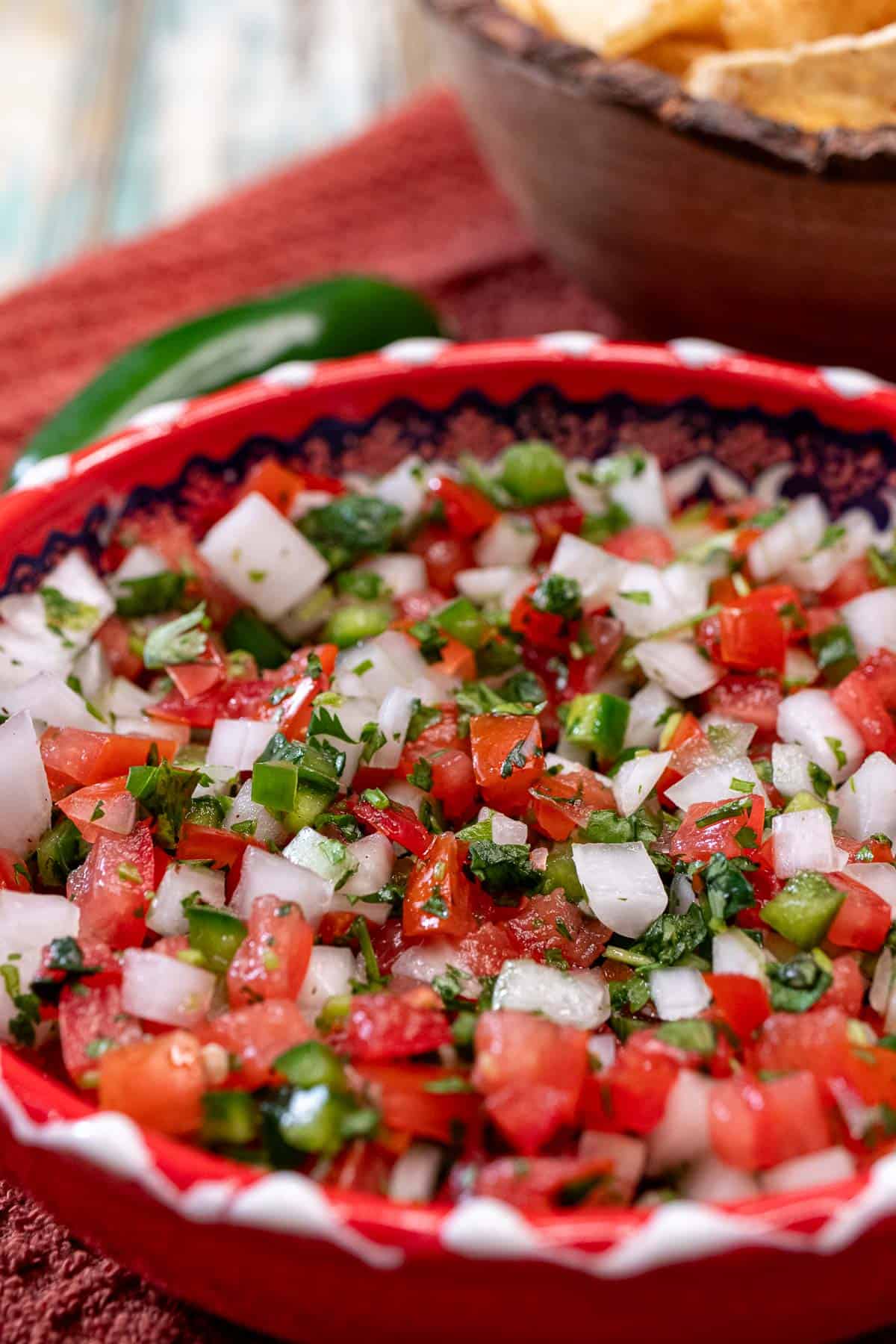
The name translates literally to “Rooster’s Beak”, but I won’t debate on which possible origin story might be the correct one. Also known as “salsa fresca” (fresh sauce) and “salsa cruda” (raw sauce), pico de gallo is a popular Mexican salsa known for its fresh ingredients. When I worked in restaurants that served it and someone was unfamiliar with it, I would describe it to them as a dry salsa or fresh salsa.
Salsa vs Pico de Gallo
Both pico de gallo and a lot of traditional red salsa use most of the same ingredients. The biggest difference, however, is that salsa is typically made with a bit of liquid and the ingredients are crushed in a molcajete or pureed into a chunky or thin consistency. Salsa roja also uses dry red peppers usually rehydrated.
Pico de gallo is literally just dicing and mincing your ingredients and tossing with salt and lime juice.
🔪 How to Make Pico de Gallo
Making a homemade pico de gallo recipe is a simple and straightforward process. Other than the ingredients, all you really need is a sharp knife, a cutting board, and a bowl (preferably a non-reactive kind like a glass mixing bowl).
In most recipes where I use tomatoes, I use the whole vegetable. For pico and a few other recipes where I use fresh tomatoes, I like to remove the seeds and the goopy inside. The seeds can impart some bitterness into the dish, and the seed gel can give pico an undesirable texture.
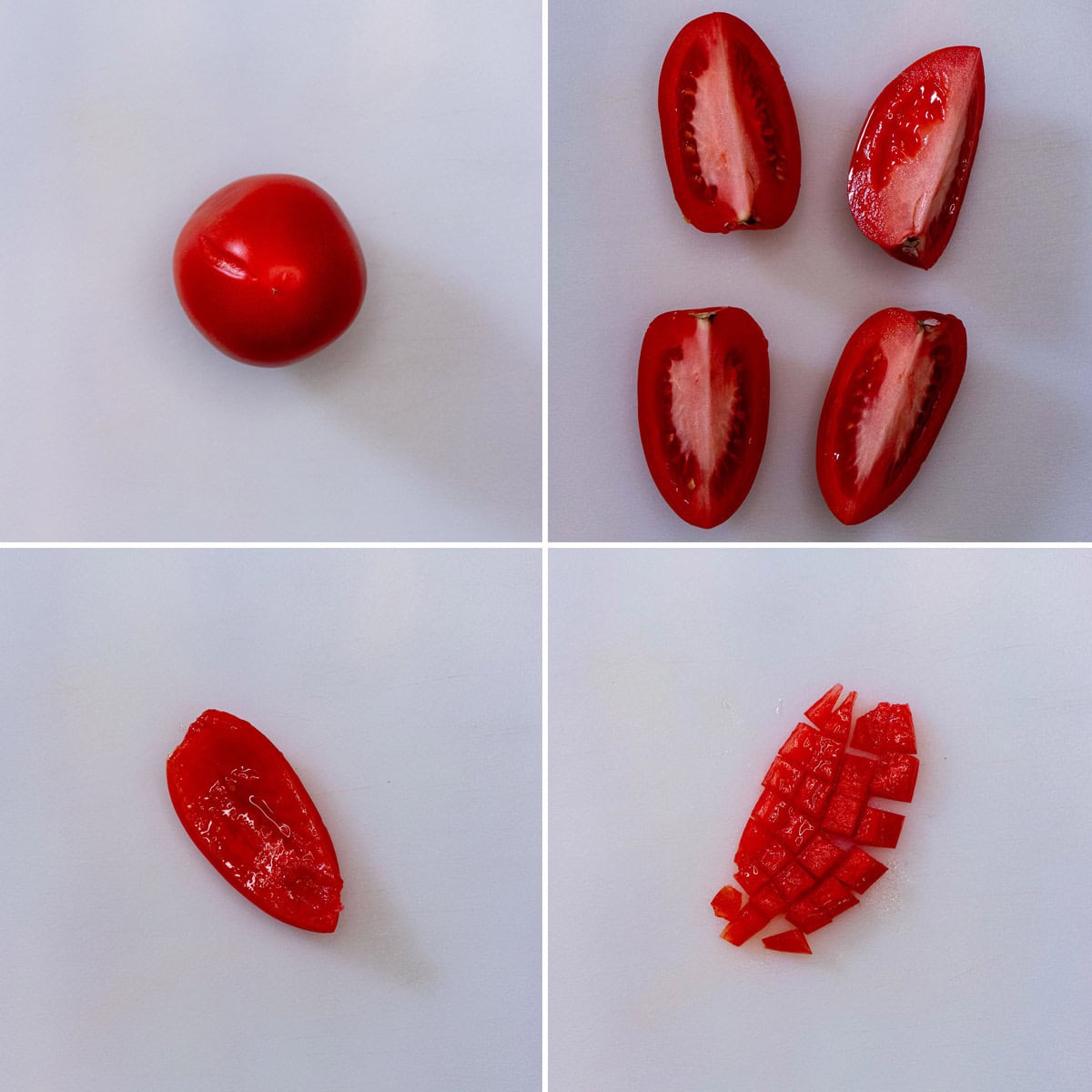
Stand the Roma tomato upright and slice downwards, cutting it in half and again into quarters. Cut off the tip where the vine was attached and then press down on both corners, exposing the seeds and seed gel. Now just run your knife flat across the tomato quarter to easily remove both the seeds and gel but not the flesh.
From here just cut strips through the tomato, turn them and cut again to dice. Place the diced tomatoes into the mixing bowl.
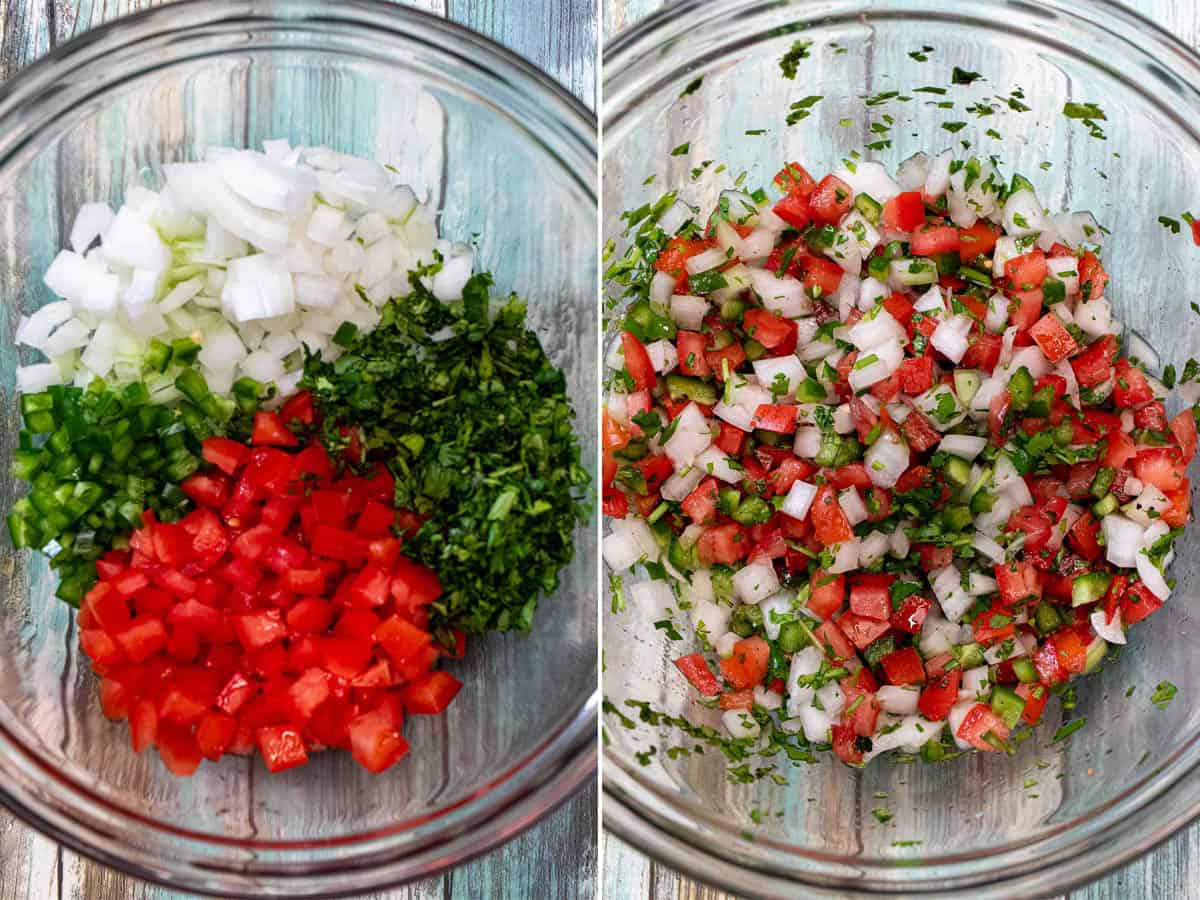
Now just dice the onion, mince the jalapeno, and finely chop the cilantro and add them to the mixing bowl as well.
Give everything a few good stirs to mix the ingredients. Now add salt and black pepper if using and squeeze the lime juice over it all. Mix again until the salt and lime juice are fully combined with the rest of the ingredients.
Cover the bowl with plastic wrap and place it into the refrigerator to marinate for at least 15-20 minutes and up to overnight, then serve.
🌮 How to Serve Pico de Gallo
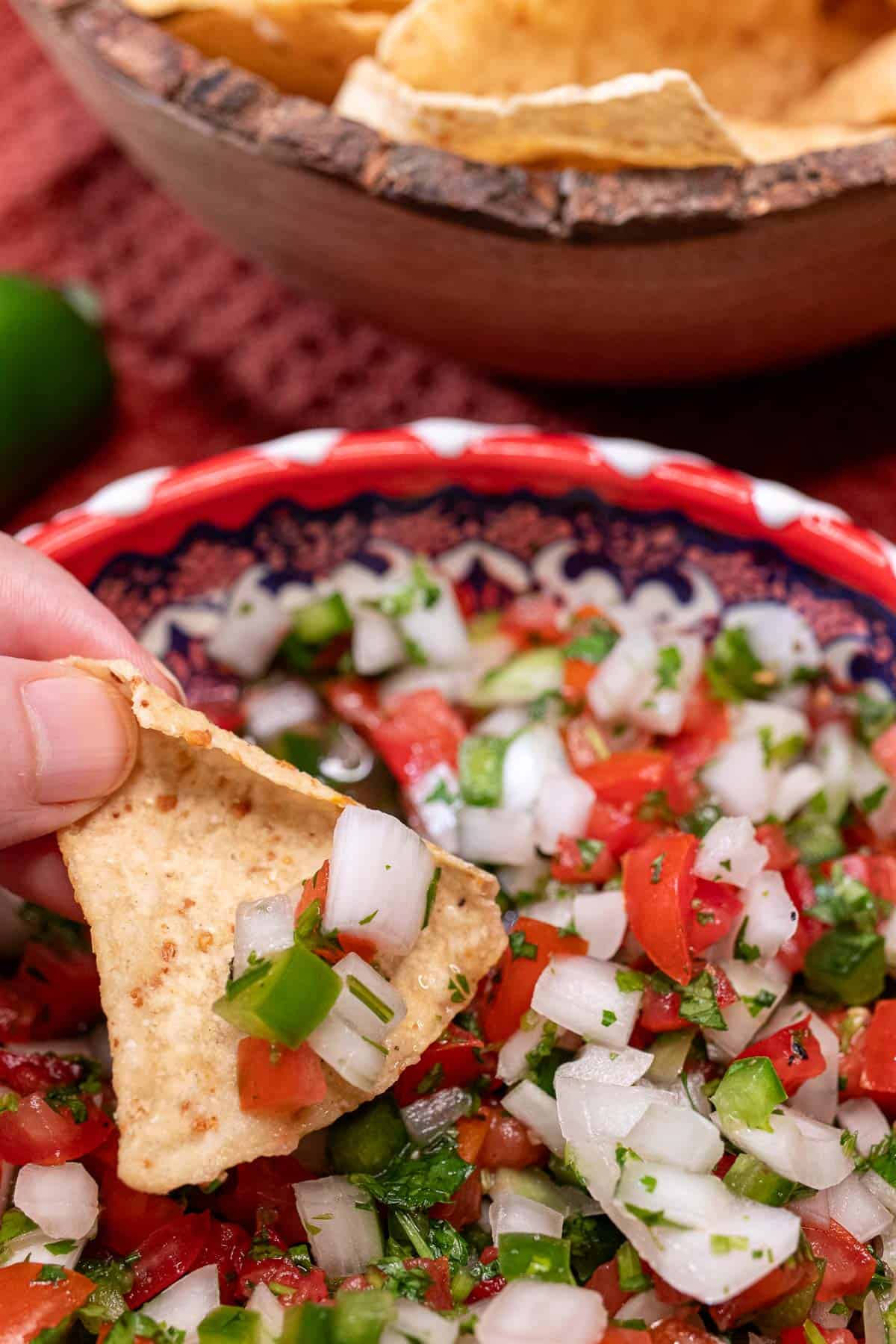
Freshly made pico de gallo is great as an appetizer with tortilla chips or served as a topping or filling in several Mexican recipes such as:
- Tacos
- Breakfast Burritos
- Scrambled Eggs
- Chilaquiles
- Huevos Rancheros
- Quesadillas
- Carne Asada
- Enchiladas
You can cook it as a filling in some things like quesadillas or breakfast burritos that are only briefly heated. For other dishes I recommend topping the dish as soon as it’s finished cooking, such as enchiladas, chilaquiles, nachos, etc.
In most other Mexican food applications, I recommend serving pico as a condiment in a side bowl with other toppings like onion, cilantro, salsa. This lets people choose if they want to use it for their tacos or meat dishes like carne asada.
💭 Frequently Asked Questions
At its core, pico de gallo is a fresh Mexican salsa made with diced tomatoes, onion, jalapenos, cilantro, lime juice, and usually some salt.
Although technically a salsa called “salsa fresca” or “salsa cruda”, pico de gallo has far less liquid than what most people consider a salsa, such as salsa roja or salsa verde. The typical salsa people are familiar with is more blended to be chunky or slightly smooth, while pico is made with just freshly diced ingredients and some lime juice.
The most widely used and authentic onion for pico is a white onion. For a milder choice, red onion is typically the second most commonly used onion. If you find raw onions harsh or pungent, you can also dice them and soak in water for 5-10 minutes and drain if you like. This removes some of the raw bite that onions can have.
The most common tomato found in pico is a Roma (plum) tomato. I’ve also used vine-ripe tomatoes with success. If Roma are out of season, cherry or grape tomatoes also work well. If your tomatoes seem watery, you can also dice them and set them in a strainer or colander with a pinch of salt for 15-20 minutes. This draws out excess moisture so your pico won’t end up watery, but totally optional.
🍽 Recommended Equipment
All you really need to make homemade pico de gallo is a sharp knife, a cutting board, and a bowl. I do like to make one recommendation, however.
Glass Bowl – Whenever you’re using fresh fruit or vegetable ingredients in a recipe, I recommend using a non-reactive bowl. Basically, anything besides a metal mixing bowl works fine, but I especially prefer using these glass mixing bowls for things like this fresh pico de gallo or fruit pies.
❄️ Storing Pico de Gallo
Store homemade pico de gallo in an airtight container in the refrigerator. It tastes best in the first 2-3 days, but I wouldn’t recommend stretching it past 4-5 days in the fridge. I wouldn’t recommend freezing it either as freshly cut veggies will lose their flavor and thawing it will add too much water from the ice crystals.
📋 Recipe
Classic Pico de Gallo
Ingredients
- 3 medium Roma tomatoes, about 1 ¼ - 1 ½ pounds
- ½ large white onion, diced
- 1 medium jalapeno pepper, seeded and minced (or 2 serrano peppers for more heat)
- ¼ bunch cilantro, finely chopped (use more or less to your preference)
- 1 medium lime, juiced (about 2 tablespoons)
- 1 teaspoon kosher salt
- ¼ teaspoon black pepper, optional
Directions
- In most recipes where I use tomatoes, I use the whole vegetable. For pico and a few other recipes where I use fresh tomatoes, I like to remove the seeds and the goopy inside. The seeds can impart some bitterness into the dish, and the seed gel can give pico an undesirable texture.
- Stand the Roma tomato upright and slice downwards, cutting it in half and again into quarters. Cut off the tip where the vine was attached and then press down on both corners, exposing the seeds and seed gel. Now just run your knife flat across the tomato quarter to easily remove both the seeds and gel but not the flesh.
- From here just cut strips through the tomato, turn them and cut again to dice. Place the diced tomatoes into the mixing bowl. Repeat with the other two tomatoes.
- Now just dice ½ the large white onion, mince 1 jalapeno, and finely chop ¼ of a bundle of fresh cilantro and add them to the mixing bowl as well.
- Give everything a few good stirs to mix the ingredients. Now add 1 teaspoon kosher salt and ¼ teaspoon of ground black pepper if using and squeeze the lime juice over it all (about 2 tablespoons). Mix again until the salt and lime juice are fully combined with the rest of the ingredients.
- Cover the bowl with plastic wrap and place it into the refrigerator to marinate for at least 15-20 minutes and up to overnight, then serve.


Comments
No Comments