

Most famously made and used in the popular New Orleans muffaletta sandwich, this olive salad can also be used for appetizers, charcuterie boards, and toppings for other dishes like pizzas or salads. Made with numerous but inexpensive ingredients, this olive salad spread is packed with flavor.
Olive salad is a combination of many ingredients, most notably olives, Giardiniera and other pickled vegetables, olive oil, vinegar, and herbs. This briny, acidic, and mildly spicy blend gives a muffaletta sandwich its signature flavor but also tastes great in other applications and appetizers.
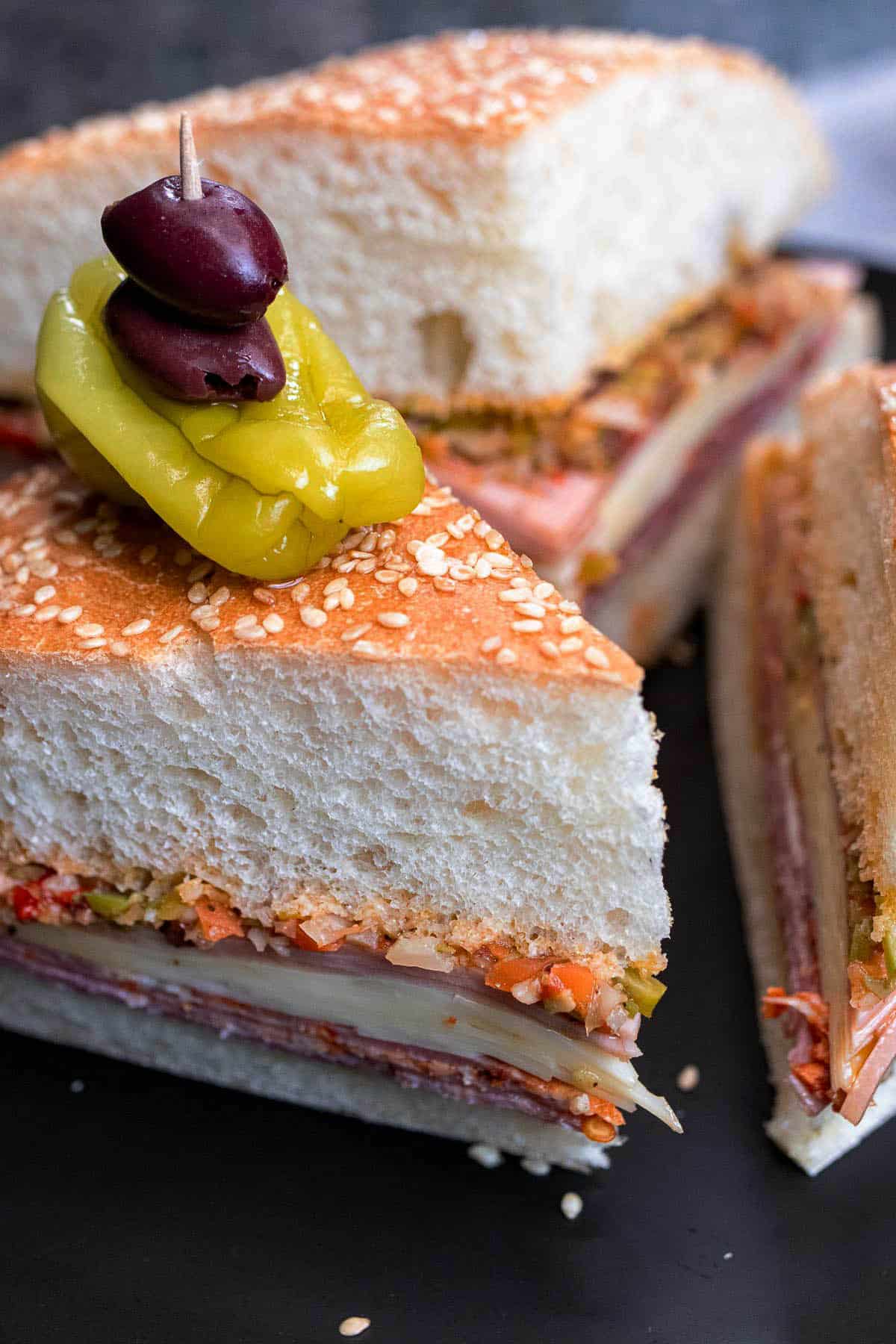
While I love the blend of flavors in this olive salad for my New Orleans muffaletta sandwich recipe, it works well in other ways too. Toss a spoonful in your salad or as a topping for pizza or hummus or use it as a spread for bread or crackers in a charcuterie spread. Don’t keep this recipe limited to just one sandwich or recipe. If you’re planning on making the muffuletta sandwich, I also have a great recipe for homemade muffaletta bread.
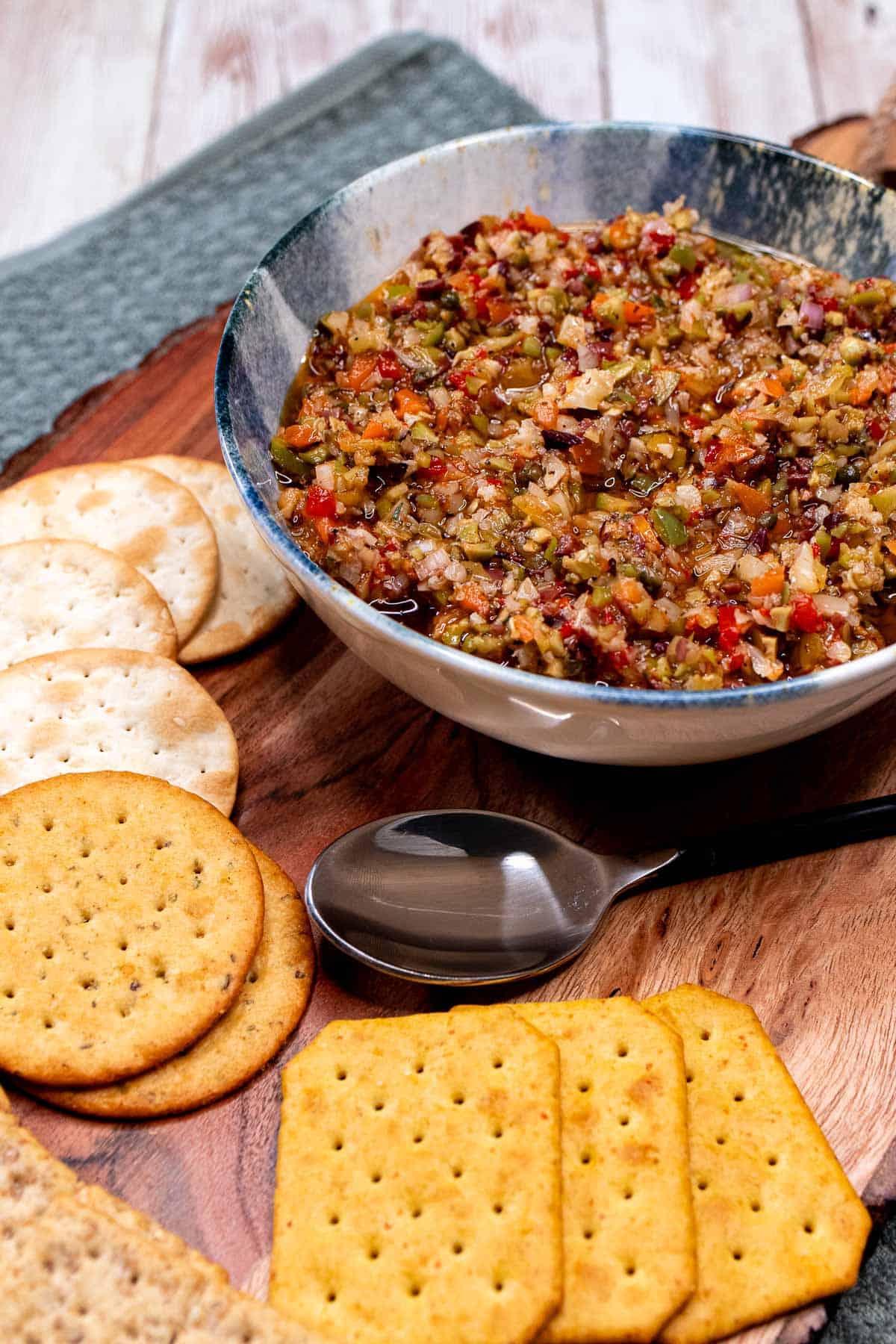
Depending on where you live, you might be able to find this pre-made and jarred, but not every olive salad is made equally. Southern grocery stores might even sell Central Groceries version, but don’t use the Chicago-style olive salad unless you’re planning to make a spicy muffaletta (or muffuletta) sandwich.
Making it yourself allows you to tweak things to your taste as well. Hate black olives? Leave them out. Want it made without capers or cauliflower? Ditch that too. Want more fresh herbs or for a spicier bite? All you. Plus, you’ll have plenty of leftovers to use in several ways or even place in jars and gift it to family members.
Jump to:
🥘 Ingredients for Italian Olive Salad
This recipe uses quite a few ingredients to make the olive salad, but some are inexpensive and some are optional depending on what you like. I’ll point out the ones I find optional and a few substitutions as well.
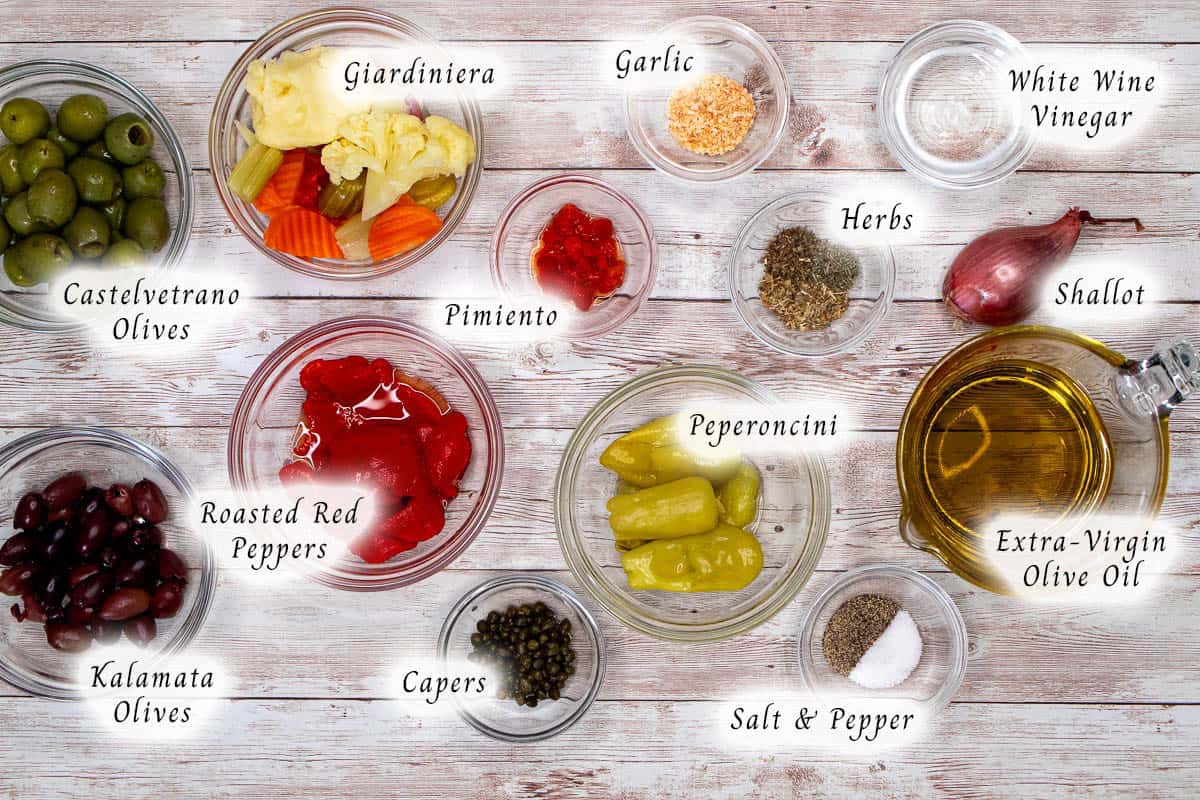
Olives – One of the main ingredients are olives. You’ll need both green and black olives here, and I typically use a 2:1 ratio of green to black. Since this is an Italian-style recipe, I suggest Castelvetrano olives that are from Italy. I also normally use Greek Kalamata black olives. Optional, but I also add a bit of capers as well.
Giardiniera – The other main ingredient here is Italian giardiniera. This is sold as a jar of pickled vegetables, typically including cauliflower, carrots, red bell peppers, and celery. While the Italian version is normally mild, you can also find Chicago-style that is spicier. Mostly the same ingredients, it may include additions like spicy peppers or red pepper flakes and is packed in oil instead of vinegar.
Pepperoncini – These are small Italian hot chili peppers. While the heat level can vary, they’re generally similar to banana peppers and are milder than jalapenos. They add a mild heat and taste slightly sweet and tangy. They may already be in your giardiniera, but if not or you want some more, optionally add more.
Roasted Red Peppers – I use the jarred version of these for this recipe. These are optional since they’re also normally already in the giardiniera. I just like their flavor and find the amount in giardiniera to not be enough, so use your judgment.
Pimiento – Also an optional ingredient. If you’re using the Italian Castelvetrano olives, they’re usually pitted but not stuffed with pimento peppers. If you like their flavor, grab a tiny jar and add these to the mix.
Vinegar – Use a bit of red or white wine vinegar here for the acidity. I usually add this while blending the above ingredients to help keep everything a bit loose. Alternatively, you can replace this with some liquid from the giardiniera instead, unless you’re using the Chicago version (since it uses oil).
Vegetables – While I use shallot here, you can replace that with any standard onion instead. Garlic is also a good addition. Sometimes I use granulated garlic, or you can mince 3-4 fresh cloves instead.
Herbs – You can use either fresh or dried herbs here. Like the granulated garlic, I don’t mind using dried herbs here because they soften a lot as the olive salad sits around. I use a mixture of oregano, basil, and thyme. I also use parsley, but I suggest fresh for that at least.
Seasoning – I keep things simple here: just add some kosher salt and black pepper.
Olive Oil – Finally, finish things off with a good amount of a quality extra-virgin olive oil. Some recipes keep the salad a bit dry and use an equal amount of vinegar and olive oil. I prefer to keep the salad packed in olive oil when I store it and use it, however.
🥗 How to Use Olive Salad
This recipe is specifically used in making the famous New Orleans muffuletta sandwich. However, you can use this for numerous other recipes and dishes as well.
Add a few spoonfuls to a salad for extra flavor or even a pasta dish or pasta salad. You could spread it on top of hamburgers or hot dogs for a briny, tangy flavor, or even top steaks, fish, or chicken like it’s a chimichurri sauce.
Mix a little bit into your eggs, or on top of pizza instead of olives. You could even spread it as a sauce for pizza like a pesto. One of my favorite ways to use it though, besides the muffuletta sandwich, is as a dip or spread or part of a charcuterie board. Use toasted bread, chips, crackers, or veggies and dip away!
🔪 How to Make Olive Salad for Muffaletta Sandwiches
Despite the many ingredients, this olive salad comes together rather quickly.
Start by finely dicing a shallot, mincing some garlic cloves (if using), and finely chop any fresh herbs you’re using. Set these aside for now.
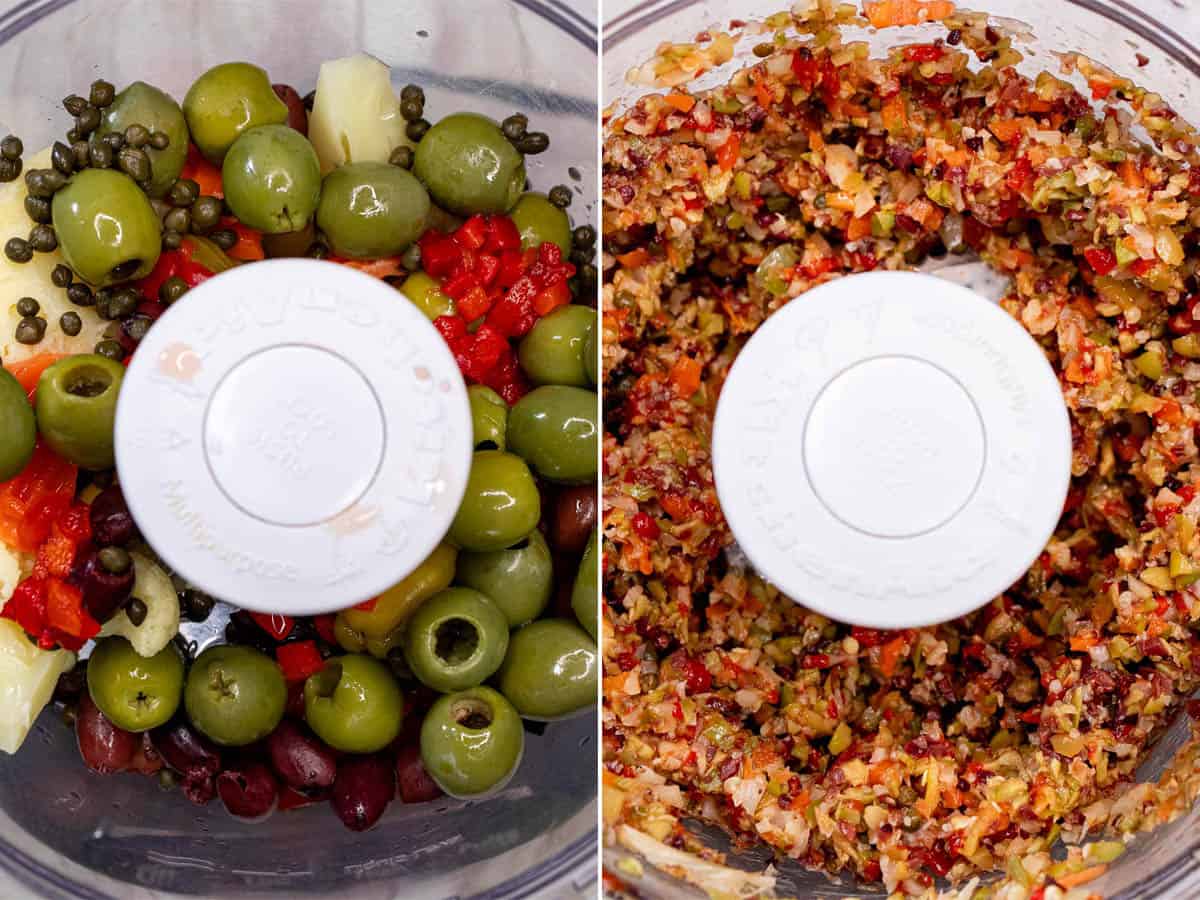
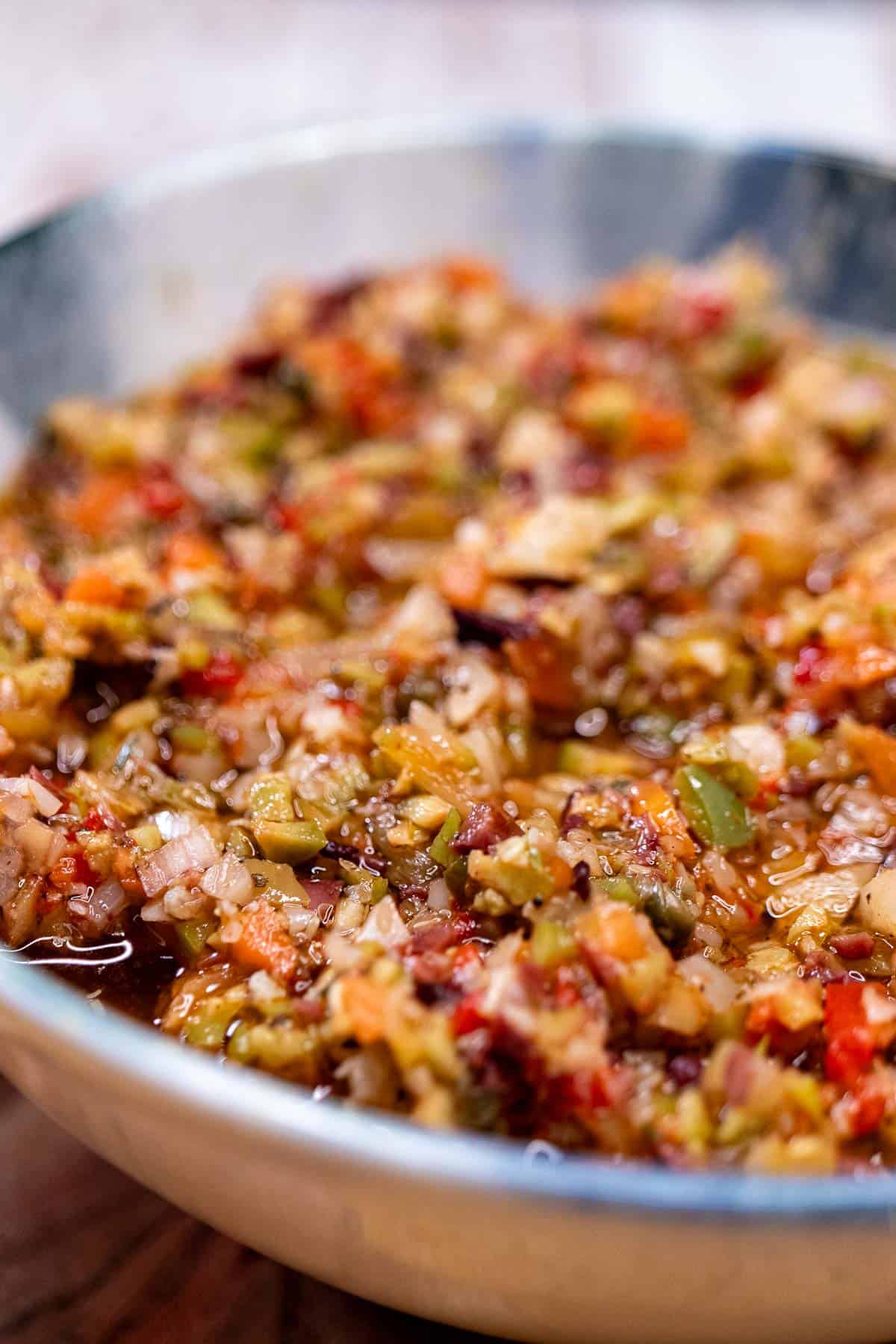
In a food processor, add both olives and capers, the giardiniera, pepperoncini (stems removed), roasted red peppers, pimientos, and vinegar. Pulse everything a few times, then scrape the bowl and pulse a few more. It should be the consistency of a finely chopped mix, but don’t pulse until it becomes a paste.
If you don’t have a food processor, you can still make this by hand. You’ll need to add a few ingredients at a time on a cutting board and chop into pieces. Then go back over it to finely chop everything as best you can.
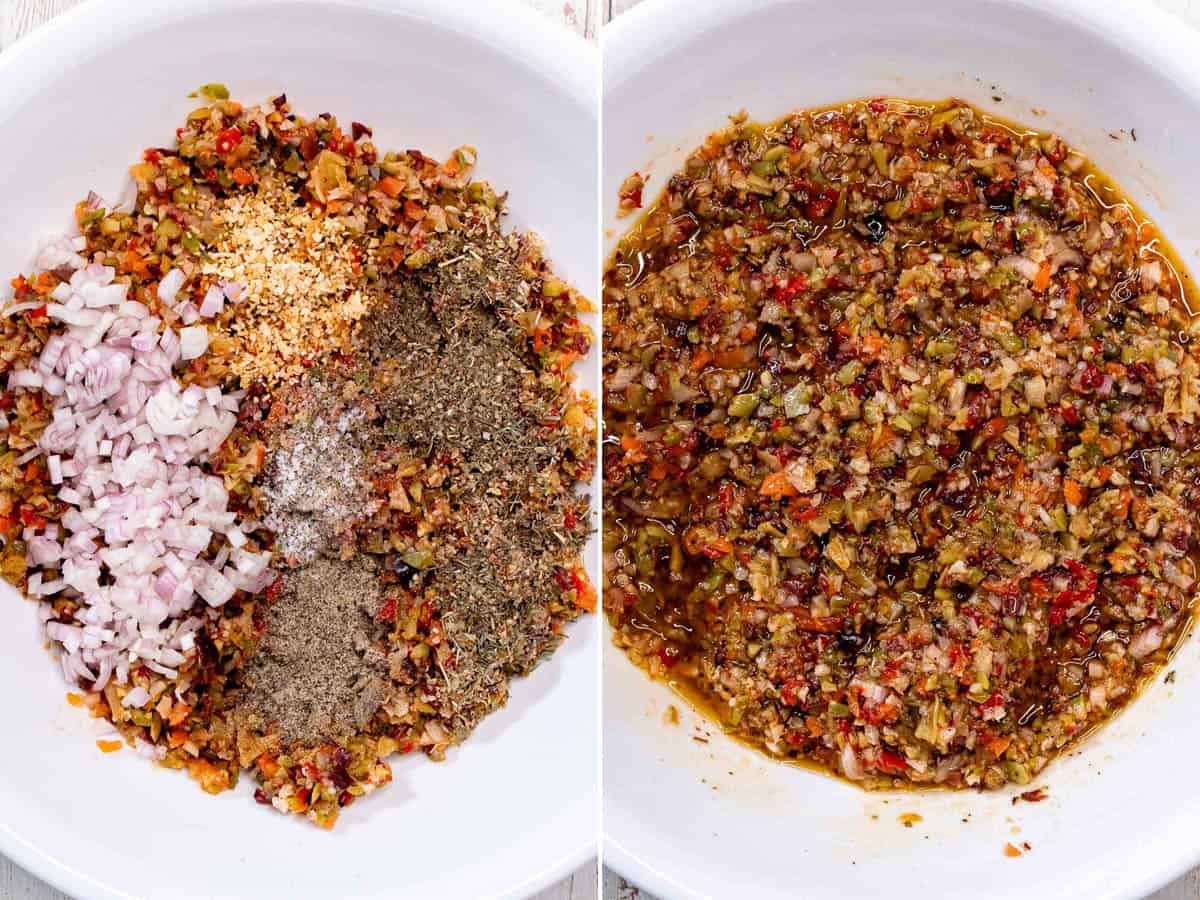
Dump everything out of the stand mixer into a large non-reactive bowl. Now add the reserved shallot, garlic, herbs, salt and pepper. Mix everything thoroughly and finally add the olive oil and mix again.
Store in an airtight container or some canning jars in the refrigerator. Let everything chill overnight, or for at least 6-8 hours. This allows the olive salad to marinate and give an even better flavor and taste.
🍽 Recommended Equipment
This is a pretty simple recipe to make, but I want to mention one item that really makes the process easier when making olive salad.
Food Processor – A bit of an investment, but less expensive than a stand mixer. A decent food processor makes the chopping process for this recipe a lot easier and faster. Food processors have many uses as well, so it’s worth getting one if you do much cooking or baking at home period.
❄️ How to Store Olive Salad
I recommend storing olive salad in a glass canning jar with a tight seal. Leave it in the fridge overnight before using it to let the flavors meld.
If you have leftovers, how long it will keep in the refrigerator can vary. Other recipes that use very little olive oil may only last 1-2 weeks. However, recipes like this with lots of olive oil can last much longer as the oil is a natural preservative.
After using it, you can add more of the extra-virgin olive oil until the mixture is just covered. Store in the refrigerator for at least 2 weeks and up to 2 whole months. You can also can it in a water bath, but that’s not my field of expertise so I would do a web search on that first.
Alternatively, you can also freeze olive salad for up to 3 months. After thawing overnight in the fridge, this can change the texture in weird ways, so I don’t recommend it myself. If freezing, be sure to use a freezer-safe canning jar and leave a good 1-inch headspace at the top. You can also transfer to a freezer-safe, air-tight container first.
📋 Recipe
Olive Salad
Ingredients
- 1 cup Castelvetrano olives
- 1 cup Italian giardiniera
- ½ cup Kalamata olives
- ½ cup pepperoncini, stems removed, optional
- ½ cup roasted red peppers, jarred version, optional
- 1 tablespoon capers, optional
- 1 tablespoon pimiento, optional
- 3 tablespoons red or white wine vinegar
- 1 small shallot, finely diced, about 2-3 tablespoons
- ¾ teaspoon granulated garlic, or 3-4 cloves, minced
- 1 tablespoon fresh parsley, finely chopped
- 1 teaspoon dried oregano, or 1 tablespoon fresh
- ½ teaspoon dried basil, or 1 ½ teaspoons fresh, optional
- ¼ teaspoon dried thyme, or ¾ teaspoon fresh
- 1 teaspoon ground black pepper
- ½ teaspoon kosher salt
- ¾ cup extra-virgin olive oil
Directions
- Despite the many ingredients, this olive salad comes together rather quickly. All jarred ingredients are listed in drained volumes.
- Start by finely dicing 1 small shallot, mincing 3-4 garlic cloves (if using) or ¾ teaspoon granulated garlic, and finely chopping any fresh herbs you’re using (1 tablespoon oregano, 1 ½ teaspoons basil, and ¾ teaspoon thyme). Use 1 tablespoon fresh parsley, but can use 1 teaspoon dried oregano, ½ teaspoon dried basil, and ¼ dried thyme instead of fresh. Set these aside for now.
- In a food processor, add 1 cup Castelvetrano olives, 1 cup Italian giardiniera, ½ cup Kalamata olives, ½ cup pepperoncini (stems removed), ½ cup roasted red peppers, 1 tablespoon capers, 1 tablespoon pimientos, and 3 tablespoon red or white wine vinegar. Pulse everything a few times, then scrape the bowl and pulse a few more. It should be the consistency of a finely chopped mix, but don’t pulse until it becomes a paste.
- If you don’t have a food processor, you can still make this by hand. You’ll need to add a few ingredients at a time on a cutting board and chop into pieces. Then go back over it to finely chop everything as best you can.
- Dump everything out of the stand mixer into a large non-reactive bowl. Now add the reserved shallot, garlic, herbs, 1 teaspoon ground black pepper, and ½ teaspoon kosher salt. Mix everything thoroughly and finally add ¾ cup extra-virgin olive oil and mix again.
- Store in an airtight container or some canning jars in the refrigerator. Let everything chill overnight, or for at least 4-6 hours. This allows the olive salad to marinate and give an even better flavor and taste.


Comments
No Comments