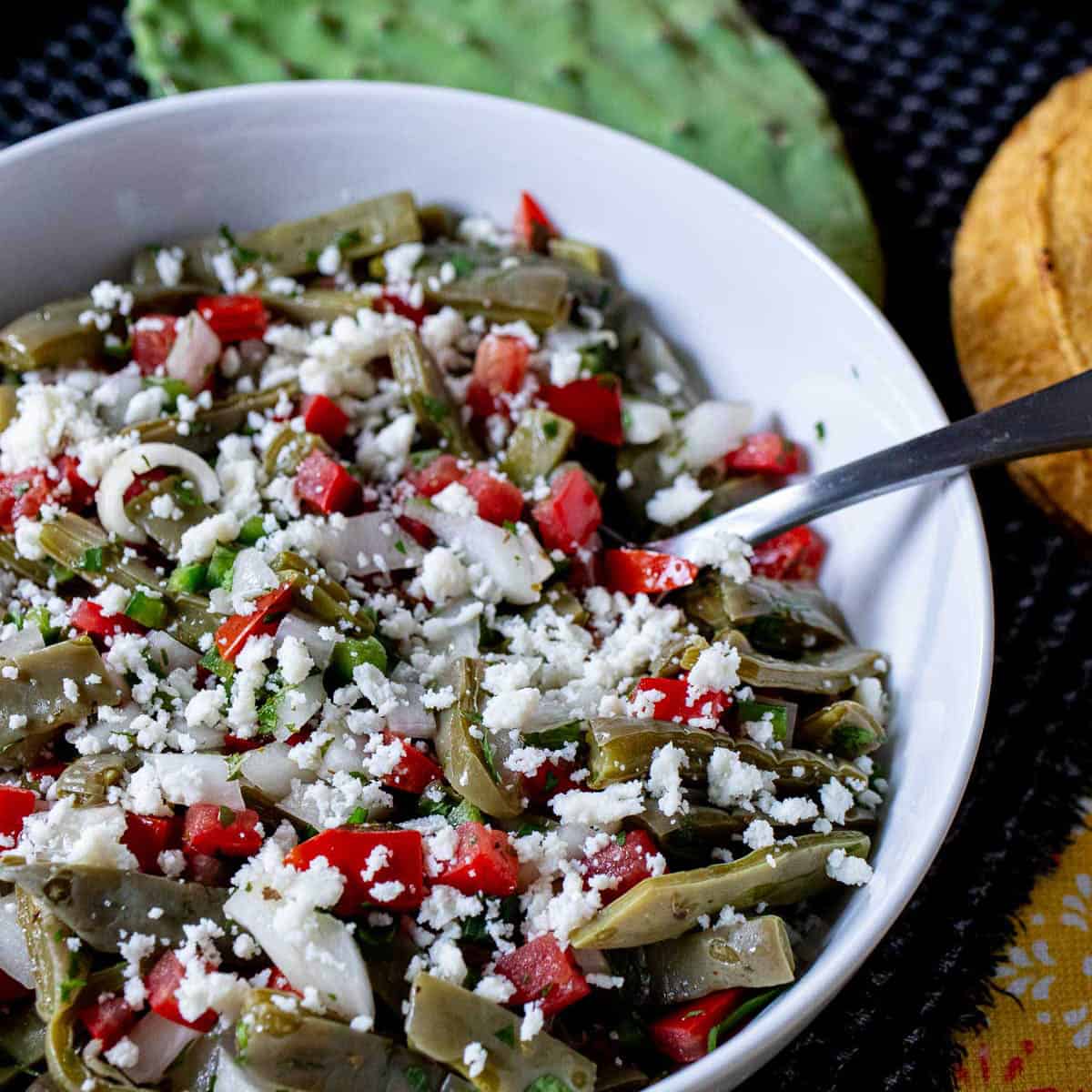
Cactus Salad
This Mexican cactus salad, or ensalada de nopales, is a tangy and slightly tart, refreshing salad that pairs well with lots of dishes and meats.
Ingredients
The Nopales:
- 4-5 medium nopales paddles, about 2-3 cups when cut, see note
- ½ medium white onion
- 1 clove garlic, smashed
- 1 teaspoon kosher salt
- 1 tomatillo husk, optional, see note
The Cactus Salad:
- ½ medium white onion, diced
- 2-3 medium Roma tomatoes, diced
- 1 jalapeño, small diced, or 1 serrano
- ¼ cup finely chopped fresh cilantro
Lime Dressing:
- ¼ cup extra-virgin olive oil
- 2 tablespoons fresh lime juice
- ½ teaspoon Mexican oregano
- ½ teaspoon kosher salt, add more to taste
For Serving and Topping:
- Queso panela
- Queso fresco
- Sliced radishes
- Sliced avocado
- Tortilla chips
- Tostados
Directions
- Fresh, whole cactus pads will need to be prepped first by removing the spines and cutting them down. If using fresh, but cleaned and cut pads, skip to the next section. Finally, if you are using jarred nopalitos, simply drain and rinse them thoroughly with cold water and you can skip ahead to putting the salad together.
How to Prepare Fresh Nopales:
- If you’re using fresh, whole paddles, you will need to remove the spines and cut the pads into strips or cubes. To remove them carefully, grip the bottom of the cactus pad with tongs, a thick kitchen towel, or wear gloves (actual work gloves, not vinyl ones).
- While holding the bottom of the cactus pad, run a sharp knife around the outer edge of the paddle to remove those spines. Now run the knife along the flat side of the pad at a slight angle to remove the surface spines. Try to remove as little extra skin and flesh as possible. Flip the pad over and repeat the process until all spines are removed.
- While still gripping the bottom of the paddle, rinse under cold water to remove the cut spines and any other debris. Finally, cut off the bottom of the paddle where you were gripping it to remove the last spines.
- From here you can make long cuts across the length of the cactus. Now slice in the opposite direction to make either strips or cubes. Nopales are typically cut into strips roughly a half-inch wide by 1-2-inches long or cut into ½-1-inch-wide cubes.
- While cutting through the cactus you may notice a clear, sticky substance leaking out. This is normal and you’ll try to cook out as much as possible.
Cook the Prepared Cactus:
- Once the nopales are cleaned and cut, you can bring a pot of water to boil on the stove. Depending on the size of the pot, you’ll need around 6-8 cups of water. It should be enough to cover the cactus by 2-3-inches.
- When the water starts boiling, add the 2 cups of nopales, ½ a white onion, 1 smashed clove garlic, 1 teaspoon kosher salt, and a tomatillo husk if using. Lower the heat and simmer for about 8-10 minutes. The nopales should go from bright green to an olive-green color and become tender, but still crisp.
- While cooking, the cactus will release more of the sticky gel (baba) which can cause a foam to form. Keep an eye on this so that it doesn’t foam up and over the top of the pot. The tomatillo husk is there to help keep this from being an issue.
- Once cooked, discard the onion, garlic, and husk and drain the nopales through a colander. Rinse under cold running water. This will help remove any remaining baba and cool the cooked cactus. Leave in the colander to drain and cool before adding to the salad.
Prepare the Salad:
- In a small jar, add ¼ cup extra-virgin olive oil, 2 tablespoons fresh lime juice, ½ teaspoon Mexican oregano, and ½ teaspoon kosher salt. Shake vigorously for a few seconds and set aside. Alternatively, add the ingredients to a bowl and whisk thoroughly.
- Dice the remaining half of the white onion, 2-3 Roma tomatoes, 1 jalapeno (or serrano), and finely chop ¼ cup of fresh cilantro. Add all of them to a large serving bowl and combine them with a wooden spoon.
- Now add the cooled nopales and the dressing and stir together again.
- If using queso panela, you can slice into roughly 1-inch cubes and toss with the salad. For queso fresco, I like to crumble it over the salad once it has been mixed or let people do that themselves for their own portions.
- You can serve immediately, but it’s even better if you refrigerate for at least 1-2 hours so the flavors can marinade together.
- Serve with various garnishes on the side such as sliced radishes or avocados, tortilla chips, or tostadas.
Equipment Used
Notes
1) Nopales – The cactus used in this recipe can typically be found in 3 different ways. If you go to an international or Latin market, you can usually find fresh cactus paddles whole with the spines still attached or cleaned and cut in bags. If you cannot find fresh, many grocery stores have jarred versions available in the Hispanic section.
2) Tomatillo Husk – There are numerous methods people use to help remove the viscous, sticky gel that nopales leech out when cut and cooked. Using a tomatillo husk is a cheap and easy method. Other options people swear by include cooking in a copper pot, adding baking soda, or even tossing a penny or two into the boiling water.
3) Cooking Methods – Nopales can be eaten raw or cooked in a couple ways. Read the post above for options including raw, grilled, or sauteed in a pan.
Nutrition
Serving: 1 side saladCalories: 94kcalCarbohydrates: 3gProtein: 0.5gFat: 9gSaturated Fat: 1gSodium: 390mgPotassium: 91mgFiber: 1gSugar: 2gCalcium: 12mgIron: 0.2mg
Tried this recipe?Let us know how it was!
