


A German springtime tradition, white asparagus with hollandaise sauce is practically a requirement on tables across Germany. Typically served with ham and potatoes, this limited time vegetable defines spring menus while in season.
While green asparagus is popular and usually available year-round in most countries, Germans love their white asparagus. This version is incredibly popular during the spring and typically available around mid-April (depending on winter weather) until late June. It is so popular it has its own named harvesting season – Spargelzeit!
White asparagus has a mild, delicate flavor that is slightly sweeter with a less “grassy” flavor than its green counterpart. Paired with a rich, buttery hollandaise sauce, it elevates the subtle flavor of the asparagus without overpowering it. The slightly nutty and somewhat bitter flavors from the asparagus contrast nicely with the silky, rich, tanginess of the sauce.
Weißer spargel mit sauce hollandaise, or white asparagus with hollandaise sauce, is one of the most popular ways to serve white asparagus during the season, probably followed by white asparagus soup. This dish is commonly served with boiled potatoes and slices of smoked ham. Look below at variations for other popular options.
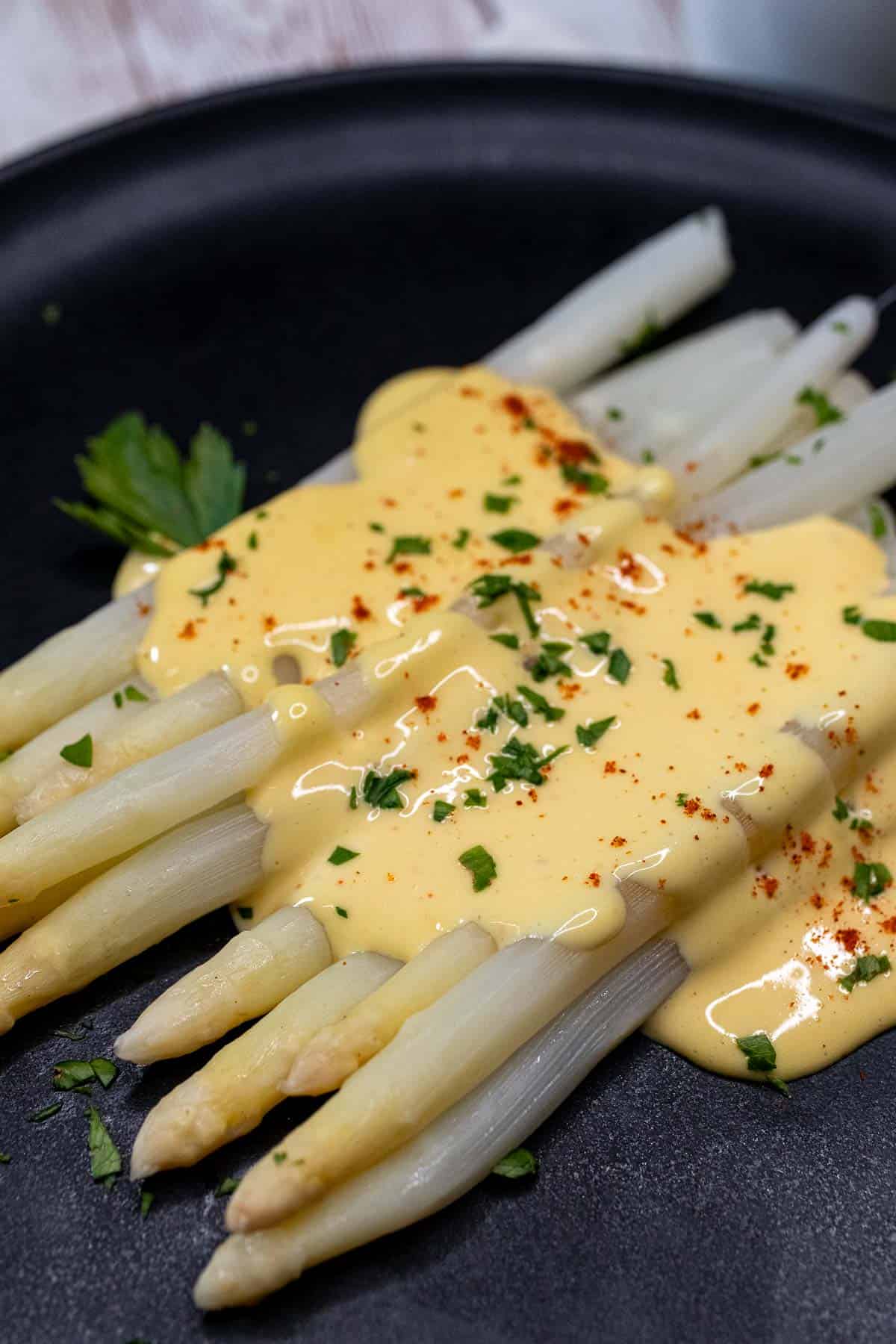
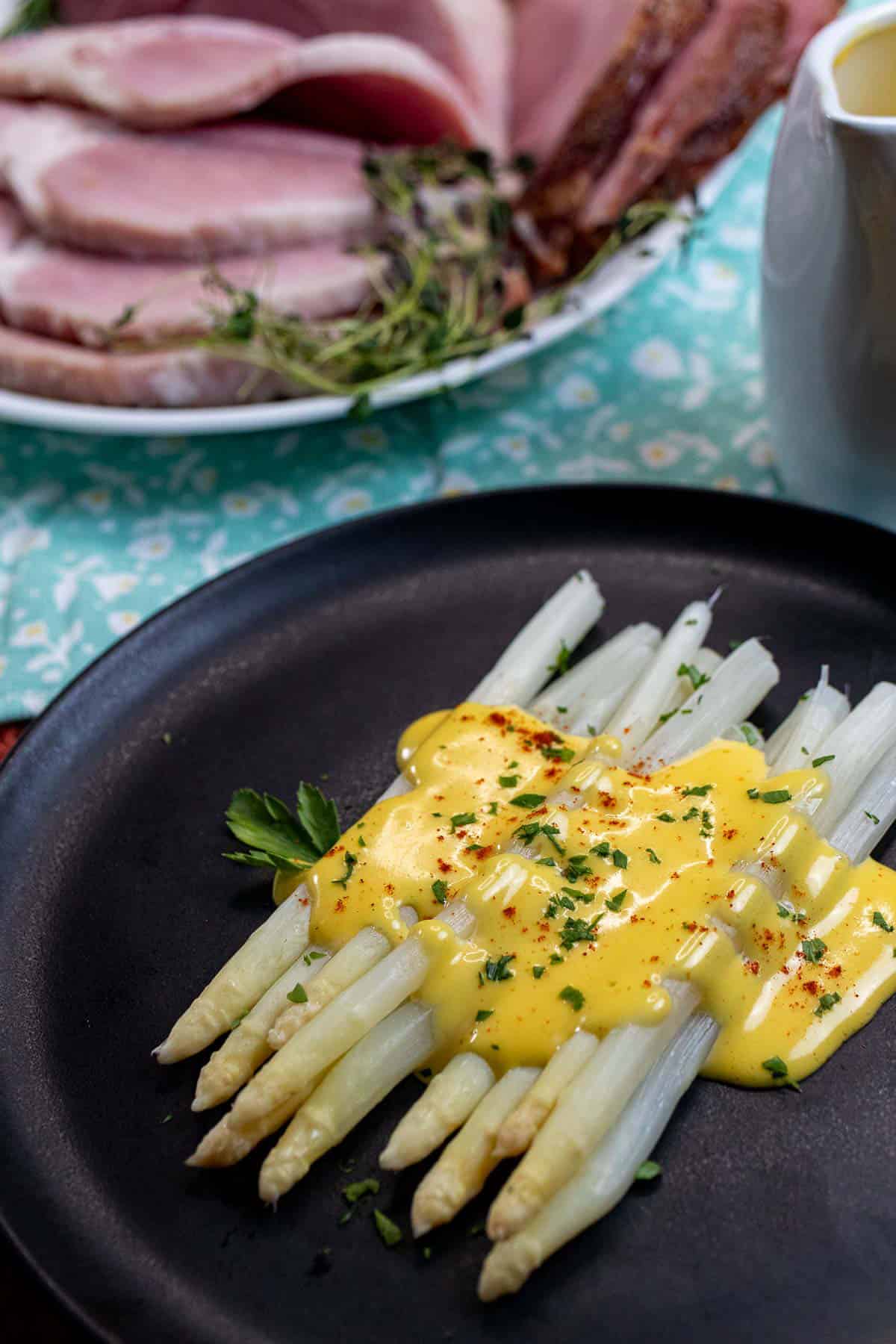
I once made this dish for an international Easter spread that included my peach and bourbon glazed ham, roasted melting potatoes, and Sicilian orange and fennel salad. This combination made for a beautiful spread that combined flavors and international harvests from late winter into early summer. A perfect way to celebrate spring and Easter.
Jump to:
🥘 White Asparagus & Hollandaise Sauce Ingredients
This recipe includes ingredients and directions for two items: white asparagus and hollandaise sauce. While white asparagus is an ingredient on its own, you’ll need a few more items to boil it with for the best flavor.
Asparagus
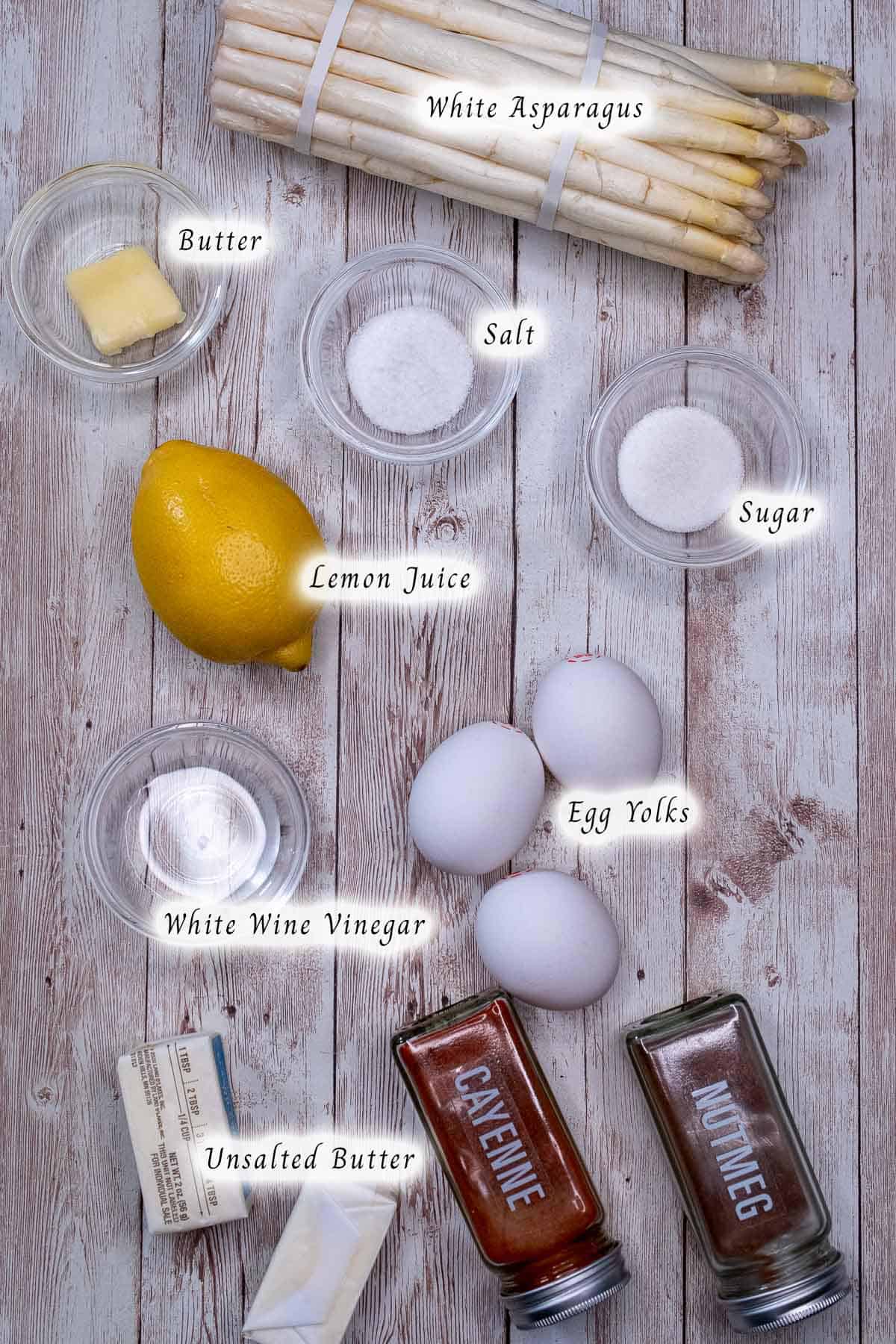
White Asparagus – Fresh white asparagus stalks are normally found in the spring at higher end grocery stores in your area. They are usually sold in bundles in the colder produce section. You can also find these sold almost year-round in jarred versions, which I don’t recommend for this recipe.
Flavoring – When you cook the asparagus in water, it’s common to flavor the water a bit. Beyond just salting the water, add a bit of sugar, a touch of butter, and some lemon juice. This helps cut some bitterness as well as complement the white asparagus’ natural buttery sweetness.
Hollandaise
Egg – The base of any hollandaise sauce is egg yolks. Save the whites for another use or an egg white omelet later.
Lemon – Fresh lemon juice adds acidity to the sauce which balances the flavor, helps emulsify the yolks and butter, and helps to keep the egg yolks from becoming scrambled eggs.
Wine – Optional, but you can also add a splash of white wine or white wine vinegar for more acidity and flavor.
Butter – The butter is your source of fat to emulsify with the egg yolks in creating the sauce. I use unsalted and add salt myself, but salted butter is alright too.
Seasoning – I add a pinch of salt since I use unsalted butter, and a dash of either cayenne (traditional) or nutmeg. Use one or the other.
👨🌾 What is Spargelzeit?
Spargelzeit is the official German harvesting period for white asparagus season. Sometimes called white gold, this variety of asparagus is treasured and celebrated every year during harvest season. You can literally find white asparagus in almost every home and restaurant menu nonstop throughout the season.
Harvesting usually begins around mid-April and goes until June 24th, St. John the Baptist Day. It sort of reminds me of King Cake season in the Gulf region of the US. It starts on the first day of the Epiphany and ends exactly on Fat Tuesday and no more will be made until next year.
While king cake season is mostly determined because of Lent, Spargelzeit has a practical reason for ending when it does. Harvesting too far into the heat of the summer can kill off the asparagus roots and it won’t be able to grow through the year and flower again next spring.
White asparagus is the same as the green variety; they're just grown differently. As soon as it begins to grow through the dirt, 8-10-inch-tall mounds of dirt are used to cover the plants. Some growers also cover them in black tarps or buckets; anything to keep them out of the sun. Without the sunlight, photosynthesis doesn't occur, so they don’t produce chlorophyll and stay white.
🔪 How to Make White Asparagus & Hollandaise
This recipe includes an easy and foolproof method for making fresh hollandaise, but feel free to use a store-bought sauce instead.
Cook the White Asparagus
Start with preparing the asparagus. The outer layer of white asparagus spears tends to be thicker and tougher compared to green asparagus, so it needs to be peeled.
Start roughly a ½-inch below the tips and use a vegetable peeler to peel down the stalk. Once peeled, cut off the bottom, woody ends of the stalk. Cut about ½ - 1-inch from the bottom until you see a still moist, tender section.
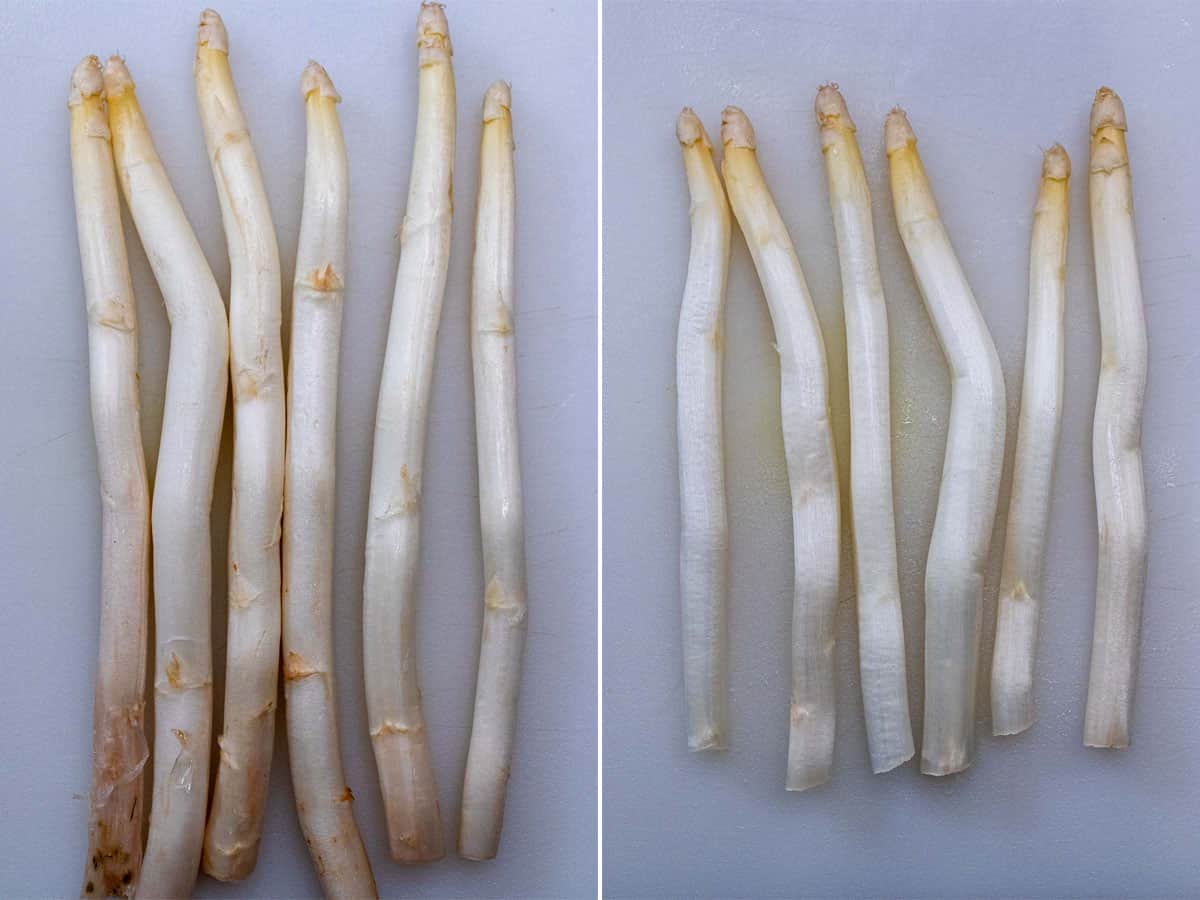
As a tip, save the peels and bottoms and you can use them while boiling the asparagus, or reserve for later if you plan to make white asparagus soup, or a vegetable broth.
Set a pot over high heat on your stove and fill with enough water to fully submerge the asparagus. Once the water is boiling, add kosher salt, sugar, a squeeze of lemon juice, and a bit of butter. Once the salt and sugar are dissolved, gently add the asparagus and lower the heat slightly. Boil until the asparagus is softened and tender, but still has a bit of bite, about 10-12 minutes (thicker stalks can take up to 20 minutes, however).
Once cooked, gently remove the asparagus with a slotted spoon or strainer. You can serve individual portions on a plate or add it all to a serving plate.
Make the Hollandaise
While the asparagus is cooking, you can make the hollandaise sauce.
In a blender or food processor, add the egg yolks, salt, lemon juice, and white wine vinegar if using. Blend until everything is mixed and a little frothy.
Cut the butter into cubes and place in a microwave safe bowl or a glass measuring cup with a spout (this makes it easier to pour). Cover and microwave for about 30 seconds, stir, and continue microwaving in 10 second increments until fully melted and very hot.
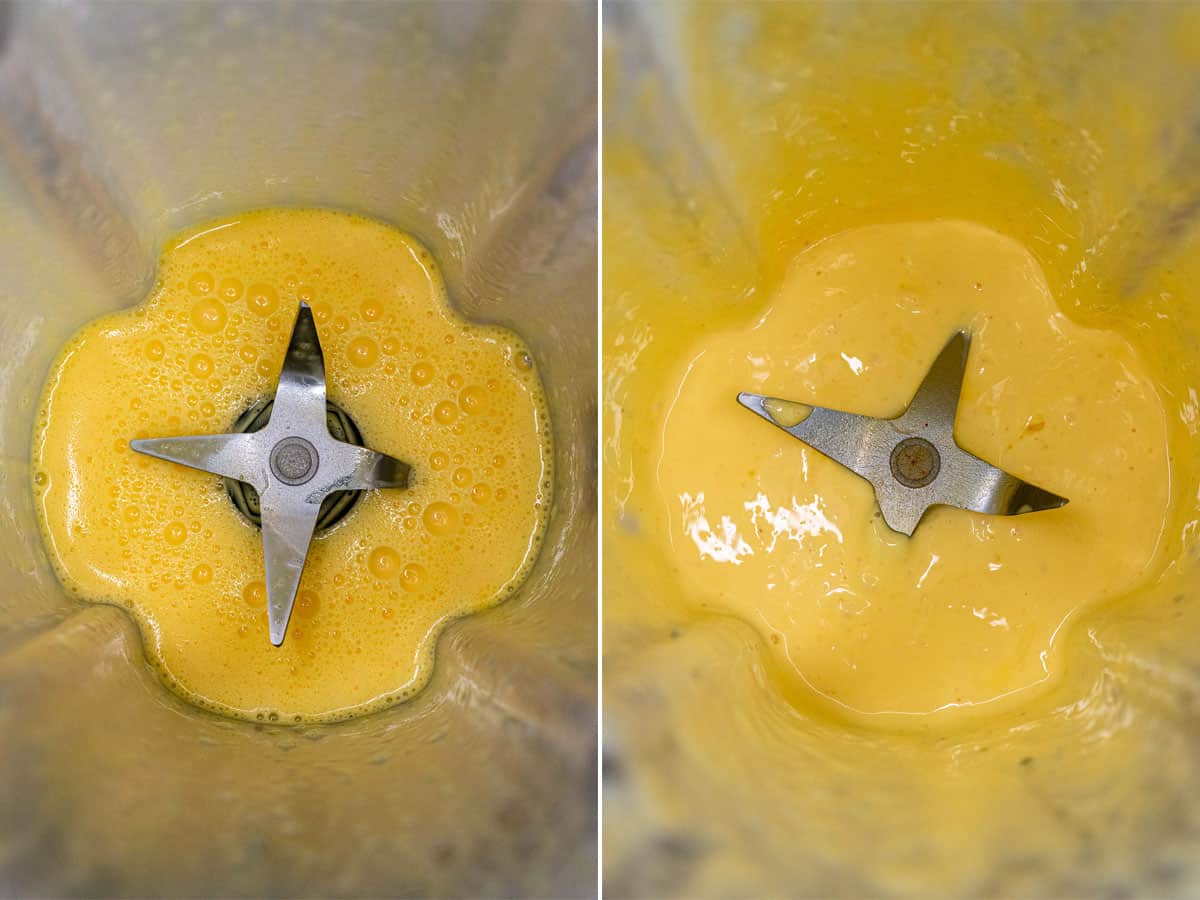
With the blender going, slowly drizzle in the hot butter until the sauce is fully emulsified and can coat the back of a spoon. Make sure to go slowly here to keep it from breaking; the whole process should take over a minute of drizzling in the butter.
Add a pinch of cayenne (if using) and give it one more quick blitz.
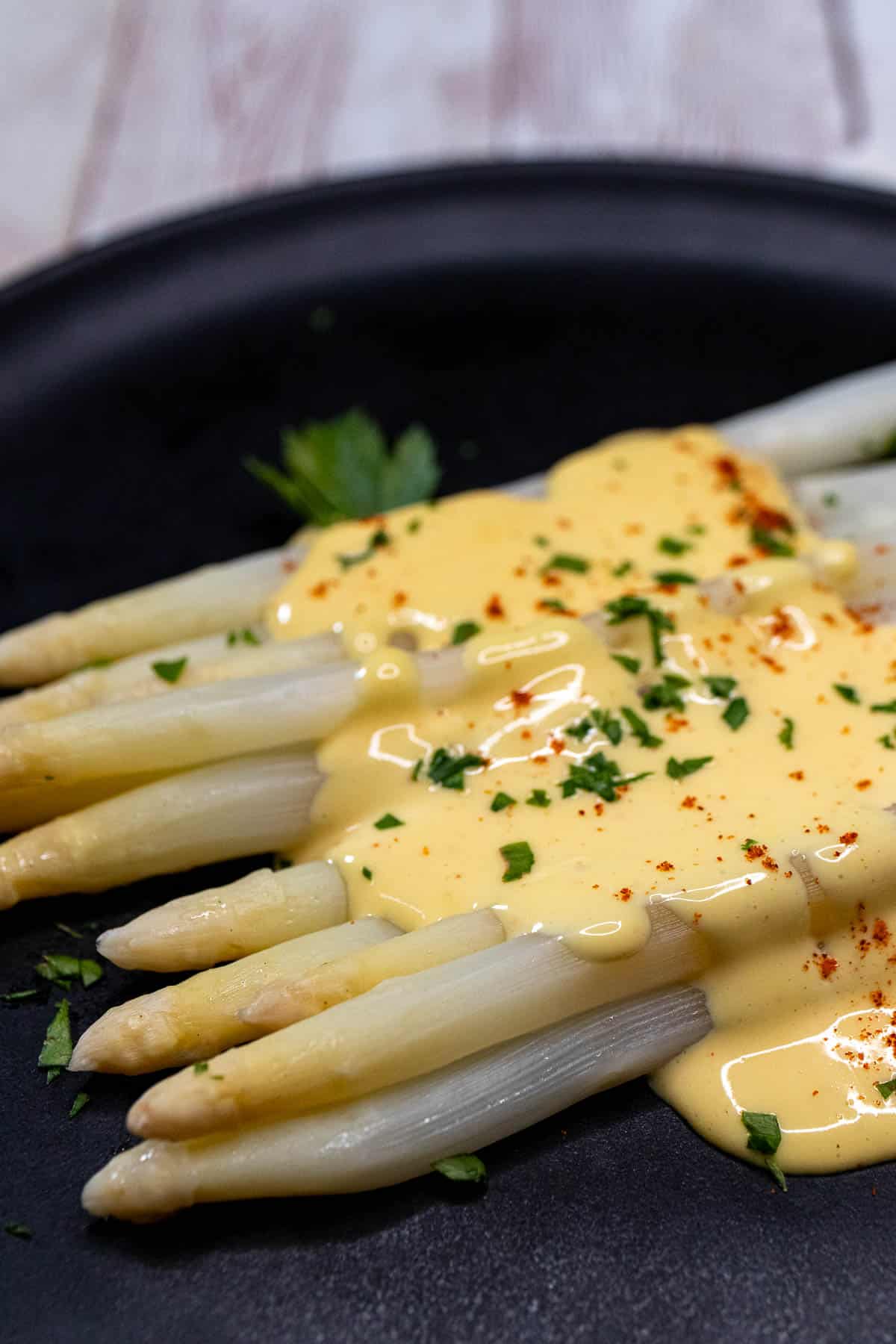
Spoon over your plated asparagus and top with another pinch of cayenne or nutmeg. Top with some fresh parsley or chives if you like and serve warm.
📖 White Asparagus Serving Variations
While this white asparagus recipe focuses on just the vegetable and a sauce, there are a couple of classical pairings and other popular sauce options.
Classic Pairing – One of the single most popular ways to serve this dish is with the white asparagus covered in sauce hollandaise and served with ham and potatoes. Usually, the potatoes are simply boiled until tender, then tossed with some fresh herbs. The ham is typically a cured or smoked ham, thin sliced and rolled option like Black Forest ham or prosciutto.
Other Sauces – While hollandaise is a classic pairing, you can top with simpler options that are less rich, or less buttery. Popular options include just simply melted butter with a lemon wedge, browned butter with or without some toasted breadcrumbs, or cream sauces. The cream sauces usually include egg yolk, but replace butter with heavy cream, or include a saffron flavored version.
Baden Version – The Baden-Württemberg region in southwest Germany is famous for its white asparagus, and they love to serve it with their savory, torn pancakes called kratzete. These pancakes are made without sugar or a leavener like baking powder and sometimes fresh herbs are mixed in. Cooked in a skillet, after flipping it over, the pancake is torn into pieces and slightly crisped up before serving.
Other Pairings – Instead of simple ham, this side dish can also be found served alongside fish such as cod or salmon, or a schnitzel. A popular vegetarian version is often served with a poached or fried egg instead of meat.
🍽 Recommended Equipment
Two of the items I’ll list below, most people will probably have already. I do recommend them for making this dish though, in case you don’t have them around. The other item is definitely a wish list item and not necessary for making this recipe.
Peeler – White asparagus has tougher skin than its green counterpart and does need peeling before cooking. A decent set of vegetable peelers is good item for all kitchens to have on hand, and these are what I use.
Blender – You can make an easy hollandaise sauce in a decent blender or food processor. I recommend having a good quality blender like this one that can be used in many applications, but there’s no need to blow the bank on $500+ blenders for the average home cook.
Asparagus Cooker – If you really love asparagus, this asparagus cooker might be right up your alley. While labeled as an asparagus cooker, it’s basically just a pot that’s taller than it is wide and comes with a lid and strainer basket. This lets you cook asparagus vertically for more even cooking, but you can use it for other applications as well, such as boiling pasta or frying smaller batches of French fries or other fried foods.
❄️ How to Store Cooked White Asparagus
Both white asparagus and hollandaise sauce are best consumed the day they’re made. If you do have leftovers, however, you can refrigerate them for a few days. I do suggest if you think you may have leftovers, though, to keep and store them separately.
Once cooled, you can store the cooked asparagus in an airtight container in the refrigerator for 3-4 days. I suggest eating within 3 days for best taste and texture though. You can reheat on the stove in a pan over medium heat with a bit of butter, or in a microwave-safe container with a splash of water for 1-2 minutes.
Hollandaise sauce, once cooled completely, can also be refrigerated in an airtight container for 2-3 days at most. While you can keep leftovers, reheating can be tricky. The best bet is to reheat in a double boiler over low heat and whisk in a bit of hot water until you reach the desired temperature and consistency.
I do not recommend freezing either component.
📋 Recipe
German White Asparagus (with Hollandaise Sauce)
Ingredients
White Asparagus:
- 2 pounds white asparagus
- 2 teaspoons kosher salt
- 2 teaspoons granulated sugar
- 1 tablespoon fresh lemon juice
- 1 tablespoon butter
Hollandaise Sauce:
- 3 large egg yolks
- Pinch of salt
- 1 tablespoon fresh lemon juice
- 1 tablespoon white wine vinegar, optional
- ½ cup butter, melted and hot
- Pinch of cayenne, or nutmeg
Directions
Cook the White Asparagus:
- Start with preparing 2 pounds of white asparagus. White asparagus tends to have thicker, tougher outer layer compared to green asparagus, so it needs to be peeled. Start roughly a ½-inch below the tips and peel down the stalk. Once peeled, cut off the bottom, woody part of the stalk. Cut about ½ - 1-inch from the bottom until you see a still moist, tender section.
- As a tip, save the peels and bottoms and you can use them while boiling the asparagus, or reserve for later if you plan to make white asparagus soup, or a vegetable broth.
- Set a pot over high heat on your stove and fill with enough water to fully submerge the asparagus. Once the water is boiling, add 2 teaspoons kosher salt, 2 teaspoons granulated sugar, 1 tablespoon fresh lemon juice, and 1 tablespoon butter. Once the salt and sugar are dissolved, gently add the asparagus and lower the heat slightly. Boil until the asparagus is softened and tender, but still has a bit of bite, about 10-12 minutes (thicker stalks can take up to 20 minutes, however).
- Once cooked, gently remove the asparagus with a slotted spoon or strainer. You can serve individual portions on a plate or add it all to a serving plate.
Make the Hollandaise:
- While the asparagus is cooking, you can make the hollandaise sauce.
- In a blender or food processor, add 3 large egg yolks, a pinch of salt, 1 tablespoon fresh lemon juice, and 1 tablespoon white wine vinegar if using. Blend until everything is mixed and a little frothy.
- Slice a ½ cup of unsalted butter into cubes and place in a microwave safe bowl or a glass measuring cup with a spout (this makes it easier to pour). Cover and microwave for about 30 seconds, stir, and continue microwaving in 10 second increments until fully melted and very hot.
- With the blender going, slowly drizzle in the hot butter until the sauce is fully emulsified and can coat the back of a spoon. Make sure to go slowly here to keep it from breaking; the whole process should take over a minute of drizzling in the butter.
- Add a pinch of cayenne (if using) and give it one more quick blitz.
- Spoon over your plated asparagus and top with another pinch of cayenne or nutmeg. Top with some fresh parsley or chives if you like and serve warm.
Equipment Used
- Asparagus Cooker (optional)


Comments
No Comments