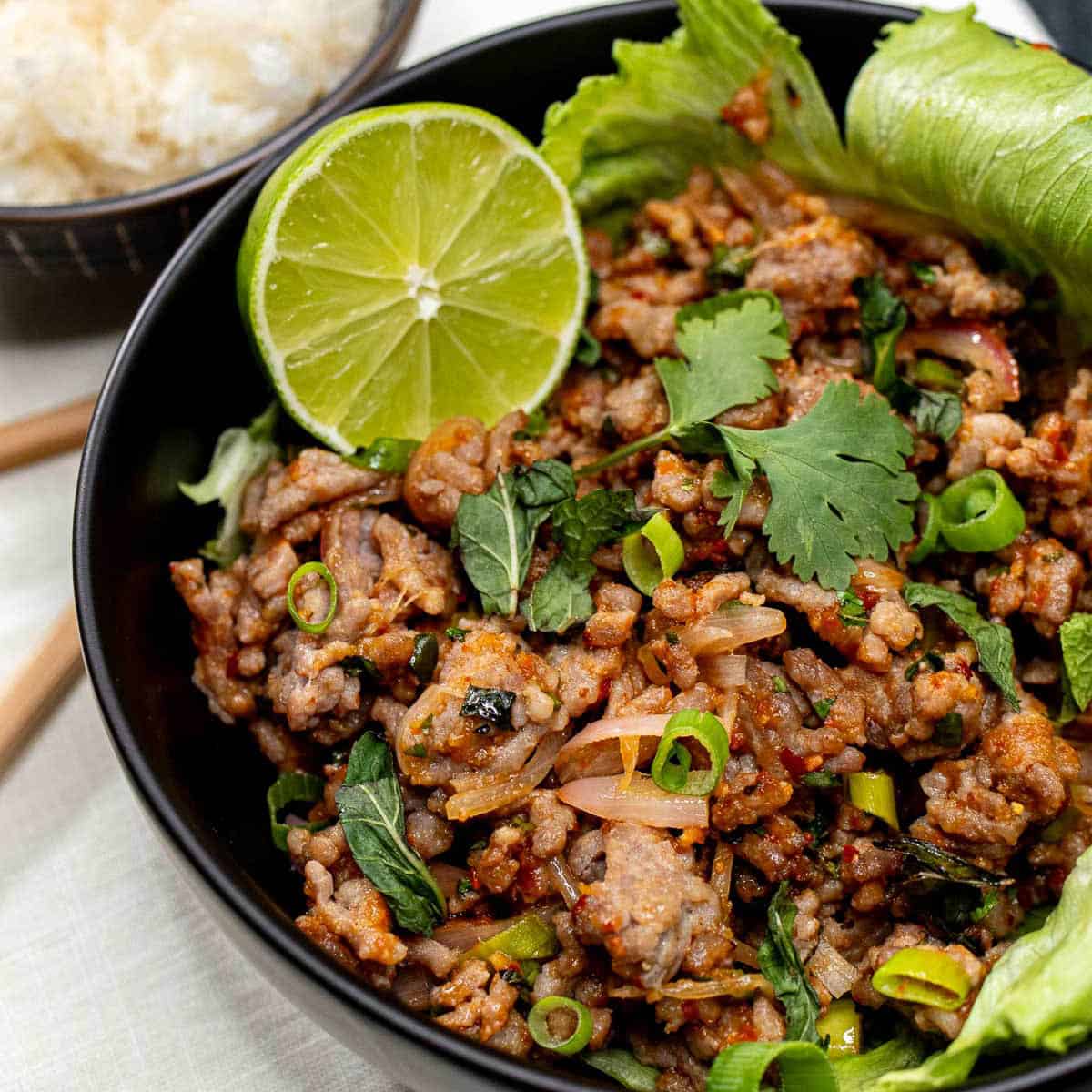
Thai Pork Laab (ลาบหมู Laab Moo)
Thai pork laab is a popular dish made with minced pork, seasonings, and fresh herbs. Full of the regional flavors, laab is savory, spicy, and sour all at once.
Ingredients
- 1 tablespoon sticky rice, uncooked
- 1 pound ground pork
- 2 tablespoons fish sauce
- 2 tablespoons fresh lime juice, with extra limes for serving
- 1-2 teaspoons chili flakes, see note
- ¼ teaspoon white sugar, optional
- 1 medium shallot, sliced thin
- 2 green onions, chopped
- 20 sprigs fresh mint
- 5-6 sprigs fresh coriander, cilantro
- 5-6 leaves fresh culantro, optional
Directions
- Add 1 heaping tablespoon of glutinous (sticky) rice to a dry skillet or wok over medium low heat. Toast, stirring often, until it starts to turn from a golden brown into a dark brown and smells like popcorn, about 10-12 minutes. Remove from the heat immediately to stop the cooking and allow it to cool a bit, then crush it into a powder with a mortar & pestle or a spice grinder.
- Thinly slice the shallot, chop the green onions, and coarsely chop or tear the mint, coriander (cilantro), and culantro (if using) leaves and set everything aside.
- In a medium saucepan or pot or deep skillet add 1-pound ground pork and cook over medium heat without any oil. Break up the meat and cook until no pink spots remain. If you prefer a wetter laab, you can add a few tablespoons of water to the pork as its cooking.
- From here you can transfer the cooked pork to a mixing bowl, or just leave it in the pot, remove from the heat, and add everything there for a one pot meal. Starting with 2 tablespoons fish sauce, 2 tablespoons lime juice, 1-2 teaspoons chili flakes, and 1 tablespoon of toasted rice powder, add them all and stir thoroughly to combine.
- Now add the shallot, green onion, mint, coriander, and culantro and stir again to combine all the ingredients. Place in a large serving bowl if serving family style, or into separate dishes for individual meal portions. Laab is typically served warm or at room temperature.
- Optional – Typically once the pork is cooked, the ingredients are added and mixed in off the heat and then served. Personally, I like to continue cooking it just a bit more. Once the pork is almost done, I add the ingredients as above, including the shallots, and stir to combine, while continuing to cook another 3-4 minutes, then add the green onions and herbs and cook another 1-2 minutes before removing from the heat.
- This isn’t traditional and completely down to personal preference. I like this method because it gives a little more time for the seasoning to infuse with the meat and sweats the shallots down just a bit instead of having the raw bite of onion.
Notes
1) Chili Flakes – Known as prik bon (พริกป่น), Thai chili flakes have a stronger flavor and spice compared to the common crushed red pepper in US stores. You can usually find this in Asian markets or make your own with dried bird’s eye chilis or even chilies de arbol if that’s easier to find. Or just use crushed red pepper if that’s easiest.
2) Onions – Shallots are preferred here, but Thai shallots are a bit stronger in flavor and the size of a large grape compared to others. If using regular shallots, use one small or medium one, or some red onion instead.
Nutrition
Serving: 1 large bowlCalories: 661kcalCarbohydrates: 14gProtein: 41gFat: 48gSaturated Fat: 18gCholesterol: 163mgSodium: 1569mgPotassium: 935mgFiber: 2gSugar: 3gCalcium: 91mgIron: 3mg
Tried this recipe?Let us know how it was!
