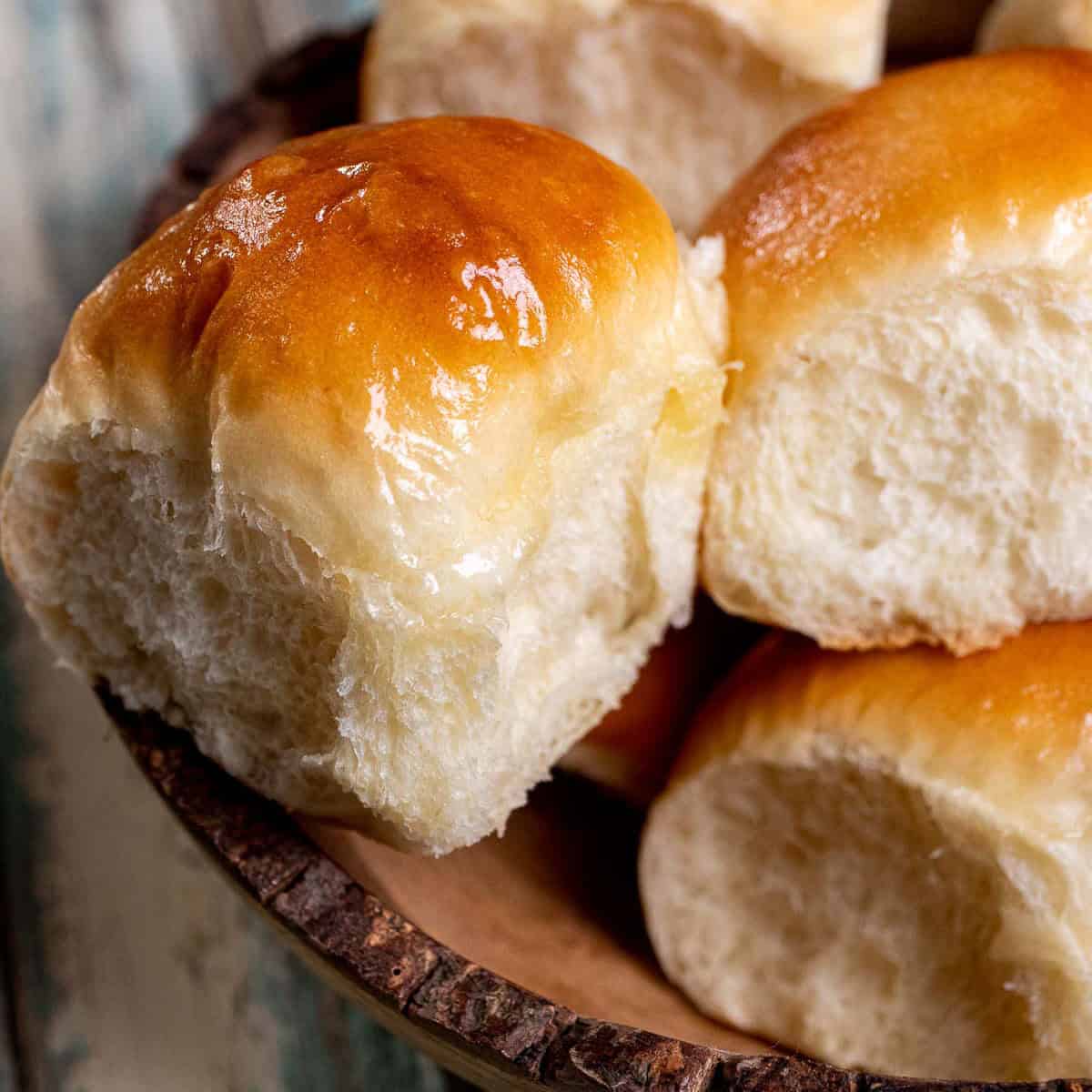
Honey Butter Yeast Rolls
Rich, tender, soft, and slightly sweet, these honey butter yeast rolls are some of the best dinner rolls I’ve ever made. Soft and buttery, these rolls have a wonderful texture and flavor, and when topped with honey butter, it puts their flavor over the top.
Ingredients
Honey Butter Rolls:
- 1 cup whole milk, warm
- 2 ¼ teaspoons instant yeast, 1 packet
- 1 teaspoon granulated sugar, or honey
- ¼ cup honey
- 1 large egg, at room temperature
- 1 large egg yolk, at room temperature
- ¼ cup unsalted butter, melted and cooled
- 1 teaspoon kosher salt
- 3 ½ cups bread flour
Honey Butter Topping:
- ¼ cup butter, softened
- 1 tablespoon honey
Directions
Make the Dough & First Rise:
- Begin by melting ¼ cup unsalted butter and proofing the yeast. In a liquid measuring cup, heat 1 cup whole milk until warm (about 100°F / 38°C), add 1 teaspoon granulated sugar (or honey) and 2 ¼ teaspoons (1 packet) yeast and stir together. Set aside to bloom for about 10 minutes. Place the butter in a small bowl and microwave for 20 seconds, and again in 10 second increments until it is just melted. Set aside to cool slightly.
- If the yeast and milk are bubbly and frothy looking after 8-10 minutes, the yeast is good, and you can begin making the dough. In the bowl of a stand mixer, or in a large mixing bowl, add 1 large egg, 1 large egg yolk, ¼ cup honey, and the melted butter. Use a fork and mix until the eggs are nice and scrambled, then add the milk and yeast mixture and stir together again.
- Add most of the 3 ½ cups bread flour, reserving roughly a ½ cup, and place on the stand mixer with the dough hook attachment. Mix for about two minutes at stir speed, scraping down the sides, until a shaggy dough begins to form.
- Toss in 1 teaspoon kosher salt and the rest of the flour and continue mixing at stir speed until combined, then turn to low speed and allow the dough to knead for 8-9 minutes. The dough should be slightly tacky, but not sticky. If it feels too sticky, add more flour a tablespoon at a time until it feels right. Lightly oil a large bowl and add the dough, turning to coat. Cover with plastic wrap or a damp towel and place in a draft-free, warm environment. Let it rise for 1-2 hours, until doubled in size.
Second Rise & Baking:
- Once doubled in size, punch down the dough and turn out onto a lightly floured surface. Tear off pieces of dough to form 15 equal pieces. If using a kitchen scale, my dough was just under 900 grams, so it was about 60 grams (or 2 ounces) for each roll. Take each piece of dough and push your fingers under the dough towards you until a smooth top forms and pinch the bottom together. Place it on the floured surface and cup your hand over the ball and gently roll back and forth to seal the bottom and make a tight ball.
- Place all 15 dough balls into a nonstick 9x13 baking dish and cover again for a second dough rise. This should take around 45-60 minutes. In the meantime, set aside a ¼ cup of butter to soften. When the second rise is almost over, preheat your oven to 350°F / 180°C.
- Once the dough has risen a second time (they should be puffed up and touching each other), set on the middle rack of the oven and bake for 18-20 minutes. While baking, place the softened butter in a small bowl and add 1 tablespoon honey to it. Use a fork to mix the honey into the butter until fully combined.
- Remove the yeast rolls from the oven when they are finished baking and the tops are golden brown. As soon as you remove them from the oven, use a knife or pastry brush to slather on the honey butter. It will melt and coat all the tops in a wonderful glaze.
- Allow them to cool for about 5 minutes and serve with the rest of the honey butter on the side.
Equipment Used
Notes
1) Whole Milk – You can use other milks here, but whole milk makes the best tasting and textured enriched breads in my experience. I have not tried this recipe with non-dairy milks, but they should be ok to use.
2) Bread Flour – I’ve made these with both bread and all-purpose flour and either one will work. Bread flour does give the best texture and airiness to the bread, however.
3) Yeast & Rising Times – Active dry or instant yeast can be used here. I use instant yeast, but I still bloom it, which I always recommend doing. It’s much better to find out if your yeast is dead a few minutes in, instead of using all your ingredients and waiting an hour or two to realize it was no good.
As for rising times, you want to look for the dough to have basically doubled in size. How long that takes depends on a lot of factors from the type of yeast you use, the temperature and humidity of your home, and even altitude. The rise times given are normal ranges, but they can vary.
Nutrition
Serving: 1 rollCalories: 202kcalCarbohydrates: 29gProtein: 5gFat: 8gSaturated Fat: 4gCholesterol: 34mgSodium: 189mgPotassium: 79mgFiber: 1gSugar: 7gCalcium: 29mgIron: 0.4mg
Tried this recipe?Let us know how it was!
