Homemade Chicken Stock
Homemade chicken stock is easy to make and highly versatile. Using leftover chicken scraps that otherwise would have ended up in the trash, it’s a great way to cut down on waste, and because of the long simmer, it’s mostly hands off while cooking. Make a large batch and you can freeze it to have some on-hand whenever you need a small amount.
Ingredients
- 4 pounds chicken carcasses and wing tips
- 1 medium yellow onion, sliced (see note #2)
- 1 medium yellow onion, unpeeled and quartered
- 2-3 medium carrots, roughly chopped
- 2-3 ribs celery, roughly chopped
- ½ tablespoon black peppercorns
- 2 bay leaves, fresh or dried
- 2-3 sprigs fresh thyme
- 3-4 sprigs fresh parsley
- 1 tablespoon vinegar, white distilled or cider
- 12 cups water, cold
Directions
- Start by heating a large stock pot with a splash of oil to medium-high and adding the chicken pieces. Working in batches, sear the chicken for a few minutes and remove to cool. Turn the heat to medium-low and add the sliced onion. Cook until tender.
- Using poultry shears or a butcher’s knife, chop up a lot of the chicken carcasses and wing tips. Add them back to the stock pot with the onion and stir to combine. Turn the heat to low and cover the pot. Let the meat and onion sweat for 20 minutes.
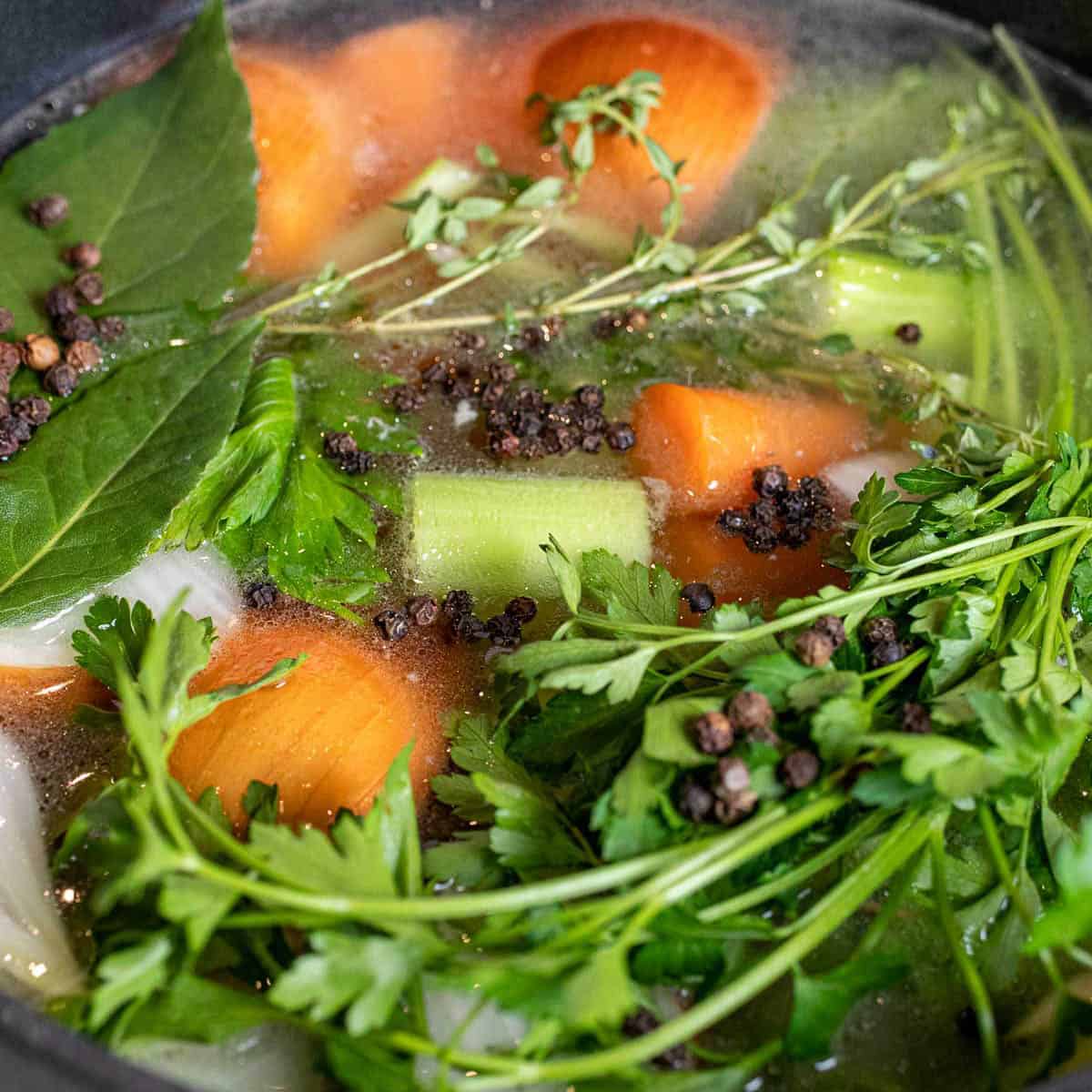
- Remove the lid, add the vegetables, water, and vinegar, and stir to combine. Crank up the heat and add the peppercorns, bay leaves, thyme, and parsley. Bring the water to just shy of boiling and then lower the temperature to a simmer. Allow to cook, uncovered for 3 hours.
- While it cooks, occasionally skim the foam off the top with a ladle.
- Once finished cooking, pour the stock through a fine mesh strainer to remove all the solids. Discard the solids.
- You should have about 8 cups/2 quarts of stock from the original 12 cups/3 quarts of water. If it’s more than 8 cups, reduce it a little more on the stove. If it’s less than 8 cups, add a little water.
- Once cooled, pour into glass canning jars and place in the refrigerator for a few hours or overnight. The fat will rise to the top as it cools and be easier to skim off as it solidifies.
- At this point it is ready to be used in recipes, or you can further reduce it for a concentrated stock.
- If you want to concentrate the stock, pour it into a pot and bring it to a boil. Reduce heat to a strong simmer and continue cooking for 30-40 minutes until reduced by half.
Notes
1) Use a large stock pot or Dutch oven. For reference, the stock pot I used for this is 6.5 quarts and it literally filled to maybe an inch from the top. If you have a larger one than that, definitely use it.
2) If you want a cleaner, white stock version of this, it’s easier and faster to make. Simply skip the browning of the chicken, don’t cut the bones, and skip the sweating step. Keep the onion, but don’t slice and cook it, just quarter it like the other onion and add it to the stock pot with the rest. Don’t skip the skimming either and try to skim every 10-15 minutes during the first hour, and every 20-30 minutes for the rest of the cook time. To make the finished stock even cleaner, strain the stock once to remove solids, and then strain again with cheesecloth or muslin over the strainer to remove as many impurities as you can.
3) Because of the long cook time, don’t dice the vegetables. Chop them into larger pieces at least 1-2 inches so that they don’t overcook and fall apart while cooking. You can also leave the onion unpeeled and if the carrots and celery have their leaves, toss them in too.
4) A great tip for freezing chicken stock is to reduce it and then freeze it in ice cube trays. Once frozen, move the cubes of stock to an airtight freezer bag. Now you’ll have just the right amount frozen and on-demand for recipes that call for a small amount of stock without having to buy and open an entire quart container for a few tablespoons of stock.
5) Why make a concentrated stock? You can use the stock as it is, but if you concentrate it, it takes up a lot less space. You can use a smaller amount in this form and water it down without losing flavor as well.
6) When chilled, homemade chicken stock will solidify into a jelly consistency. Don’t be alarmed or wonder if you did something wrong. When cooking the bones and collagen, it’s turned into gelatin. A high concentration of the gelatin is makes it solidify like Jell-O. A little bit of heat will turn it into a liquid again almost immediately.
Nutrition
Serving: 1cupCalories: 293kcalCarbohydrates: 5gProtein: 23gFat: 20gSaturated Fat: 6gCholesterol: 94mgSodium: 127mgPotassium: 318mgFiber: 1gSugar: 2gCalcium: 45mgIron: 1mg
Tried this recipe?Let us know how it was!
