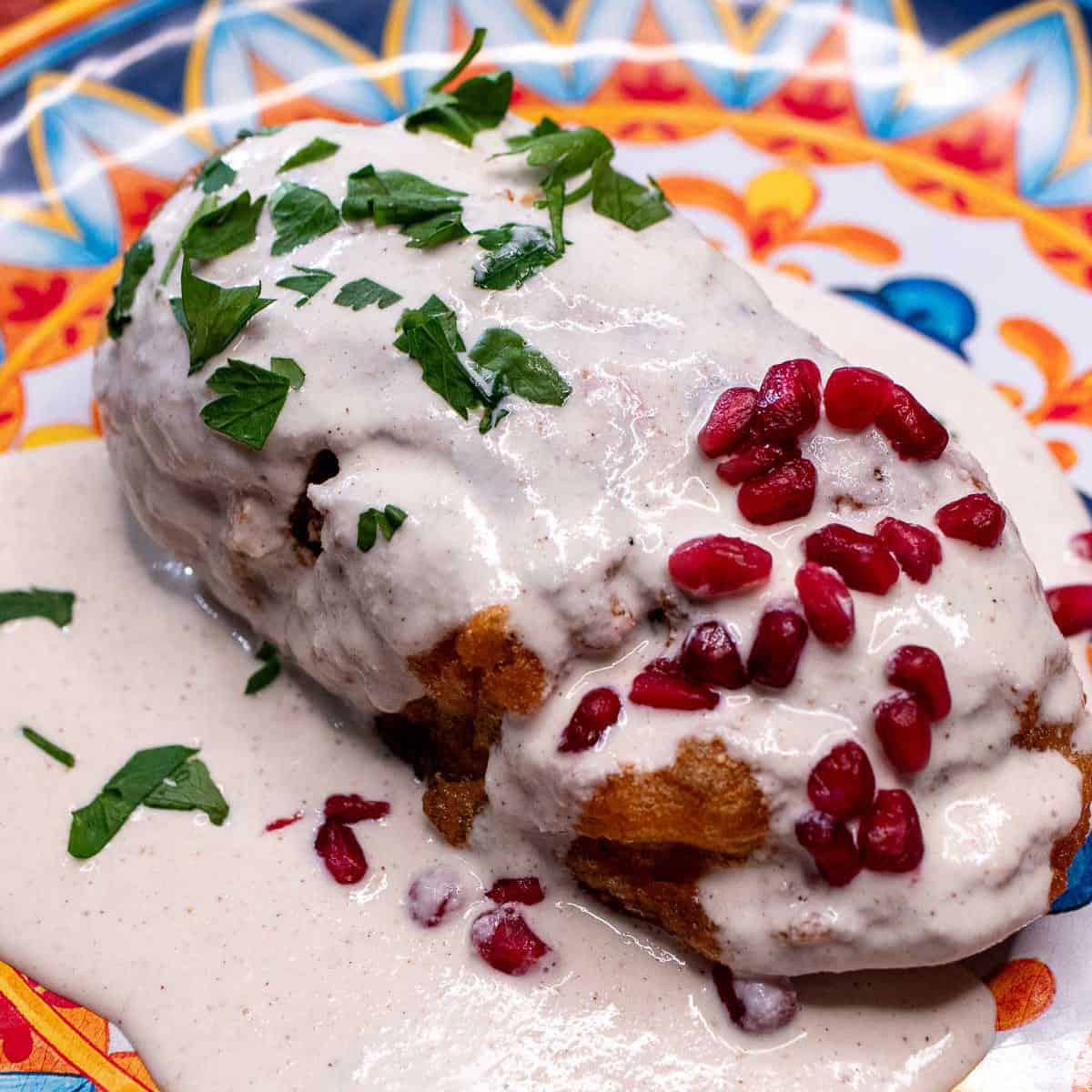
Chiles en Nogada
Widely considered a national dish of Mexico, chiles en nogada celebrate Mexican independence with a stuffed poblano covered in a walnut sauce. This dish is a celebration with amazing flavors of in-season fruits and nuts and beautiful colors.
Ingredients
Walnuts:
- 1 cup walnut halves, heaping, see note
- 2 cups water, hot
Filling:
- 2 tablespoons oil, or lard
- ½ white onion, diced
- 2 cloves garlic, minced
- 1 pound ground beef
- 1 pound ground pork
- 2 teaspoons kosher salt
- 1 teaspoon ground black pepper
- 2 Roma tomatoes, diced, see note
- 1 medium apple, peeled and diced, see note on fruit
- 1 medium pear, peeled and diced
- 1 medium peach, peeled and diced
- 1 medium plantain, peeled and diced
- ½ teaspoon ground cinnamon
- ½ teaspoon dried thyme
- ⅛ teaspoon ground cloves
- ¼ cup raisins, regular or golden
- ¼ cup slivered almonds
- 3 tablespoons candied pineapple, chopped small
- 2 tablespoons sherry, optional
Walnut Sauce:
- 1 cup skinned walnuts, heaping, see note
- ½ cup whole milk
- 4 ounces goat cheese, see note
- 4 ounces queso fresco or cream cheese, see note
- ½ cup Mexican crema, or heavy cream
- ½ teaspoon kosher salt, more to taste
- ½ teaspoon ground cinnamon
- 1 tablespoon white sugar, optional, more to taste
- 2 teaspoons sherry, optional
Poblanos & Toppings:
- 6-8 large poblanos
- Flat-leaf parsley, for garnish
- Pomegranate arils, for garnish
For Frying (Optional):
- 1 cup all-purpose flour
- 5 large eggs, separated
- Neutral oil, enough for shallow frying
Directions
The Walnuts:
- If using packaged walnut halves, you’ll want to start here to soak them and remove the skin so that the sauce won’t taste bitter. Pour a heaping cup of walnuts into a medium bowl and pour 2 cups of hot water over them. I typically use a glass measuring cup filled with water and microwave it on high for 2 minutes. Allow the nuts to soak for at least 1-2 hours and up to overnight.
- Once softened, drain the walnuts and place them on some paper towels or a clean kitchen towel. You can scrape the skin off with a paring knife or your own nails. Another good method I found is using the stiff bristles of a vegetable cleaning brush.
- In another medium bowl, pour in ½ cup whole milk. As you skin the walnuts, toss them into the bowl of milk to soak and stay soft while also adding a nutty flavor to the milk.
- If using pre-skinned walnuts, just place them into the bowl of milk while you make the filling.
The Picadillo Filling:
- Like the walnuts, this can be prepared a day ahead of time if needed. In a large pan or Dutch-oven, heat 2 tablespoons oil or lard over medium to medium-high heat. Place ½ a diced white onion in the pan and sauté for 5-6 minutes. It should start turning translucent but without browning. Add 2 minced garlic cloves and cook until fragrant, about a minute longer.
- Now add 1-pound ground beef, 1-pound ground pork, 2 teaspoon kosher salt, and 1 teaspoon ground black pepper. Continue cooking while breaking up the meat until there’s very little pink left, about 8-10 minutes. Add 2 diced Roma tomatoes and stir to combine. Continue cooking another 3-4 minutes.
- While the tomatoes are cooking and breaking down, peel and dice the apple. I find the apples usually take the longest to cook and soften, so I add these first. Toss the diced apple into the pan and mix to combine. Quickly peel and dice the pear, peach, and plantain, adding them to the mixture as you go, in that order.
- Finally, add ½ teaspoon ground cinnamon, ½ teaspoon dried thyme, ⅛ teaspoon ground cloves, ¼ cup raisins, ¼ cup slivered almonds, 3 tablespoons candied pineapple, 2 tablespoons sherry (optional) to the pan. Stir to combine thoroughly and cover the pan. Allow the mixture to continue cooking, covered, for about 15 minutes, stirring occasionally. Remove from the heat and let cool before using.
The Nogada:
- While this could also be made ahead of time, I recommend making it shortly before serving instead. Once the walnuts have been dealt with, this literally comes together in less than 5 minutes.
- In a blender, add the walnuts and whole milk they’ve been soaking in, as well as ½ cup of the cream you’re using. Blend on a chopping setting or medium speed to break things up, then increase speed until a smooth sauce forms.
- Now add the 6-8-ounces of cheese you’re using, ½ teaspoon kosher salt, ½ teaspoon ground cinnamon, and optionally 1 tablespoon white sugar and 2 teaspoons sherry. Blend at a medium speed until well combined and smooth. Taste and adjust if you think it needs more salt or sugar. The walnut sauce should be pourable but slightly thick, able to coat the back of a spoon. Wipe a finger across the spoon and if it leaves a clean streak that doesn’t fill back in, you’re good to go.
- If the sauce seems a bit thin, add a bit more cheese or crema/heavy cream. Alternatively, if the sauce feels too thick, blend in a bit more milk. Set the sauce aside at room temperature until ready to serve.
Preparing the Poblanos:
- I recommend doing the poblanos just before serving so that they’re nice and fresh. If you’re trying to be efficient with your time, I’d suggest making the walnut sauce while the peppers are steaming and cooling after roasting.
- If you have a gas stove, you can roast the 6-8 poblanos directly on the stove grates. Turn the front burners on high and roast the peppers, turning until blackened on every side, about 3-4 minutes each side. If that’s not an option, heat your oven broiler to high and place the poblanos on a baking sheet. Set the oven rack to the second highest position and broil the peppers, turning occasionally until blackened.
- Once roasted, you can place the peppers into a zipper locked gallon bag or in a large bowl covered tightly with plastic wrap. Allow them to steam and cool for 10-15 minutes. Once cool enough to handle, remove the blackened outer skin but leave the stems intact.
- Gently cut a slit down one side of the pepper starting close to the top. Slice down a few inches, but don’t cut all the way to the bottom. Carefully cut or pull away the seeds and pith inside the poblano. A quick rinse inside the pepper can help wash out any seeds you couldn’t reach. Set the peppers aside as you work on them.
- Stuff each poblano gently with the filling, being careful not to overstuff. You should be able to get a few tablespoons of filling into each one.
Frying the Stuffed Poblanos (Optional):
- This step is optional since it adds even more steps to an already complex recipe. While traditional in Puebla, many regions and modern recipes skip this step. The fried, eggy batter holds onto the sauce well, and adds a nice flavor, but also makes an already rich, creamy dish even heavier.
- Start by heating 2-4 cups of neutral oil in a large pan over medium heat. You’ll be shallow frying the peppers, so you just need enough oil to come roughly halfway up their side. Dip the handle of a wooden spoon into the oil, if you see small bubbles forming around it, the oil is good to go.
- While the oil heats up, separate the 5 large eggs. In a large mixing bowl, add the egg whites and beat them at high speed until stiff peaks form. Now gently fold in the egg yolks, one at a time, until you have a fluffy batter.
- Take the filled poblanos and try to seal the opening with two toothpicks. In a large bowl, add 1 cup all-purpose flour. Dip the peppers into the flour and cover it on all sides. Shake off any excess flour and dip the peppers into the egg batter.
- Quickly transfer the battered poblanos into the oil (depending on pan size, you can probably cook two at once). While the bottom is frying, carefully spoon oil over the top of the pepper so the batter sets. Fry for about 3-4 minutes until golden brown, carefully flip the pepper over and continue frying for another 2-3 minutes. After flipping, spoon a little oil over the top and around the sides.
- Once golden brown on all sides, transfer the cooked peppers to a paper towel-lined baking sheet to cool. Continue battering and frying until all the peppers are done and have a chance to cool a bit.
Plating Chiles en Nogada:
- Once all the poblanos have been stuffed and optionally fried, you can plate and top them. You can plate them in a large baking dish or serving dish to serve community style, or plate them individually for each person.
- In the middle of a plate (or serving dish) pour a small splash of the walnut sauce and place the stuffed poblano on top. Pour enough sauce over the top of the pepper to cover the top and pool down the sides and onto the plate.
- To top them, roughly chop or hand rip some flat-leaf parsley and sprinkle over ⅓ of the pepper. On the other side, sprinkle some pomegranate seeds (arils) over the other ⅓ of the pepper. This symbolizes the colors of the Mexican flag of red, white, and green. Alternatively, you can just sprinkle the parsley and pomegranate arils over the whole pepper.
- Traditionally this dish is served at room temperature or still slightly warm. It is a rich and filling dish normally served on its own. If you want something to go with it, however, it can also be served with side of black beans, refried beans, or some Mexican rice.
Notes
1) Walnuts – I recommend getting walnut halves and soaking them in hot water to more easily remove their skin. While you can skip this step, the sauce will be bitter if you don’t. Alternatively, you can buy them online as already skinned walnuts as well. If you don’t like walnuts, you can also use pecans, skinned almonds, or a combination.
2) Tomatoes – I use two Roma tomatoes diced here, but you can also use a can of diced tomatoes or even tomato sauce if you prefer. If using canned tomatoes, I recommend fire-roasted ones for a good flavor.
3) Fruits – The traditional fruits found in the region around Puebla, Mexico can be difficult to find. For apples, use varieties that can hold their shape when cooked, such as Granny Smith, Honeycrisp, Gala, etc. As for peaches, look for firm, yellow, clingstone varieties that hold up to cooking. The best options for pears include Bosc and Anjou, or Bartletts that are still a bit green and firm and not fully ripened. Look for yellow plantains with a bit of blackening but avoid green plantains or yellow plantains with a ton of blackening.
4) Cheese – Purists will say goat cheese is the only proper cheese for chiles en nogada. The specific goat cheese used, however, can be difficult to source. One of the few actual goat cheeses with wider availability is typically the French goat cheese chèvre, even better if it is a slightly aged version.
Not everyone is a big fan of goat cheese though, and a lot of modern recipes will use goat cheese, queso fresco, or cream cheese either solo or in combinations. When used in combinations of two, the total amount is usually between 6-8-ounces.
5) Frying – Frying in the eggy batter adds a lot of richness to this dish, but most modern recipes will skip this step. Considering how many steps go into making chiles en nogada, a lot of people will skip this part, and the recipe is still delicious.
Nutrition
Serving: 1 poblanoCalories: 818kcalCarbohydrates: 50gProtein: 35gFat: 54gSaturated Fat: 14gCholesterol: 201mgSodium: 1064mgPotassium: 969mgFiber: 6gSugar: 22gCalcium: 200mgIron: 5mg
Tried this recipe?Let us know how it was!
