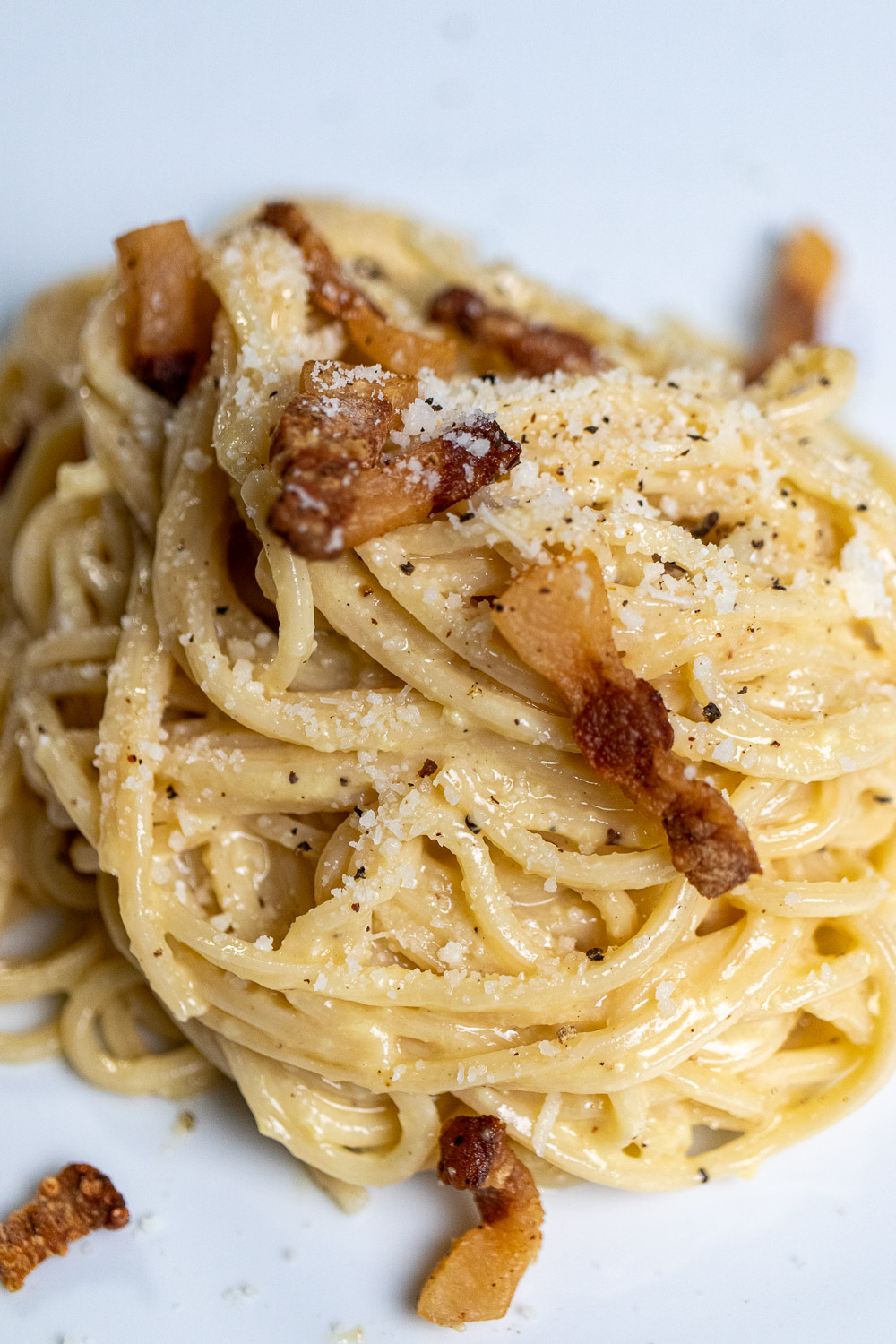
Authentic Spaghetti alla Carbonara
One of the most famous Italian dishes around the world, carbonara is often imitated and recreated with many variations. This authentic spaghetti carbonara recipe is how the dish is traditionally served, using high quality and simple ingredients to create a rich and wonderful dish. Also called pasta alla carbonara, spaghetti is a typical choice, but you’re not limited to one type of pasta.
Ingredients
- 5-6 ounces spaghetti, or pasta of choice
- 2-3 ounces guanciale, cut into ¼” strips, see notes
- 2 large eggs
- ¾ cup grated Pecorino Romano, plus more for topping
- Freshly ground black pepper to taste
Directions
- This dish comes together quickly, so before starting, grate the pecorino and slice up the guanciale.
- In a large pot, add water and bring to a boil over high heat. Add salt as it starts to boil and then add your pasta. Cook the pasta about a minute or two less than it calls for to be al dente.
- As soon as you start the pasta, heat a 12” skillet over medium heat and add the sliced guanciale. Cook to your desired level of crispiness, which should be good to go at the same time as the pasta is done. If you prefer it softer, remove from the heat earlier.
- While the rest is cooking, add your grated cheese, eggs, and a generous amount of freshly ground pepper to a mixing bowl. Whisk or beat with a fork until you have a thick but wet paste like consistency and set aside.
- Using a small glass measuring cup, or a coffee cup, dip into the cooking pasta and reserve some of the starchy pasta water. This is optional, but I like to add a little of the pasta water to the pecorino mix just to temper the eggs some before adding to the pasta.
- When the pasta is ready, do not drain through a colander. Using a pasta spoon or some tongs, transfer the pasta into the pan with the guanciale, don’t worry about getting some of the water in the pan when you transfer it, you want that to happen. If you prefer to save some crispy guanciale as a topping, transfer some of it out before this step and set aside. Toss the pasta with the guanciale and then turn off the heat.
- This is one of the most crucial steps in making carbonara, turn the heat OFF the pan or remove the pan from the stove altogether before adding the pecorino mixture so you don’t end up with scrambled eggs.
- Add the pecorino mixture to the pan and immediately begin stirring and tossing. The residual heat from the pasta and water will cook the egg and melt the cheese, emulsifying everything and creating a creamy sauce.
- If the sauce looks too loose, add some more pecorino. If everything looks too thick, add some more of the reserved pasta water to thin it out.
- Plate the pasta and add any reserved guanciale and top with some more grated pecorino and freshly ground black pepper and serve.
Notes
1) Guanciale – Depending on where you live, it may be difficult to find this product. There are several online retailers that will ship it though, and if you can source it, it’s worth trying out. If you can’t find it, I would recommend pancetta as the best alternative, which is more widely available at many grocery stores. If pancetta is still difficult to find or seems too expensive, bacon can be used instead. Be sure to use a decent quality bacon though and look for the thickest butcher cut you can find, do not use thin bacon.
2) Pecorino Romano – When using pecorino in sauce recipes, the trick is to grate the cheese. Buy whole wedges and, using a box grater or something similar, grate the cheese, do not shred it. Grating the cheese allows it to melt more easily and smoothly when tossed with pasta, whereas shredding the cheese can leave a stringy texture that doesn’t fully emulsify properly.
If you’re not a fan of pecorino, Parmigiano Reggiano is a good substitute. The cheese is similar in texture and isn’t as salty. Both cheeses can be found in grocery stores where they sell imported cheeses, not the dairy section with sliced and shredded cheeses.
3) Salted Water – An important note when using both guanciale and Pecorino Romano in cooking is that both ingredients are salty. Normally when cooking pasta, the saying goes that the water should be “as salty as the Mediterranean Sea.” When using both ingredients however, you should salt the water about half as much as normal, otherwise the finished pasta dishes can be overly salty tasting.
4) Storing Carbonara – This recipe was purposefully made as a small, 2 portion recipe because carbonara doesn’t store well. With the addition of eggs in the sauce, this pasta is best eaten as soon as it’s made. It’s not that great when stored in the refrigerator and reheated a few days later. The recipe is easily scaled up though for 4-6 portions or more.
Nutrition
Calories: 738kcalCarbohydrates: 56gProtein: 31gFat: 43gSaturated Fat: 18gCholesterol: 263mgSodium: 829mgPotassium: 286mgFiber: 3gSugar: 2gCalcium: 451mgIron: 2mg
Tried this recipe?Let us know how it was!
